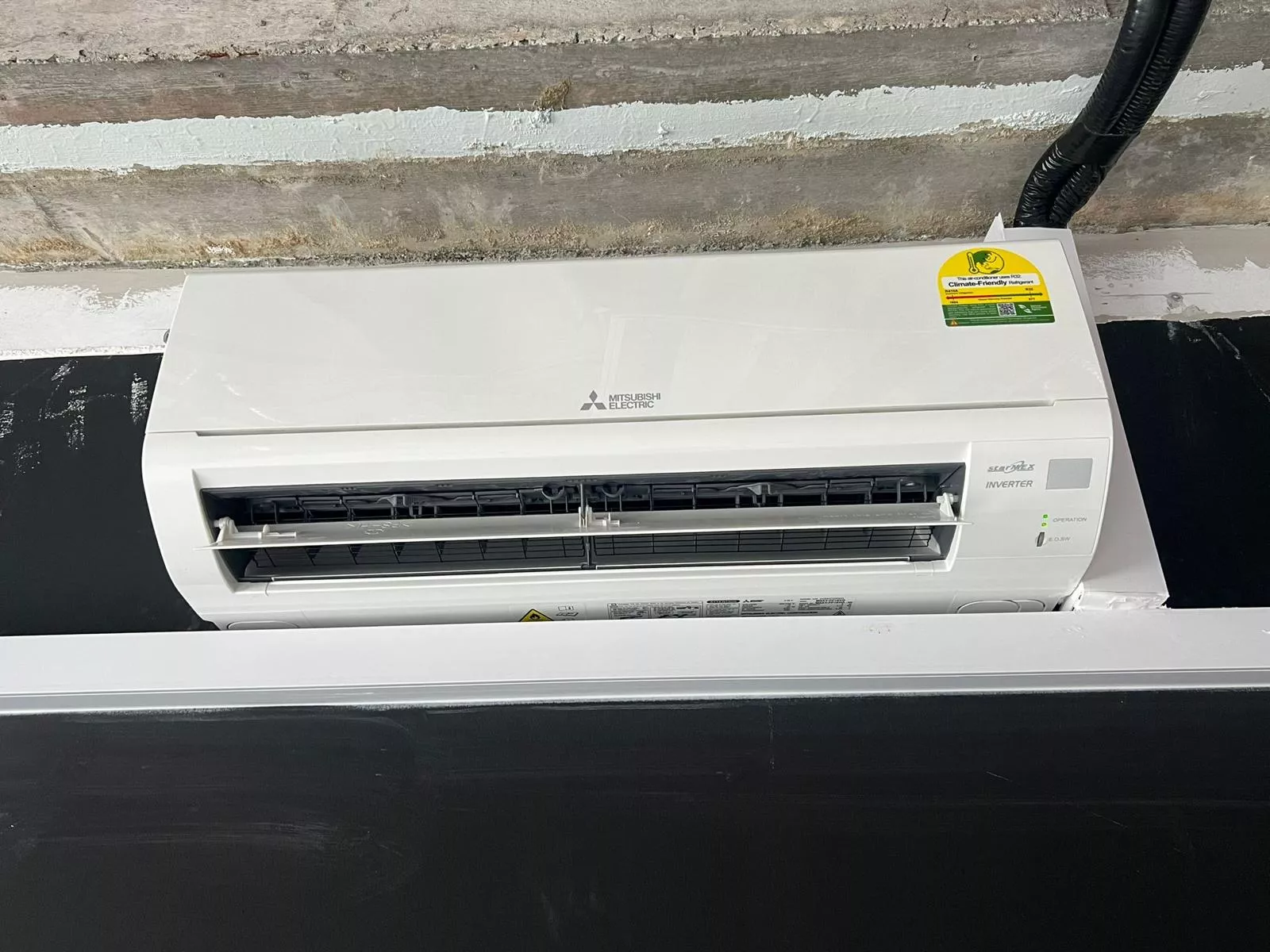
The best aircon temperature for Singapore homes is 24–25°C. At 80%+ humidity, this range keeps most people comfortable while avoiding the steep electricity costs of sub-22°C settings. Every degree below 25°C increases your compressor runtime—and power draw—by roughly 5–10%. Settings above 26°C save money but may not dehumidify enough for comfort in humid bedrooms or small HDB rooms. For most Singaporeans, 25°C strikes the balance: shirt-sleeve comfort, controlled condensation, and a monthly bill that won't shock you.
Why 25°C Is the Sweet Spot in Singapore's Climate
Singapore's year-round humidity (75–95%) means your aircon does two jobs: cooling and dehumidification. Both demand energy, but dehumidification is the silent killer of your electricity budget when the thermostat is set too low.
The Physics: Compressor Load vs Temperature Setpoint
Your compressor cycles on and off to maintain setpoint. At 25°C in a typical 3-room HDB flat (ambient 30–32°C), a 9,000 BTU inverter unit runs at ~60% load during peak afternoon hours. Drop the thermostat to 22°C and the compressor pushes closer to 80–90% load, cycling less frequently but drawing maximum current longer. That 3°C difference costs you roughly 15–30% more kWh per month.
Humidity Control Below 26°C
At 26°C or higher, many non-inverter units (and older inverter models) struggle to condense enough moisture from air. You'll feel 'cool but clammy'—the room temperature reads fine, but 70%+ indoor humidity makes perspiration cling. At 24–25°C, relative humidity indoors drops to 55–65%, the range where most people report dry skin comfort without feeling cold.
Real-World Comfort: What Singaporeans Actually Set
Our servicing teams see thermostats across hundreds of homes monthly. The most common settings:
- Living rooms (multi-split, 12k–18k BTU): 25–26°C, fan on Auto or Low
- Bedrooms (9k BTU): 24–25°C at night, ramping to 26°C after 3am if using a timer
- Study / home office: 23–24°C during work hours (users tolerate higher bills for focus and screen glare reduction)
- Landed properties (ducted systems): 25–26°C centralised, with zone overrides in master bedrooms
Settings below 22°C are rare outside server rooms or households with medical conditions (elderly with heat intolerance, skin conditions). Settings above 27°C appear mostly in storerooms or when the aircon is used intermittently (workshop, garage conversions).
Cost Breakdown: Monthly Bill Impact by Temperature Setting
Electricity tariffs in Singapore (as of Q1 2025) hover around $0.30–0.34/kWh for domestic households. A 9,000 BTU inverter aircon running 8 hours nightly draws roughly 0.6–0.9 kW depending on setpoint and ambient load.
| Setpoint (°C) | Approx. Power Draw (kW) | Monthly Cost (8h/night, 30 days) | Notes |
|---|---|---|---|
| 22 | 0.85–0.95 | $61–73 | High compressor load; dehumidifies aggressively; risk of overcooling small rooms |
| 23 | 0.75–0.85 | $54–65 | Common in bedrooms; good dehumidification; may feel cold by 5am |
| 24 | 0.65–0.75 | $47–58 | Balanced comfort and cost; humidity ~60% |
| 25 | 0.60–0.70 | $43–54 | Recommended: optimal for most Singapore homes |
| 26 | 0.55–0.65 | $40–50 | Lower cost but humidity may climb above 65%; ceiling fan helps |
| 27 | 0.50–0.60 | $36–46 | Savings plateau; comfort drops in humid weather or small rooms |
These figures assume a clean, well-maintained unit with recent servicing. A clogged filter or low refrigerant charge forces the compressor to work 20–40% harder at any setpoint, erasing savings from conservative temperature choices.
Multi-Split and Ducted Systems
For 4-room or 5-room condos and landed homes running multi-split (2–5 indoor units, one outdoor compressor), the cost multiplier is not linear. If you set the master bedroom to 23°C and living room to 26°C simultaneously, the compressor runs to satisfy the lowest setpoint demand first. You pay closer to the 23°C rate across the whole system until that zone is satisfied. Staggered usage (living room 7–11pm, bedrooms 11pm–7am) cuts monthly bills by 15–25% compared to whole-home simultaneous cooling.
How to Optimise Comfort Without Lowering Temperature
If 25°C feels too warm in your space, the aircon setpoint is rarely the root cause. These factors matter more:
Airflow and Fan Speed
Set fan speed to Auto (inverter units) or Medium (non-inverter). High fan speed moves more air across your skin, boosting perceived cooling by 1–2°C equivalent without extra compressor load. In HDB bedrooms under 12 m², pairing the aircon with a ceiling fan at low speed lets you raise the thermostat to 26°C and feel the same as 24°C, saving $10–15 monthly.
Insulation and Heat Gain
West-facing rooms, top-floor HDB units, and condos with floor-to-ceiling glass take on radiant heat all afternoon. By 9pm, walls and ceilings are still radiating 28–30°C into the room. Blackout curtains, reflective window film, or even strategic furniture placement (avoid placing the bed directly under an uninsulated ceiling) reduce the cooling load. A room that sheds heat properly will feel comfortable at 25°C; one that doesn't may need 23°C to achieve the same sensation.
Servicing Interval and Filter Cleanliness
A unit overdue for servicing loses 10–20% cooling efficiency. Dust on the evaporator coil insulates it, forcing the compressor to run longer cycles. Refrigerant charge 10% low mimics the same symptom: you drop the thermostat to 22°C to compensate for weak airflow, paying double penalties—lower setpoint and higher compressor runtime.
Regular servicing every 3–4 months (quarterly for living rooms, every 4 months for bedrooms) keeps the system running at design spec. The 9-point pre-check included with every aircons.sg service booking picks up refrigerant loss, clogged drains, and fan bearing wear before they cost you an extra $20–40 per month in wasted electricity.
Common Mistakes That Drive Up Cost (and Discomfort)
Setting It to 16°C 'To Cool Faster'
Aircons do not cool faster at lower setpoints—they cool longer. Whether you set 16°C or 25°C, the evaporator delivers air at roughly 10–14°C. The thermostat only controls when the compressor stops. Setting 16°C in a bedroom means the compressor runs continuously for 45–60 minutes instead of cycling off after 20 minutes at 25°C. You will overshoot comfort, waste energy, and often wake up cold at 3am, then toggle the unit off entirely—creating a sawtooth temperature cycle that disturbs sleep.
Leaving the Aircon on 18°C All Day 'For Efficiency'
Inverter technology is efficient at partial load, not continuous full load. Leaving a bedroom aircon on 18°C while you're at work does not 'maintain' efficiency—it runs the compressor at 70–80% duty cycle cooling an empty room. You will spend $80–120 monthly on that one unit. Better: turn it off when leaving, restart it 30 minutes before you return home (or use a Wi-Fi module with scheduling). A properly sized 9k BTU inverter unit cools a 12 m² HDB bedroom from 30°C to 25°C in 12–18 minutes.
Ignoring Humidity Complaints
If your household complains the room 'feels muggy' even at 24°C, check the drainage pipe. A clogged drain pan forces the evaporator to sit in standing water, which re-evaporates into the air stream. You are blowing cool but humidified air back into the room. The fix is drain flushing (part of standard servicing) or a drain pump replacement if the gravity line is blocked—typically under $80 for the visit and part.
Temperature Recommendations by Room Type and Usage
| Room / Use Case | Recommended Setpoint | Fan Speed | Why |
|---|---|---|---|
| Master bedroom (sleep) | 24–25°C | Auto or Low | Dehumidifies for dry-sheet comfort; quiet operation; cost-effective for 8h nightly use |
| Kids' room | 25–26°C | Low | Prevents overnight chill in smaller bodies; reduces dry throat complaints |
| Living room (evening) | 25–26°C | Auto or Medium | Larger volume takes longer to cool; higher setpoint plus ceiling fan works well |
| Home office / study | 23–24°C | Auto | Sedentary work; users tolerate slightly higher bills for alertness and screen comfort |
| Gym / yoga room | 22–23°C | Medium or High | High metabolic heat; strong airflow needed; intermittent use keeps monthly cost reasonable |
| Server / electronics room | 20–22°C | Auto | Equipment longevity; dehumidification critical; cost justified by hardware protection |
Adjusting for High-Floor Units and Landed Homes
HDB units above the 10th floor and landed properties with large glazing face higher radiant and wind load. Rooftop bedrooms in terraces can see 2–3°C higher ambient by late afternoon. In these cases, 24°C may be necessary where a mid-floor HDB unit would be comfortable at 25°C. The cost difference is real but justified—forcing a 26°C setpoint in a west-facing penthouse bedroom will leave you uncomfortable and tempted to add a second aircon, doubling capital and running costs.
Smart Controls and Scheduling: Automate the Sweet Spot
Wi-Fi aircon controllers (retrofitted or built into newer Mitsubishi, Daikin, Midea models) let you schedule setpoint changes by time of day. A typical sleep profile:
- 10pm–1am: 24°C (initial cooldown and dehumidification)
- 1am–5am: 25°C (deep sleep; lower metabolic heat)
- 5am–7am: 26°C or Off (body warming for wake-up; outdoor temperature dropping)
This progression saves 8–12% monthly versus a flat 24°C setting and avoids the 3am chill that makes people shut off the unit entirely, then wake sweaty at 6am.
Geo-Fencing and Occupancy Sensing
Higher-end systems (Daikin Urusara, Mitsubishi Electric starmex INVERTER) support occupancy sensors or phone-location triggers. The aircon idles at 27°C when the room is empty and ramps to 25°C when motion is detected or your phone enters the home Wi-Fi zone. Real-world savings: 15–20% for households where bedrooms sit empty 10+ hours daily.
When to Override the 25°C Rule
There are legitimate reasons to run colder or warmer:
- Medical: Elderly with cardiovascular conditions may need 26–27°C to avoid vasoconstriction; infants under 6 months should not be exposed to sub-24°C for prolonged periods.
- Allergies and asthma: Some users find 23°C with strong dehumidification reduces dust mite activity and mold spore levels, worth the extra $15–20 monthly.
- Electronics: Home studios, NAS setups, and gaming rigs with multi-GPU loads generate significant heat. A 22°C setpoint in a 10 m² study with 800W of equipment is reasonable.
- Night-shift workers: Sleeping during the day in Singapore's 32–34°C afternoon heat may require 23°C to achieve the same comfort as 25°C at night when outdoor ambient is 26–28°C.
The key is intentionality: know why you are paying the premium, and verify that the aircon itself is not the problem (low gas, dirty coil, undersized unit).
Frequently Asked Questions
Does setting the aircon to 25°C really save money compared to 22°C?
Yes. Each degree below 25°C increases compressor load by roughly 5–10%, depending on ambient temperature and humidity. Over a month of nightly use (8 hours), the difference between 22°C and 25°C is typically $15–25 for a single 9k BTU bedroom unit. Multiply that across multiple units or whole-home systems and the annual saving is $200–400.
Why does my room feel warm even at 23°C?
Three common causes: clogged air filter restricting airflow (clean or replace every 2–4 weeks), low refrigerant charge (requires top-up by a technician), or undersized unit for the room's heat load (west-facing wall, high ceiling, or too many occupants/electronics). The 9-point pre-check included with any aircons.sg service booking identifies which of these applies, and we quote the fix transparently on the spot.
Is 26°C too warm for a bedroom in Singapore?
For most people, 26°C is acceptable if indoor humidity stays below 65% and there is gentle air movement (ceiling fan on low, or aircon fan on Auto). In small HDB bedrooms with poor ventilation or high occupancy (two adults, one child), 26°C may feel stuffy. Try 25°C first; if comfortable, you have found your cost-optimal setpoint.
Should I use 'Auto' mode or manually set the temperature?
Auto mode on most inverter units adjusts fan speed to reach setpoint quickly, then idles at low speed to maintain it—this is efficient. Auto temperature (where the aircon picks the setpoint) is less useful in Singapore; units often default to 24–25°C anyway, so you might as well set it manually and control the exact comfort level. Use Auto for fan speed, manual for temperature.
Can I use a timer to save cost without sacrificing comfort?
Absolutely. Set the aircon to turn off 1–2 hours before you wake. A well-insulated bedroom will drift only 1–2°C warmer in that time (from 25°C to 26–27°C by 7am), which is tolerable during final sleep cycles. This cuts nightly runtime from 8 hours to 6 hours—a 25% reduction in cost for that unit, or about $10–12 monthly saving per bedroom.
Book Your Aircon Service and Lock In Efficient Performance
The best temperature setpoint only delivers savings if your aircon is running at design efficiency. Clogged filters, low refrigerant, and worn fan motors silently inflate your electricity bill by 20–40%, erasing every dollar you save by choosing 25°C over 23°C. At aircons.sg, every service booking (from $45 for one unit) includes a 9-point pre-check covering refrigerant pressure, drainage flow, thermostat calibration, and electrical draw. We quote any additional work—gas top-up, chemical overhaul, capacitor replacement—transparently on-site, and the $45 minimum applies toward the total. Quoted prices are final. Same-day slots available. WhatsApp us at +65 9107 2601 to book your next servicing and keep your aircon running at the sweet spot: 25°C, maximum comfort, minimum cost.