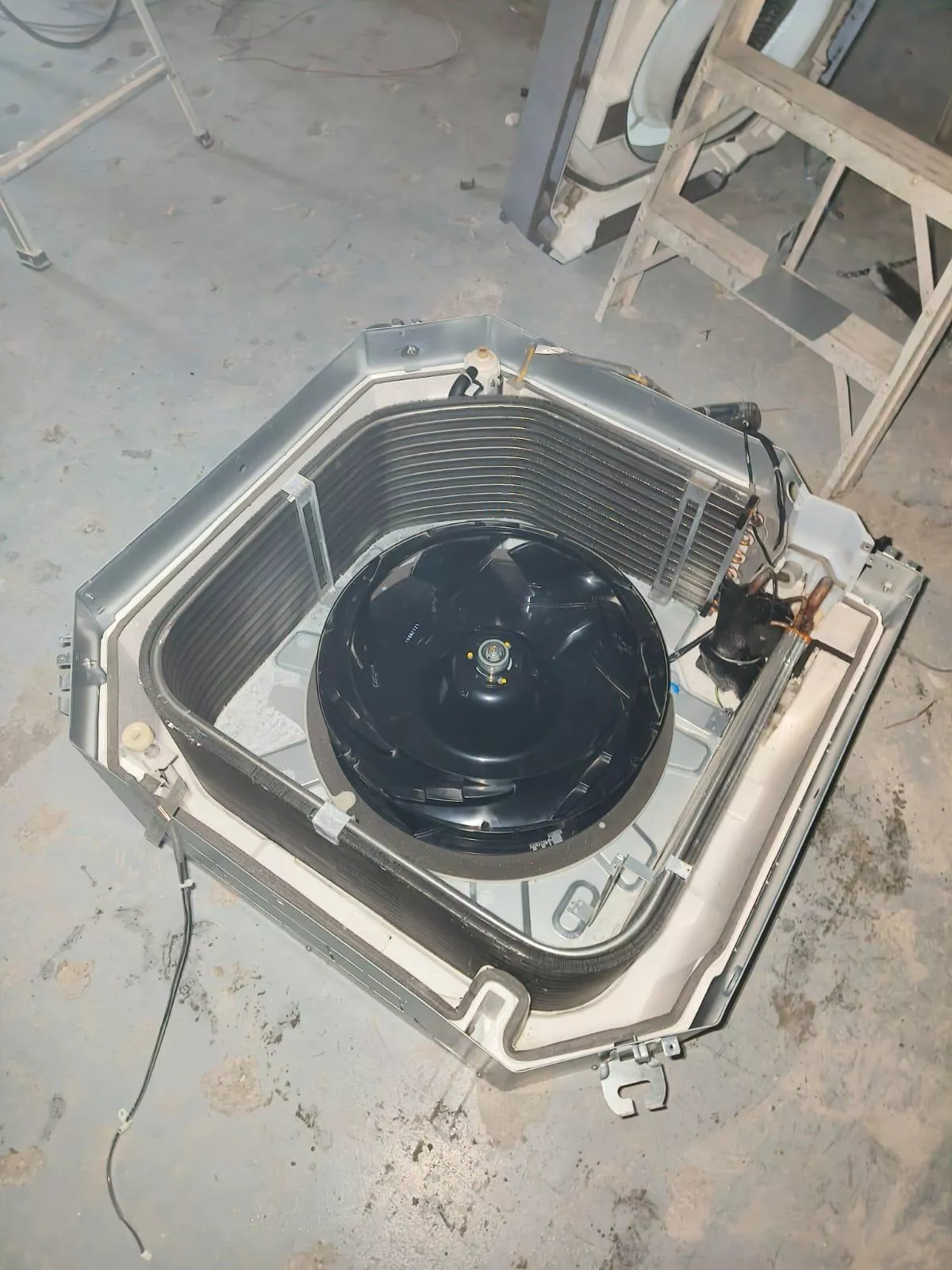
Smart aircon controllers are worth installing if your household often forgets to turn off the aircon or runs it inefficiently. Expect to pay $150–$450 per unit for popular models like Ambi Climate or Sensibo, with installation taking 15–30 minutes. Typical energy savings range from 15–30% monthly, meaning payback in 8–18 months for an average Singapore household running aircon 8+ hours daily. They work with any infrared-remote aircon—no rewiring needed—and most don't require MCST approval since they're plug-and-play.
What Smart Aircon Controllers Actually Do
A smart aircon controller replaces your infrared remote with app-based control and automation. You plug a small device into a wall socket, point it at your aircon indoor unit, and pair it with your phone via Wi-Fi. From there, you can turn the aircon on or off remotely, set schedules, monitor temperature and humidity, and trigger automation based on your location or time of day.
Key features across most brands:
- Remote control via smartphone app — turn on the aircon 15 minutes before you reach home, or switch it off from the office if you forgot
- Scheduling and automation — set the aircon to run only between 11pm and 6am, or turn off automatically when everyone leaves the house (geofencing)
- Energy monitoring — see estimated runtime and consumption; some models integrate with smart plugs for real kWh tracking
- Climate AI — a few premium models (like Ambi Climate) learn your comfort preferences and adjust temperature, fan speed, and mode automatically to reduce waste
- Integration with smart home ecosystems — works with Google Home, Alexa, Apple HomeKit, or SmartThings for voice control and cross-device automation
They do not change your aircon's hardware, refrigerant, or compressor efficiency. They simply make it easier to run the aircon only when needed, which is where the savings come from.
Cost Breakdown: Purchase, Installation, and Payback
Upfront Cost by Model
| Brand / Model | Price (SGD) | Key Features |
|---|---|---|
| Sensibo Sky | $150–$180 | Basic remote control, scheduling, geofencing, Alexa/Google support |
| Sensibo Air | $220–$250 | Adds indoor air quality monitoring (PM2.5, CO₂, humidity) |
| Ambi Climate 2 | $200–$230 | AI-driven comfort tuning, learns preferences over time |
| Cielo Breez Plus | $180–$210 | Similar to Sensibo Sky; good HomeKit integration |
| Xiaomi Mi Smart IR Remote | $40–$60 | Budget option; controls any IR device, but no aircon-specific features or energy tracking |
Installation Cost
Most smart controllers are plug-and-play. You don't need an aircon technician—just plug in, download the app, and follow the pairing steps. If you prefer professional setup or want to bundle it with aircon servicing, we can quote for configuration and testing (includes pairing to your phone, setting up schedules, and confirming IR signal compatibility with your aircon model).
Energy Savings and Payback Period
Assume a typical 2.5HP (System 2) aircon in an HDB 4-room flat, running 8 hours daily at $0.30/kWh:
- Baseline monthly cost: ~$80–$100
- With smart scheduling (reduce runtime by 2 hours/day): ~$60–$75 → saves $20–$25/month
- With geofencing and climate AI (reduce runtime + optimize setpoint): ~$56–$70 → saves $24–$30/month
At $200 upfront and $25/month savings, payback is 8 months. If your household is already disciplined about switching off the aircon, savings drop to 10–15%, pushing payback to 12–18 months. For commercial spaces or landed properties with multiple aircon units running long hours, payback can be as short as 4–6 months per unit.
Singapore-Specific Considerations: MCST, HDB, and Humidity
MCST Approval for Condos
Smart aircon controllers are internal devices—no external modification, no drilling, no change to the facade. You do not need MCST approval. If you're installing a separate smart plug to measure power draw, same story: internal wiring, no approval needed. Just don't mount anything outside the window or on common property.
HDB Flats
No HDB approval required either. As long as you're not altering the aircon outdoor unit, bracket, or running new cables through the facade, you're fine. Smart controllers work with every window unit, wall-mounted split, and multi-split system we've seen in HDB estates.
High Humidity and Sensor Accuracy
Singapore's 80%+ humidity year-round can throw off cheaper temperature/humidity sensors. Models like Sensibo Air and Ambi Climate use calibrated sensors designed for tropical climates and tend to be accurate within ±0.5°C and ±3% RH. The budget Xiaomi IR remote has no environmental sensor—it's purely a remote relay—so you won't get climate-based automation.
Wi-Fi Reliability in High-Rise Units
If you live on a high floor (15th and above) or have thick walls, Wi-Fi signal to the aircon's room can be weak. Most smart controllers require 2.4GHz Wi-Fi (not 5GHz). Before buying, confirm your router's 2.4GHz signal reaches the room reliably, or plan to add a mesh node or Wi-Fi extender ($50–$100). A dropped connection means the controller falls back to the last manual setting—your aircon won't turn off automatically if the internet goes down, so geofencing and remote control are temporarily offline.
Practical Benefits Beyond Energy Savings
Forgetting to Switch Off
This is the single biggest use case. If anyone in your household has left the aircon running all day even once, a smart controller pays for itself in avoided waste. Geofencing (automatic off when the last person leaves home) is reliable and works even if you don't open the app for weeks.
Pre-Cooling Before You Get Home
Walking into a 32°C bedroom at 11pm is miserable. Set the aircon to turn on at 10:30pm, and the room is comfortable by the time you're ready for bed. No need to blast it at 16°C to cool faster—maintain a steady 24°C from 30 minutes before arrival.
Monitoring Runtime for Servicing Schedules
Most smart controllers log daily runtime. If you see 10+ hours/day consistently, you know you're due for servicing every 6–8 weeks instead of the standard quarterly schedule. This prevents frosted coils, water leaks, and compressor strain. We recommend servicing every 60–80 operating hours for Singapore's dusty, humid conditions; smart tracking makes that easy to measure.
Multi-Zone Coordination
If you have three bedrooms each with its own aircon, you can schedule staggered start times to avoid spiking your household electrical load. Some households hit their SP Group demand threshold and pay higher rates; staggering by 10–15 minutes per unit smooths the load curve.
Common Pitfalls and What We've Seen Go Wrong
Incompatible Aircon Models
Most smart controllers work with any infrared-remote aircon, but a handful of older or proprietary models (some Mitsubishi Starmex units, certain Daikin commercial controllers) use non-standard IR codes. Check the manufacturer's compatibility list before buying. Sensibo and Ambi both maintain Singapore-specific compatibility databases and update firmware regularly—we've had zero issues with common brands like Mitsubishi, Daikin, Midea, Panasonic, Fujitsu, or Toshiba.
Placing the Controller Too Far from the Aircon
IR signal range is typically 8–10 meters in a direct line of sight, but walls and furniture block it. Mount the controller on a shelf or wall bracket with a clear view of the aircon's IR receiver (usually near the display panel on the indoor unit). If the unit is in a bedroom and the controller is in the hallway, commands will fail intermittently.
Over-Reliance on 'Eco' or AI Modes
Climate AI is genuinely useful, but it's not magic. If you set your comfort threshold at 22°C in Singapore's humidity, the aircon will run almost continuously no matter what the algorithm does. Realistic comfort for most people here is 24–25°C. Let the AI optimize fan speed and swing; don't expect it to halve your bill if your setpoint is unrealistic.
Ignoring Firmware and App Updates
Smart home devices get regular updates for bug fixes, new integrations, and security patches. An outdated Sensibo or Ambi unit might lose connection to Google Home after a platform API change. Enable auto-updates in the app, or check manually every few months.
Alternatives: When a Smart Controller Isn't the Best Solution
If You Already Have a Programmable Aircon Remote
Some newer Daikin, Mitsubishi, and Panasonic aircons (2020 onwards) have built-in Wi-Fi modules and proprietary apps. If your aircon already offers scheduling and remote control via the manufacturer's app, a third-party smart controller adds little value unless you want cross-platform integration (e.g., Alexa control when the manufacturer doesn't support it, or unified control across mixed brands).
If Your Main Goal Is Energy Savings, Not Convenience
A smart controller saves energy by reducing runtime. If you're disciplined enough to manually switch off the aircon when leaving and set a reasonable temperature, the incremental savings from automation are modest—maybe 5–10%. In that case, you'll get better ROI from regular aircon servicing (clean filters and coils improve efficiency by 10–20%) or upgrading to an inverter aircon with a higher EER (Energy Efficiency Ratio). A 5-tick inverter aircon can cut energy use by 30–40% versus a 2-tick non-inverter, which far outweighs any smart-controller gains.
For Rental Properties
If you're renting and might move in a year, a $200 smart controller is harder to justify unless you plan to take it with you (which is easy—just unplug and pack it). A cheaper programmable timer plug ($20–$30) gives you basic on/off scheduling without app control, and you won't mind leaving it behind when you move out.
Our Recommendation: Who Should Install One
Install a smart aircon controller if you:
- Run aircon 6+ hours daily and often forget to switch it off
- Have irregular schedules (shift work, frequent travel) and want to pre-cool only when needed
- Own multiple aircon units and want centralized control and monitoring
- Value convenience and smart-home integration (voice control, HomeKit scenes, etc.)
- Want data-driven insight into your energy usage to optimize servicing intervals
Skip it if you:
For most Singapore households—especially dual-income families with long work hours—a mid-range model like Sensibo Sky or Ambi Climate 2 hits the sweet spot of features, reliability, and payback speed. Budget options like the Xiaomi IR remote work fine for basic scheduling but lack the energy monitoring and climate intelligence that justify the 'smart' label.
Frequently Asked Questions
Do smart aircon controllers work with all aircon brands in Singapore?
Yes, as long as your aircon uses a standard infrared remote. We've installed them with Mitsubishi, Daikin, Midea, Panasonic, Fujitsu, Toshiba, Hitachi, and Samsung units without issues. A few older or commercial models use proprietary wired controllers; check the manufacturer's compatibility list (Sensibo and Ambi publish detailed databases). If your aircon responds to a normal IR remote, a smart controller will work.
Can I control multiple aircons with one smart controller?
No—each controller handles one aircon unit. However, you can add multiple controllers to a single app account and control them all from one dashboard. Most brands offer multi-unit discounts (e.g., buy three Sensibo Sky units for $400 instead of $540). If you have a multi-split system (one outdoor unit, multiple indoor units), you'll still need one controller per indoor unit since each has its own IR receiver.
Will a smart controller void my aircon warranty?
No. Smart controllers are external accessories—they don't modify the aircon's internals, wiring, or refrigerant system. Your manufacturer warranty remains valid. If you ever need warranty service, just unplug the controller temporarily. We've never seen a brand reject a claim due to a smart controller being present.
How much does it cost to run a smart controller itself?
Negligible—typically 2–3 watts when idle, similar to a phone charger. Over a month, that's under $0.20 in electricity. The Wi-Fi radio and IR blaster draw minimal power. Even with 10 controllers running 24/7, you're looking at less than $2/month total, easily offset by the aircon savings.
What happens if my Wi-Fi goes down?
The controller loses remote access and automation, but your aircon continues running in whatever state it was last set to. Most models have a manual override mode—you can still use your original IR remote as a backup. Once Wi-Fi reconnects, the controller resumes normal operation. Geofencing and scheduled shut-offs won't trigger during an outage, so the aircon may run longer than intended until connectivity returns.
Get It Installed Right: WhatsApp Us for a Free Pre-Check
We supply and install Sensibo and Ambi Climate controllers as part of our aircon servicing and installation work across Singapore—HDB, condo, and landed properties. Every job includes our free 9-point pre-check: we'll test your aircon's IR compatibility, confirm Wi-Fi signal strength in the room, and recommend the best model for your setup and usage pattern. Transparent pricing, same-day service available, and a 2-year workmanship warranty on all installations. WhatsApp us at +65 9107 2601 to discuss your smart aircon upgrade—no forms, no back-and-forth email, just direct answers from the team that does the work.