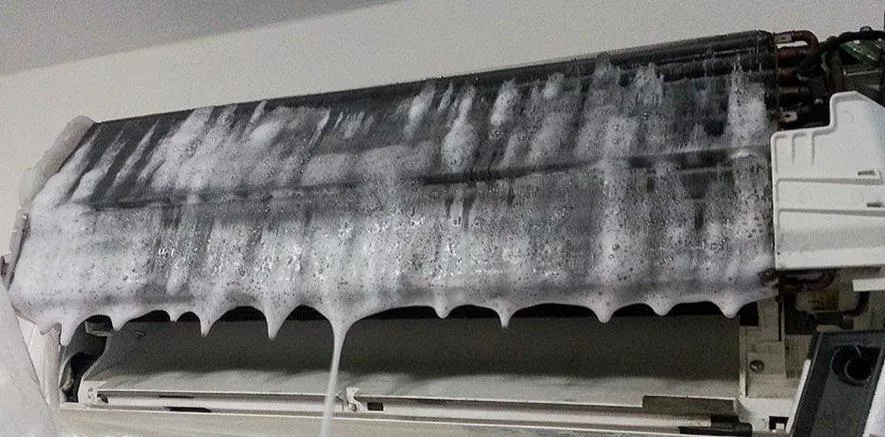
For allergy sufferers in Singapore, three aircon features deliver measurable relief: true HEPA filtration (capturing 99.97% of particles ≥0.3 microns), ioniser or plasma clusters (neutralising airborne allergens), and auto-dry or self-clean modes (preventing mould growth in 80%+ humidity). Standard mesh filters and marketing claims like 'anti-bacterial coating' do almost nothing. If buying new, budget $800–$2,500 for a quality unit with these features; retrofitting HEPA filters to older systems costs $60–$150 per unit but requires compatible mounting. Regular servicing every 8–12 weeks remains non-negotiable — even the best filter becomes an allergen incubator without cleaning.
Why Singapore's Climate Makes Aircon Allergy Features Critical
Singapore's year-round 80–90% relative humidity creates perfect conditions for dust mites, mould spores, and airborne bacteria — the three biggest indoor allergen triggers. Your aircon doesn't just cool; it recirculates indoor air 15–25 times per hour. Without proper filtration, you're cycling allergens through every room.
Here's the problem: most stock aircon units ship with basic nylon mesh filters designed only to protect the evaporator coil from large debris. These capture particles above 10 microns — useful for lint and hair, useless against pollen (15–200 microns but often fragments smaller), mould spores (3–40 microns), dust mite faeces (10–40 microns but breaks into sub-micron particles), and PM2.5 pollution (≤2.5 microns).
The result: your aircon runs all day, your power bill climbs, but you're still waking up congested, itchy-eyed, or wheezing. Upgrading filtration and adding active allergen-reduction tech makes the difference between comfort and chronic symptoms.
HDB vs Condo Considerations
HDB flats present specific challenges: older estates often have 20+ year-old R22 systems with no upgrade path for modern filters. Condensers sit in metal cages on external ledges, limiting drainage upgrades that prevent mould. If you're in a pre-2000 HDB block and suffering allergies, replacement (not retrofitting) is usually the only real fix — budget $650–$1,200 per room for a modern inverter unit with built-in HEPA and ioniser.
Condos with centralised chilled-water systems (common in older developments) give you less control over filtration at the air-handling unit level. Focus on in-room air purifiers as a supplement, and ensure your FCU (fan coil unit) servicing includes coil sterilisation every 6 months.
The Four Allergy-Reducing Aircon Features That Actually Work
1. True HEPA Filtration (Not 'HEPA-Like')
A genuine HEPA filter (High-Efficiency Particulate Air) captures 99.97% of particles 0.3 microns and larger in a single pass. This includes pollen fragments, most mould spores, dust mite allergens, and PM2.5. Look for the term true HEPA or certification to EN 1822 (H13 or H14 grade).
Beware marketing terms like 'HEPA-type', 'HEPA-like', or 'micro-particle filter' — these are unregulated and often capture only 85–90% at 2 microns, missing the fine particles that trigger respiratory symptoms.
Retrofit cost: $60–$150 per indoor unit, depending on whether your existing filter slot accepts standard HEPA sheets or requires a custom housing. Replacement HEPA filters run $25–$50 each and need changing every 6–12 months (faster if you're near construction or heavy traffic).
Energy impact: HEPA filters are denser, so airflow resistance increases. Older non-inverter systems may struggle, leading to 5–10% higher energy draw and reduced cooling efficiency. Inverter models handle the load better.
2. Ioniser and Plasma Cluster Technology
Ionisers release negatively charged ions that bind to airborne particles (allergens, bacteria, viruses), causing them to clump together and drop out of the air or get trapped more easily by filters. Plasma cluster tech (Panasonic, Sharp, Daikin Streamer) goes further, generating both positive and negative ions that chemically break down allergen proteins and microbial cell walls.
Real-world effectiveness: independent lab tests show 60–85% reduction in airborne mould spores and bacteria within 2 hours in a sealed room. Anecdotal feedback from allergy sufferers is consistently positive, especially for dust-mite and pet-dander sensitivity.
Cost: Built into most mid-range and premium units (Daikin, Mitsubishi, Panasonic, LG) at no extra charge. Cannot be retrofitted to older systems.
Maintenance: Ioniser plates or electrodes require cleaning every 3–6 months (usually part of standard servicing). Plasma generators are sealed and maintenance-free but may need module replacement after 5–7 years ($80–$150).
3. Auto-Dry / Self-Clean Modes
After shutdown, condensation on the evaporator coil creates a breeding ground for mould and bacteria. Auto-dry mode runs the fan (without cooling) for 10–30 minutes to evaporate residual moisture. Self-clean goes further, using heat or UV light to sterilise the coil before drying.
This feature is critical in Singapore. Without it, black mould builds up inside the unit within 6–8 weeks, releasing spores every time the fan runs. You'll smell it — musty, damp odour — before you see allergy symptoms spike.
Cost: Standard on most inverter models since ~2018. Older split systems lack it and cannot be retrofitted.
Usage tip: Enable auto-dry in settings (it's often shipped disabled). Expect 10–20 minutes of fan noise after each cooling cycle. The energy cost is negligible (under $2/month).
4. Washable Pre-Filters with Anti-Microbial Coating
A washable mesh or electrostatic pre-filter sits in front of the HEPA, catching large particles (hair, dust, lint) so the HEPA lasts longer. Anti-microbial coatings (silver ion, catechin, enzymes) inhibit bacterial growth on the filter itself.
Effectiveness is modest — lab tests show 20–40% reduction in bacterial colonies on the filter surface, but negligible impact on airborne allergens unless paired with HEPA or ioniser tech. Treat this as a nice-to-have, not a primary feature.
Maintenance: Wash the pre-filter every 2 weeks under running water, air-dry completely before reinstalling. Coatings degrade over time; replace every 2–3 years ($15–$35).
Comparing Allergy-Friendly Aircon Brands Available in Singapore
| Brand | Key Allergy Features | Typical Price (System 1–3) | Notes |
|---|---|---|---|
| Daikin | Streamer discharge (plasma), titanium apatite filter, auto-dry | $950–$2,200 | Streamer tech is clinically tested; excellent for mould/bacteria. Filters proprietary, replacement $40–$60. |
| Mitsubishi Electric | Plasma Quad Plus, enzyme blue filter, dual-barrier coating | $1,050–$2,500 | Premium tier; very quiet operation. Enzyme filter degrades allergen proteins. Higher upfront cost. |
| Panasonic | nanoe-X (hydroxyl radicals), PM2.5 filter, auto-clean | $850–$1,950 | nanoe-X effective on odours and bacteria. Filter replacement straightforward, $25–$45. |
| LG | Plasmaster ioniser, PM1.0 filter, auto-clean | $750–$1,650 | Good value; PM1.0 filter captures finer particles than most. Reliability mixed on older models. |
| Midea / Courts house brands | Basic ioniser, washable filter | $650–$1,100 | Budget option. Ioniser weak; no HEPA option. Suitable only if pairing with separate air purifier. |
If budget allows, Daikin and Mitsubishi Electric consistently deliver the best real-world allergy relief based on customer feedback and independent testing. Panasonic offers strong mid-tier value. Avoid no-name brands or older Midea/Gree units — their 'anti-allergy' claims rarely translate to measurable improvement.
Retrofitting vs Buying New: Cost-Benefit for Allergy Sufferers
If your current system is under 5 years old, inverter-based, and in good condition, retrofitting HEPA filters and adding a standalone ioniser can work. Total cost: $150–$300 per room. You'll see noticeable improvement within 2–4 weeks if servicing is up to date.
If your system is 8+ years old, non-inverter, or already struggling (weak airflow, frequent gas top-ups, persistent mould smell), replacement makes more financial sense. An older unit retrofitted with HEPA will fight the added resistance, driving up power consumption 10–15% and shortening compressor lifespan. You'll spend $200–$400/year on extra servicing and repairs, negating retrofit savings.
When to Replace
- Age over 10 years: R22 refrigerant systems (pre-2015) cannot efficiently support modern filtration loads.
- Persistent mould despite servicing: indicates coil corrosion or drainage issues that cleaning won't fix.
- Allergy symptoms worsening: if standard servicing + filter upgrades show no improvement after 8 weeks, the unit's internal contamination is likely irreversible.
- Energy consumption spiking: non-inverter units from 2010–2015 draw 40–60% more power than current models; replacement pays for itself in 3–5 years on electricity savings alone.
Realistic Payback Period
A $1,200 Daikin or Panasonic inverter with HEPA and ioniser, replacing a 12-year-old non-inverter, typically saves $15–$25/month in electricity (assuming 8 hours daily use). Add $50–$80/year in reduced medical costs (fewer clinic visits, antihistamines, nasal sprays) and $100–$150/year in lower servicing frequency (inverters need servicing every 10–12 weeks vs 6–8 weeks for older units). Total annual benefit: $350–$550. Payback in ~2.5–3.5 years, with 8–12 years expected unit life remaining.
Servicing and Maintenance: The Make-or-Break Factor
No amount of advanced filtration helps if your aircon isn't serviced correctly and frequently. Dust, mould, and bacteria accumulate on coils, fans, and drainage trays — areas HEPA filters never touch. A neglected HEPA filter becomes an allergen repository, releasing trapped particles back into the air as it clogs.
Recommended Servicing Frequency for Allergy Sufferers
- Standard use (6–8 hrs/day): every 10–12 weeks
- Heavy use (12+ hrs/day) or near construction/traffic: every 6–8 weeks
- Homes with pets: every 8 weeks minimum
- Visible mould or musty smell: immediate chemical overhaul ($120–$180 per unit), then standard schedule
Standard servicing ($45 for 1 unit with aircons.sg) includes coil cleaning, filter wash/replacement, drainage check, and a 9-point pre-check covering refrigerant pressure, electrical connections, and airflow. If the technician finds mould or heavy contamination, a chemical wash is quoted transparently on-site; the $45 minimum applies toward the total if you proceed, or covers the visit and inspection if you decline.
DIY Between Professional Services
Wash the front mesh filter every 2 weeks: remove, rinse under tap, air-dry completely (never reinstall damp — mould grows within 24 hours). Wipe the louvres and exterior weekly. Check the outdoor condenser quarterly for debris, leaves, or bird nests blocking airflow.
Do not attempt DIY chemical cleaning or coil sprays from hardware stores — these often leave residue that accelerates corrosion and void warranties. Leave internal work to qualified technicians.
What Doesn't Work (Despite Marketing Claims)
Activated carbon filters excel at removing odours and VOCs (volatile organic compounds) but do almost nothing for particulate allergens. Useful if you're sensitive to cooking smells or new-furniture off-gassing, irrelevant for dust-mite or pollen allergies.
UV-C lamps inside aircon units kill bacteria and mould on surfaces directly exposed to the lamp, but airflow through residential units is too fast (and UV exposure time too brief) for meaningful sterilisation of airborne particles. Effective in commercial HVAC with slow duct velocities; marginal in home splits.
Vitamin C or 'healthy ion' filters are pure marketing. No peer-reviewed evidence supports health claims. Save your money.
Ozone generators are sometimes bundled as 'air purifiers' or 'sterilisers'. Ozone is a respiratory irritant and worsens asthma and allergies. Avoid any unit that produces ozone as a byproduct (some cheap ionisers do).
Frequently Asked Questions
Can I use a portable air purifier instead of upgrading my aircon for allergies?
Yes, as a supplement or stopgap, but not as a replacement. A quality HEPA air purifier ($250–$600) filters air in one room; your aircon circulates air throughout connected spaces and also controls humidity (high humidity worsens dust-mite populations). Best outcome: modern aircon with HEPA/ioniser plus a bedroom purifier for overnight relief. If budget forces a choice, prioritise aircon replacement — it addresses both allergens and the humidity that fuels them.
How do I know if my aircon's HEPA filter needs replacing?
Check monthly: hold the filter up to a bright light. If you see minimal light passing through (looks opaque or dark grey), it's clogged. Reduced airflow from vents, longer cooling times, or return of allergy symptoms are also indicators. Most HEPA filters last 6–12 months with regular pre-filter washing; homes near expressways or construction may need replacement every 4–6 months. Mark your calendar and budget $25–$50 per replacement.
Do inverter aircons help with allergies more than non-inverter models?
Indirectly, yes. Inverter units run continuously at variable speeds, maintaining stable humidity (55–65%) that discourages dust mites (they thrive above 70%). Non-inverter units cycle on/off, causing humidity swings. Inverters also handle the airflow restriction of HEPA filters better without efficiency loss. If replacing for allergy reasons, always choose inverter — the $100–$200 upfront premium pays off in comfort and running costs.
Will chemical cleaning remove allergens built up inside my aircon?
Yes, a proper chemical overhaul removes mould, bacteria, and allergen residue from coils, blower wheels, and drainage trays — areas standard servicing can't fully reach. Cost is $120–$180 per indoor unit. Recommended once yearly for allergy sufferers, or immediately if you notice musty smells or visible mould. The difference is dramatic: customers report 60–80% reduction in morning congestion and sneezing within a week of chemical cleaning.
Are there aircon brands to avoid if I have severe allergies?
Avoid budget brands (Akira, Soniq, EuropAce, older Midea/Gree models) that claim 'anti-bacterial' or 'health filters' without specifying HEPA or plasma tech — these are usually just treated mesh that degrades in 6 months. Also avoid any unit over 10 years old, regardless of brand, due to internal contamination and lack of modern allergen-reduction features. Stick to Daikin, Mitsubishi Electric, Panasonic, or recent LG inverter models (2020 onwards) for reliable allergy relief.
Get Your Aircon Allergy-Ready
If you're waking up congested or struggling with year-round sinus issues, your aircon is likely part of the problem — but it can be part of the solution. Whether you're retrofitting HEPA filters to a current system or replacing an old unit, proper servicing is non-negotiable. Every aircons.sg service booking (from $45 for 1 unit) includes a 9-point pre-check covering filtration, drainage, mould indicators, and airflow — we'll tell you honestly whether cleaning, filter upgrades, or replacement makes sense for your situation. no hidden fees, same-day availability. WhatsApp us at +65 9107 2601 to book or ask questions — straight answers from the technicians who do the work, not a sales team.