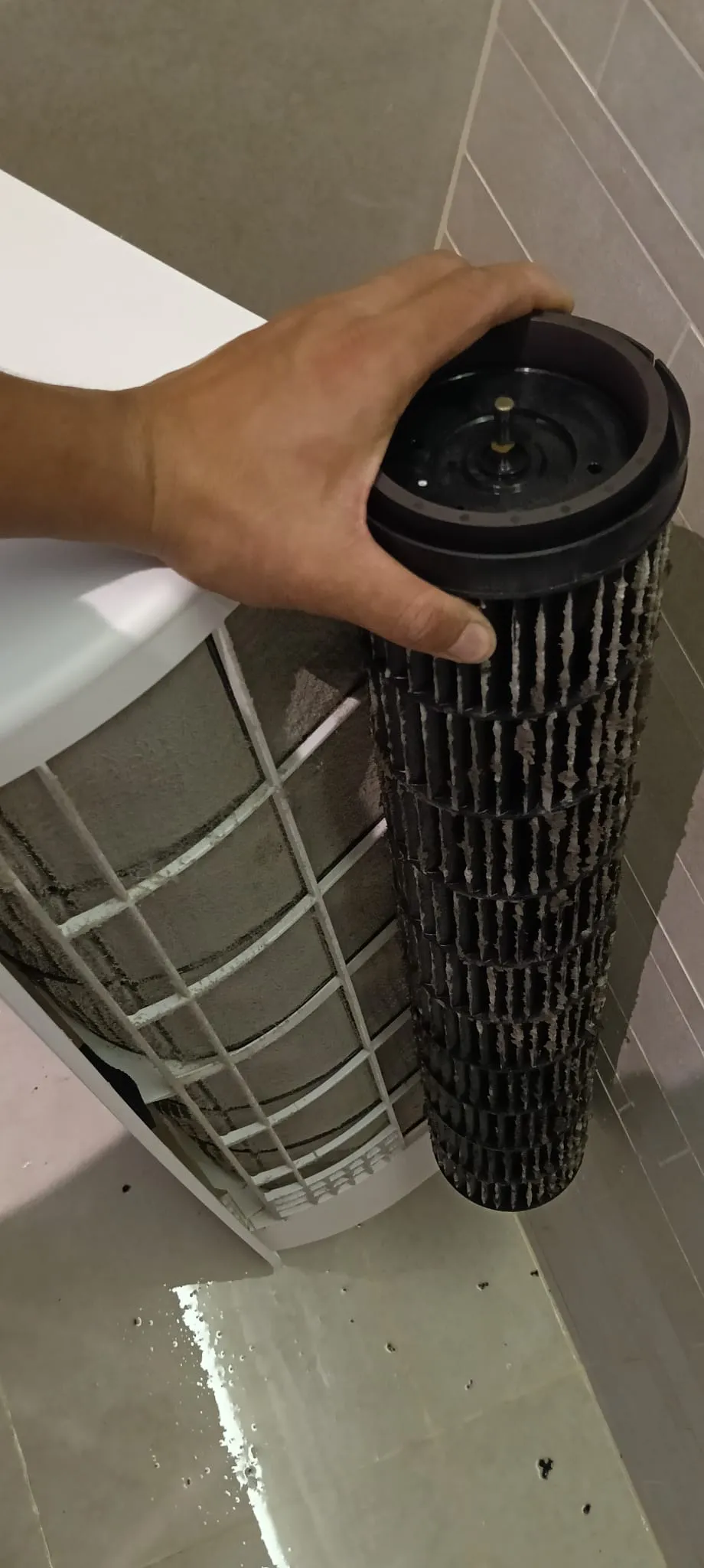
Singapore's aircon landscape in 2025–2026 is defined by seven key shifts: mandatory R32 refrigerant in new installations (replacing R410A), widespread adoption of inverter compressors (cutting energy bills 30–50%), app-based smart controls becoming standard in mid-range systems ($900–$1,800 installed), rising demand for multi-zone ducted systems in landed homes ($8,000–$15,000), post-pandemic focus on HEPA and ioniser filtration, tighter HDB and MCST noise limits (≤50 dB(A) at 1 metre), and a supply-chain-driven preference for Mitsubishi, Daikin, and Midea over smaller brands. If you're buying or upgrading in 2026, expect longer warranties (five years compressor is now table stakes), higher upfront cost ($100–$200 more per unit vs 2023), but lower running costs and better air quality.
R32 Refrigerant Is Now the Default (and R410A Is on the Way Out)
Since late 2024, every major brand sold in Singapore—Daikin, Mitsubishi, Midea, Panasonic, LG, Samsung—ships new split-system aircons with R32 refrigerant. R410A, the workhorse of the 2010s, is being phased out under the Kigali Amendment (ratified by Singapore in 2017). R22 has been illegal for new installations since 2020.
R32 has a global-warming potential (GWP) of 675, roughly one-third that of R410A (2,088). It also delivers 5–10% better energy efficiency in the same compressor design, meaning lower monthly electricity bills. For a typical 9,000 BTU bedroom unit running eight hours a day, that translates to roughly $3–$5 saved per month, or $40–$60 per year.
What This Means for Servicing and Gas Top-Ups
R32 gas top-ups cost $80–$120 per kg in 2026 (vs $60–$100 for R410A in 2023). A single-split bedroom unit holds 0.5–0.8 kg; a 12,000 BTU living-room unit holds 0.8–1.2 kg. If your aircon is leaking gas annually, the refrigerant type is less important than finding and fixing the leak—most leaks originate at flare joints on the outdoor unit or at brazed connections corroded by salt air (common above the tenth floor or near the coast).
Technicians need separate gauges and recovery equipment for R32 (it's mildly flammable, classified A2L). At aircons.sg, every van carries dedicated R32 manifolds and leak detectors; the service procedure is identical to R410A from the customer's perspective, and the 9-point pre-check (included with any service booking, $45 minimum for one unit) covers refrigerant-pressure testing regardless of gas type.
Inverter Compressors Are No Longer a Premium Feature
In 2020, inverter aircons carried a 20–30% price premium over fixed-speed models. In 2026, the gap has collapsed: entry-level inverter systems (Midea, Europace, Electrolux) start at $650–$750 installed for a 9,000 BTU unit, only $50–$100 more than the last remaining fixed-speed models, which are now hard to find outside budget retailers.
Inverter compressors ramp speed up and down to match cooling demand, rather than cycling on and off. This cuts energy consumption by 30–50% in typical Singapore use (where the aircon runs continuously for hours rather than short bursts), reduces temperature swings by ±0.5°C, and halves compressor start-up noise.
Real-World Savings
| Aircon Type | Power Draw (9,000 BTU) | Cost per Hour (at $0.35/kWh) | Monthly Cost (8 hrs/day) |
|---|---|---|---|
| Fixed-speed (non-inverter) | 900–1,050 W | $0.32–$0.37 | $76–$89 |
| Inverter (2-tick rating) | 600–750 W | $0.21–$0.26 | $50–$62 |
| Inverter (4-tick rating) | 500–620 W | $0.18–$0.22 | $43–$53 |
Over five years, a 4-tick inverter system saves $1,800–$2,200 in electricity vs a fixed-speed unit, more than paying for the $100–$150 upfront premium. For families running three or four aircons nightly, the payback period is under 18 months.
Smart Controls and App Integration Are Becoming Standard
In 2023, Wi-Fi-enabled aircons were confined to flagship models ($1,500+ installed). In 2026, mid-range Daikin, Mitsubishi, and Midea units ($900–$1,200 installed) ship with app control as standard. You get remote on/off, temperature scheduling, energy monitoring, and filter-cleaning reminders via iOS or Android.
For HDB and condo owners who leave the aircon running for elderly parents or pets, remote monitoring prevents the common scenario where the unit runs all day at 18°C because someone forgot to adjust the thermostat. Scheduled shut-off at 7 a.m. alone can cut monthly bills by 10–15%.
Third-Party Smart Plugs vs Native Integration
Retrofitting a dumb aircon with a Switchbot or Sensibo smart IR blaster costs $60–$120 and works with most infrared remotes. The limitation: you can't monitor refrigerant pressure, compressor run-time, or filter status—only on/off and temperature. Native smart aircons expose full diagnostics to the app, and some (Daikin Urusara 7, Mitsubishi Electric Starmex) push maintenance alerts directly to your phone when gas pressure drops or the indoor coil clogs.
If you're buying new in 2026, spend the extra $80–$120 for native Wi-Fi rather than bolting on a third-party device later.
Multi-Zone Ducted Systems Are the New Normal for Landed Homes
Landed-property owners—terraces, semi-Ds, bungalows—are shifting from multiple wall-mounted splits (one outdoor condenser per room) to single multi-zone ducted systems with concealed ceiling vents. A typical four-bedroom setup costs $8,000–$15,000 installed (vs $4,500–$6,500 for four separate splits), but delivers cleaner aesthetics, centralised control, and quieter bedrooms (the air handler sits in the attic or utility space).
Ducted systems require false ceilings (minimum 250 mm drop for standard ducts, 180 mm for slim-duct models) and MCST approval if you're in a strata-landed development. Installation takes two to three days, vs four to six hours for a wall-split system.
Running Costs: Ducted vs Wall Splits
Ducted systems lose 10–15% efficiency to duct leakage and static pressure unless the ducts are insulated and sealed properly. A poorly installed ducted system can cost more to run than individual splits. The flip side: modern VRV (variable refrigerant volume) ducted systems—Daikin VRV, Mitsubishi City Multi—match or beat split-system efficiency by modulating refrigerant flow to each zone independently.
For a four-bedroom landed home running aircon in three bedrooms nightly, expect $180–$250/month electricity with a well-designed ducted inverter system, vs $160–$220/month with four separate inverter splits. The $20–$30 delta buys you a much quieter, cleaner-looking home.
HEPA Filters and Ionisers Are No Longer 'Nice to Have'
Post-2020 air-quality awareness—driven by COVID, haze seasons, and rising asthma rates—has made filtration a headline feature. In 2026, even entry-level Midea and Electrolux units include basic ionisers (positive/negative ion generators that claim to neutralise airborne particles). Mid-range and premium models (Daikin, Mitsubishi, Panasonic) offer true HEPA filters or electrostatic PM2.5 filters rated to capture 95%+ of particles ≥0.3 microns.
Do They Work?
Independent tests (BCA, NEA, consumer groups) show that aircon-mounted HEPA filters reduce indoor PM2.5 by 40–60% if the room is sealed and the aircon runs continuously. Open windows, cooking smoke, and gaps around doors dilute the effect. Ionisers are harder to quantify; some users report less dust on surfaces, but peer-reviewed evidence is mixed and ozone production (a by-product of corona-discharge ionisers) remains a concern in poorly ventilated rooms.
If air quality is a priority, a standalone HEPA air purifier ($300–$800) running 24/7 in the bedroom will outperform an aircon-mounted filter that only operates when the aircon is on. That said, the built-in filter is a useful secondary layer and costs nothing extra in 2026 mid-range models.
Noise Limits Are Tightening (Especially in Condos and New HDBs)
HDB's revised Code of Practice for Building Services (2022 edition, enforced from 2023) caps outdoor-unit noise at 50 dB(A) measured at one metre, down from the old 60 dB(A) limit. Many older aircon models (2015–2020 vintage) measure 52–58 dB(A) at full load, technically non-compliant if installed today.
Condo MCSTs are following suit. Complaints about compressor noise—especially in high-density developments where outdoor ledges are separated by thin dividers—have led to stricter by-laws. Some condos now require ≤45 dB(A) at the neighbour's bedroom window, effectively mandating inverter or 'silent' compressor models.
Quiet Aircon Models in 2026
- Daikin Smile Inverter: 41–46 dB(A) outdoor, $1,100–$1,400 installed (9,000 BTU)
- Mitsubishi Starmex System 4: 42–47 dB(A), $1,200–$1,500 installed
- Midea Xtreme Save Pro: 44–49 dB(A), $850–$1,050 installed
- Panasonic Aero Series: 43–48 dB(A), $1,000–$1,300 installed
If you're replacing an old unit in a condo or new HDB, check the spec sheet for outdoor noise rating. At aircons.sg, we measure post-installation noise as part of the 9-point pre-check (included with any service booking, $45 minimum for one unit) and can fit rubber isolation mounts ($30–$50) if the compressor exceeds your MCST limit.
Brand Consolidation and Longer Warranties
Supply-chain disruptions (2021–2023) and the exit of smaller Chinese brands (Gree, TCL, Haier scaled back Singapore retail) have concentrated the market around five major players: Daikin, Mitsubishi Electric, Midea, Panasonic, and LG. Samsung remains strong in the consumer electronics channel but has a smaller aircon footprint.
Warranty terms have lengthened in response to competition. Five-year compressor warranties are now standard across Daikin, Mitsubishi, and Midea (up from three years in 2020). Parts-and-labour coverage remains one year for most brands, two years for premium Daikin and Mitsubishi models.
What the Warranty Doesn't Cover
Manufacturer warranties exclude gas top-ups, chemical overhauls, and damage from poor installation (kinked pipes, undercharged refrigerant, incorrect bracket mounting). They also exclude normal wear: clogged filters, corroded coils from salt air, and capacitor failure after three to four years of heavy use. At aircons.sg, every installation comes with a 2-year workmanship warranty and every major repair a 90-day one, covering leaks, bracket failures, and electrical faults—independent of the manufacturer's parts warranty.
What to Expect When Buying or Upgrading in 2026
If you're shopping for a new aircon in 2026, here's the realistic cost range for supply and installation (quoted prices are final, no hidden fees):
| Capacity | Budget (Midea, Electrolux) | Mid-Range (Daikin, Mitsubishi) | Premium (Daikin Urusara, Mitsubishi Starmex) |
|---|---|---|---|
| 9,000 BTU (bedroom) | $650–$850 | $950–$1,300 | $1,400–$1,900 |
| 12,000 BTU (living room) | $800–$1,000 | $1,100–$1,500 | $1,600–$2,200 |
| 18,000 BTU (large living/dining) | $1,200–$1,500 | $1,600–$2,100 | $2,300–$3,200 |
| 24,000 BTU (open-plan, landed) | $1,600–$2,000 | $2,200–$2,900 | $3,200–$4,500 |
Installation includes bracket, copper piping (up to 3 metres concealed trunking for HDB, 5 metres for condos), electrical connection, vacuum pump-down, refrigerant charging, and on-site testing. Additional trunking costs $20–$35 per metre. High-floor installations (above the fifteenth floor) may incur a $50–$80 surcharge for gondola or cradle access if external brackets are required.
Frequently Asked Questions
Is R32 refrigerant more expensive to top up than R410A?
Yes, but only marginally. R32 gas costs $80–$120 per kg in 2026 vs $60–$100 for R410A in 2023. A typical bedroom aircon holds 0.5–0.8 kg, so a full top-up runs $50–$100. The bigger issue is why you're topping up annually—most healthy systems hold gas for five to seven years. Frequent top-ups point to a leak that needs brazing or flare-joint replacement, not more gas.
Do I need MCST approval to install a new aircon in my condo?
Usually no, if you're replacing an existing unit in the same location using the same bracket position. You do need approval if you're adding a new outdoor unit, relocating the condenser to a different ledge, or installing a system that exceeds the MCST's noise or weight limits. Check your condo's by-laws or ask your managing agent before booking installation. At aircons.sg, we handle MCST submissions as part of the installation quote if required.
Are smart aircons worth the extra cost?
If you regularly forget to switch off the aircon or want to pre-cool your home before arriving, yes—the $80–$120 premium pays for itself in six to twelve months through avoided waste. If you're home most of the day and manually control temperature, a basic inverter model without Wi-Fi is fine. Retrofitting a smart IR blaster ($60–$120) later is always an option, though you lose diagnostic features like refrigerant-pressure monitoring.
How often should I service an inverter aircon vs a fixed-speed model?
Same interval: every three months for bedrooms and living areas running six-plus hours daily, every four to six months for guest rooms or study areas with lighter use. Inverter compressors don't require more frequent servicing, but the coil and filter still accumulate dust at the same rate. Skipping servicing reduces cooling efficiency by 15–25% per year and can trip the compressor thermal overload, forcing a $150–$250 repair.
What's the lifespan of a 2026 aircon compared to older models?
Inverter boards and electronic expansion valves (common in 2026 models) have a typical lifespan of eight to twelve years, slightly shorter than the fifteen-year lifespan of old fixed-speed compressors with mechanical thermostats. However, modern units are more energy-efficient and cheaper to run, so total cost of ownership over ten years is lower. Expect to replace a 2026 inverter aircon around 2036–2038, vs 2040–2045 for a 2010-era fixed-speed model—but you'll save $2,000–$3,000 in electricity along the way.
Book Your Aircon Service or Installation with aircons.sg
Whether you're upgrading to an R32 inverter system, troubleshooting a noisy compressor, or scheduling your quarterly service, aircons.sg delivers transparent pricing, same-day availability, and a 90-day workmanship warranty on every job. Every service booking (from $45 for one unit) includes our 9-point pre-check: refrigerant pressure test, coil inspection, drain-line flush, filter clean, and electrical safety check. Quoted prices are final—no hidden fees, no surprises. WhatsApp us at +65 9107 2601 to book your slot today. We're technicians first, not a call centre—you'll get straight answers from the people who actually do the work.