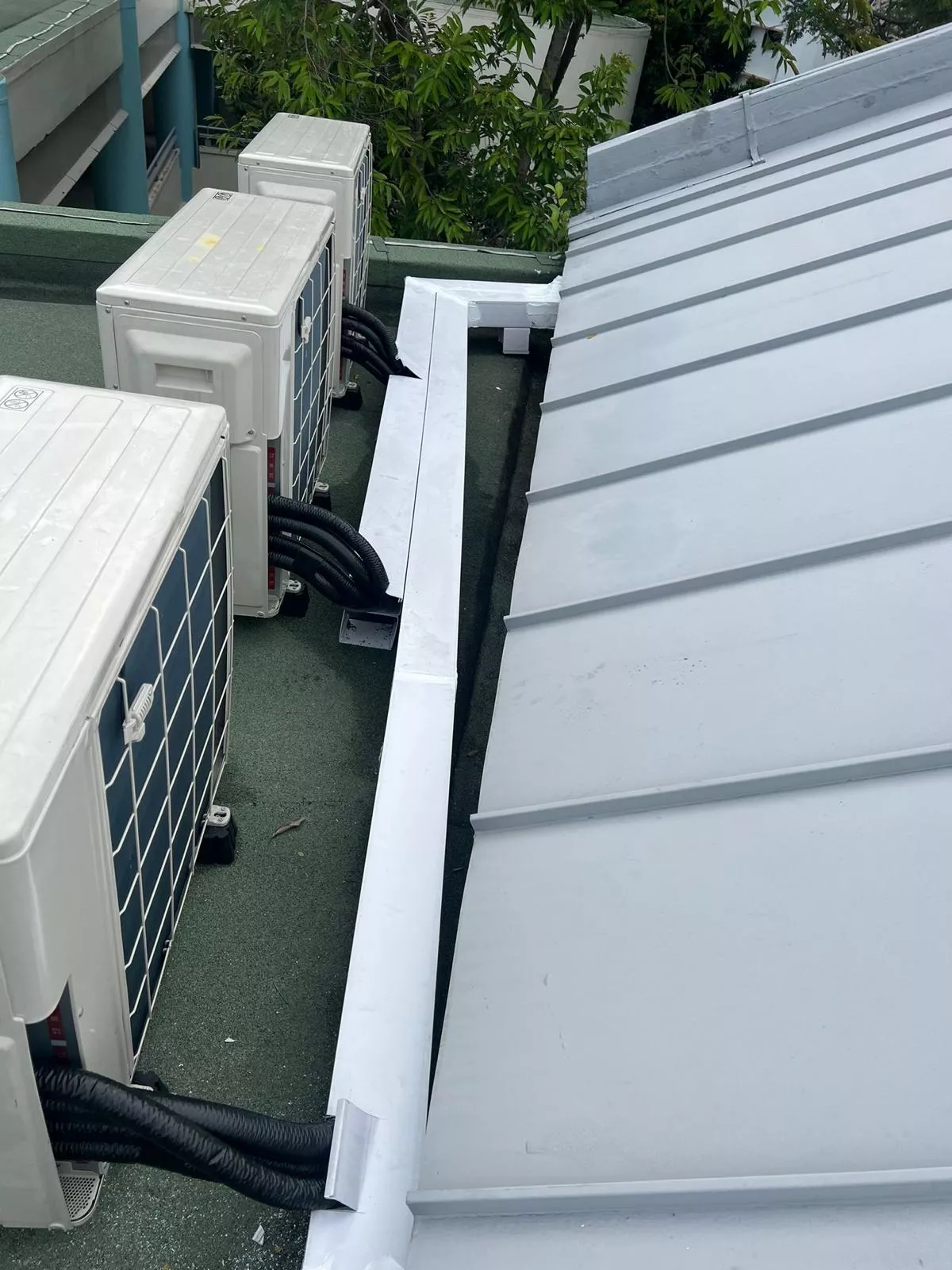
For Singapore homes, Daikin and Mitsubishi Electric consistently lead on reliability, service network coverage, and parts availability — expect 10–15 years lifespan with proper servicing. Panasonic offers solid mid-range performance with competitive pricing, while Midea delivers the lowest upfront cost but shorter 7–10 year lifespans and fewer authorised service centres island-wide. All four brands now offer R32 refrigerant models (mandatory for new installs since 2020), but Daikin and Mitsubishi hold the strongest track records for humid tropical climates and high-rise installations.
Brand Reliability and Lifespan in Singapore Conditions
Singapore's year-round 80–85% humidity, frequent afternoon downpours, and wall-mounted outdoor compressors exposed to direct sun and rain place extreme demands on aircon units. Not all brands handle this equally.
Daikin: The Industry Benchmark
Daikin holds approximately 35% market share in Singapore and runs the largest authorised service network. We regularly service Daikin units installed 12–16 years ago that still deliver consistent cooling after routine chemical overhauls. Key strengths: inverter compressor technology refined over decades, extensive spare parts inventory (even for discontinued models), and robust corrosion-resistant coatings on outdoor units. The Smarto X and iSmile series are engineered specifically for tropical climates. Expect to pay $650–$950 per System 3 non-inverter unit, $950–$1,400 for inverter models.
Mitsubishi Electric vs Mitsubishi Heavy Industries
Two separate companies: Mitsubishi Electric (Starmex) is the premium line with excellent build quality, quiet operation (19–22 dB), and 12–15 year lifespans when serviced quarterly. Mitsubishi Heavy Industries competes in the mid-range segment — solid performance but fewer service centres than Daikin or Mitsubishi Electric. Both use durable plastics and metal housings. Mitsubishi Electric units cost $750–$1,100 (non-inverter) and $1,100–$1,600 (inverter). Parts are readily available but typically 10–15% pricier than Daikin equivalents.
Panasonic: Reliable Mid-Tier Choice
Panasonic's Aero and Standard series deliver dependable cooling at 15–20% lower upfront cost than Daikin or Mitsubishi Electric. Build quality is good — we see 10–12 year lifespans — but the compressor and PCB (printed circuit board) failure rate is marginally higher after year 8. The service network is smaller; expect longer wait times for parts in older estates. Pricing: $550–$850 (non-inverter), $850–$1,250 (inverter). A sensible pick for rental properties or budget-conscious HDB owners willing to accept slightly shorter service intervals.
Midea: Budget Entry Point
Midea has grown rapidly in Singapore's rental and budget segments. Units cost $450–$650 (non-inverter), $700–$1,000 (inverter) — the lowest among major brands. The trade-off: 7–10 year typical lifespan, noisier operation (28–32 dB), and a thinner service network. Compressor warranties are often 5 years versus 10 years for Daikin/Mitsubishi. Suitable for short-term tenancies or secondary bedrooms, but not recommended for living rooms running 8+ hours daily or high-floor units (above 20th storey) where service call-outs are costlier.
| Brand | Typical Lifespan | Service Network | Inverter Unit Cost (1x System 3) | Best For |
|---|---|---|---|---|
| Daikin | 12–15 years | Extensive | $950–$1,400 | Long-term homes, high usage |
| Mitsubishi Electric | 12–15 years | Extensive | $1,100–$1,600 | Premium builds, quiet operation |
| Panasonic | 10–12 years | Moderate | $850–$1,250 | HDB, cost-conscious owners |
| Midea | 7–10 years | Limited | $700–$1,000 | Rentals, secondary rooms |
Energy Efficiency and Running Costs
Energy labels matter less than real-world usage patterns, but inverter technology and refrigerant type directly impact your monthly SP bill.
Inverter vs Non-Inverter: The 30–40% Difference
Inverter units modulate compressor speed to maintain temperature, consuming 30–40% less electricity than fixed-speed non-inverter models. For a typical 3-room HDB running two System 3 aircons 6 hours daily, the annual savings are $180–$250. Inverter payback period: 3–4 years. Every brand now offers inverter models; Daikin and Mitsubishi Electric inverters are notably more responsive in Singapore's humid conditions, ramping down smoothly without the temperature spikes common in cheaper inverter controllers.
R32 Refrigerant: Lower Global Warming Potential
Since January 2020, all new aircon installations in Singapore must use refrigerants with GWP below 750 (BCA regulation). R32 (GWP 675) has replaced R410A (GWP 2,088) as the standard. R32 is also 10% more efficient in heat transfer, translating to marginally lower running costs. Daikin and Mitsubishi were early adopters; their R32 systems have proven track records. Panasonic and Midea followed suit — quality is comparable, though technician familiarity with R32 servicing varies. Older R410A and R22 units can still be serviced and topped up, but refrigerant costs are rising due to phase-out schedules.
Monthly Cost Comparison (2x System 3 Units, 6 Hours Daily)
- Daikin inverter (R32): $55–$70/month
- Mitsubishi Electric inverter (R32): $55–$72/month
- Panasonic inverter (R32): $60–$75/month
- Midea inverter (R32): $65–$80/month
- Any non-inverter (R410A/R32): $85–$110/month
Rates assume $0.35/kWh blended tariff. Actual costs vary with BTU capacity, set temperature (every degree below 25°C adds ~10% consumption), and airflow obstructions.
Parts Availability and Servicing Ecosystem
Long-term ownership cost hinges on parts availability and technician expertise — areas where brand choice matters significantly.
Daikin and Mitsubishi Electric: Deep Parts Inventory
Both brands stock PCBs, fan motors, thermistors, and compressors for models up to 15 years old. We source Daikin parts within 24–48 hours for 90% of repairs; Mitsubishi Electric is similar. Common replacement costs: fan motor $120–$180, PCB $200–$350, compressor $450–$650. Warranty coverage (typically 1 year parts, 5–10 years compressor) is honoured promptly through authorised networks. Third-party servicing is widely available — nearly every aircon company in Singapore has techs trained on Daikin and Mitsubishi systems.
Panasonic: Moderate Parts Lead Time
Panasonic parts are available but may require 3–7 days for older or less common models. Costs run 10–20% lower than Mitsubishi Electric equivalents. The authorised service network is smaller; many independent techs handle Panasonic units competently, but expertise is less uniform. For straightforward issues (gas top-up, coil cleaning), no problem. For obscure PCB faults or compressor swaps, expect longer diagnostic times.
Midea: Growing but Patchy Support
Midea's service network has expanded, but parts for units older than 5 years can be hit-or-miss. Lead times stretch to 1–2 weeks for non-stock components, and some discontinued models require generic aftermarket parts (which may void remaining warranty). Independent techs are less familiar with Midea-specific error codes and PCB layouts. If you choose Midea, budget for potential unit replacement after 8–10 years rather than extended repairs.
Installation and MCST Considerations
Brand choice intersects with installation constraints — particularly in condos and high-rise HDBs.
HDB Regulations: Bracket and Ledge Placement
HDB allows aircon installation on common corridors (with brackets) or service yards. Compressor weight varies: Daikin and Mitsubishi System 3 outdoor units weigh 30–38 kg, Panasonic 28–35 kg, Midea 26–32 kg. All comply with HDB's load limits, but heavier units require sturdier L-brackets ($80–$120 installed). For high floors (above 12th storey), wind load and vibration matter — Daikin and Mitsubishi housings have better reinforcement and dampening, reducing long-term bracket fatigue.
Condo MCST Approval: Aesthetic and Noise Rules
Many condos mandate concealed or colour-matched outdoor units. Daikin, Mitsubishi Electric, and Panasonic offer white, grey, and champagne-gold casings; Midea options are more limited. Noise is another MCST concern: Mitsubishi Electric Starmex models run at 19–22 dB (outdoor unit), Daikin 23–26 dB, Panasonic 24–28 dB, Midea 28–34 dB. If your outdoor compressor sits near a neighbour's bedroom window, the 6–10 dB difference between Mitsubishi and Midea is audible and may trigger complaints.
Refrigerant Piping Runs: Why Brand Quality Matters
Longer piping (common in landed properties or large condos) increases refrigerant pressure drop and efficiency loss. Daikin and Mitsubishi Electric systems tolerate up to 20–25 m piping with minimal performance degradation; Panasonic and Midea are rated to 15 m before cooling capacity drops noticeably. For multi-storey homes or outdoor units far from indoor fan coils, stick with Daikin or Mitsubishi.
Common Mistakes When Choosing an Aircon Brand
Mistake 1: Prioritising Upfront Price Alone
A $300 saving on a Midea versus a Daikin unit evaporates within 2–3 years through higher electricity bills, more frequent servicing, and earlier replacement. Calculate total cost of ownership over 10 years: installation + energy + servicing + parts. Daikin and Mitsubishi Electric typically win this comparison for owner-occupied homes.
Mistake 2: Ignoring Service Network Density
Buying a brand with one authorised service centre in Jurong when you live in Pasir Ris means longer wait times and higher call-out fees. Daikin and Mitsubishi Electric techs are available island-wide; Panasonic is decent in mature estates; Midea coverage is thinner in the East and North-East.
Mistake 3: Overlooking Noise for Bedrooms
A 28 dB indoor unit sounds acceptable in a showroom but becomes intrusive in a quiet bedroom at night. Mitsubishi Electric and Daikin's premium lines run at 19–21 dB — close to a whisper. Midea and budget Panasonic models hover at 26–30 dB. For living rooms and kitchens, noise is irrelevant; for master bedrooms, it matters.
Mistake 4: Mixing Brands in Multi-Split Systems
Some installers suggest pairing a Daikin outdoor compressor with a cheaper indoor unit. Don't. Multi-split systems require matched refrigerant flow calibration; mixing brands voids warranties and causes uneven cooling. Stick with one brand across all indoor and outdoor units in a single system.
Frequently Asked Questions
Which aircon brand is most reliable for Singapore's humidity?
Daikin and Mitsubishi Electric have the longest proven track records in Singapore's tropical climate, with corrosion-resistant coatings, robust compressors, and 12–15 year lifespans under regular servicing. Panasonic is reliable but with marginally higher failure rates after year 10. Midea is adequate for short-term use but less durable in continuous high-humidity operation.
Is Midea a good choice for HDB flats?
Midea works for rental HDBs or secondary bedrooms where cost is the priority and usage is under 6 hours daily. For owner-occupied flats with long-term plans (10+ years), Daikin or Panasonic offer better value through lower running costs, longer lifespan, and easier parts sourcing. Midea's thinner service network can mean longer downtime during peak repair seasons (March–May).
Do all brands support R32 refrigerant now?
Yes. Daikin, Mitsubishi Electric, Panasonic, and Midea all offer R32 models compliant with Singapore's 2020 BCA regulations. Daikin and Mitsubishi were early adopters with more mature R32 systems; Panasonic and Midea R32 units are newer but perform comparably. Older R410A and R22 units remain serviceable — gas top-ups and parts are still available, though refrigerant costs are rising.
How much does servicing cost differ across brands?
Standard quarterly servicing (filter cleaning, coil rinse, condensate drain check) costs the same across brands: $25–$35 per unit. Chemical washes and overhauls are similar ($80–$120 standard, $150–$220 chemical overhaul). Parts and refrigerant top-ups vary: Daikin R32 gas top-up runs $80–$120, Mitsubishi Electric $90–$130, Panasonic $70–$110, Midea $70–$100. Compressor replacements for Mitsubishi Electric cost 10–20% more than Daikin or Panasonic equivalents.
Can I install a Daikin unit myself to save cost?
No. Aircon installation requires refrigerant handling (controlled under NEA regulations), bracket mounting (structural safety), electrical wiring (licensed electrician work for anything above 15A), and vacuum pressure testing. DIY installation voids manufacturer warranty, risks refrigerant leaks, and may violate HDB or MCST rules. Professional installation costs $150–$250 per unit and includes bracketing, piping (up to 3 m), wiring, testing, and warranty registration.
Our Recommendation: Match Brand to Usage
For owner-occupied homes with 10+ year horizons, Daikin or Mitsubishi Electric deliver the best total cost of ownership through energy savings, durability, and parts availability. For HDB flats on tighter budgets, Panasonic offers a sensible middle ground — slightly higher running costs but 20% lower upfront outlay. For rental properties or short-term stays, Midea's low purchase price makes sense if you accept a 7–10 year replacement cycle.
Whichever brand you choose, lifespan hinges on regular servicing: quarterly filter cleans, annual chemical washes, and gas pressure checks every 2 years. Neglect servicing and even a premium Daikin will fail by year 8.
Need an honest assessment of your existing aircon — or a quote for a new installation? Our 9-point pre-check (included with every $45 minimum service booking for 1 unit) covers compressor health, refrigerant pressure, coil condition, drainage, thermostat calibration, and more. We service all major brands island-wide, stock common parts, and explain repair-versus-replace trade-offs transparently. WhatsApp us at +65 9107 2601 — same-day slots available, 90-day workmanship warranty on all jobs, and aircons.sg is run by Larry Contractors Pte Ltd; we're the techs who answer the phone and show up at your door.