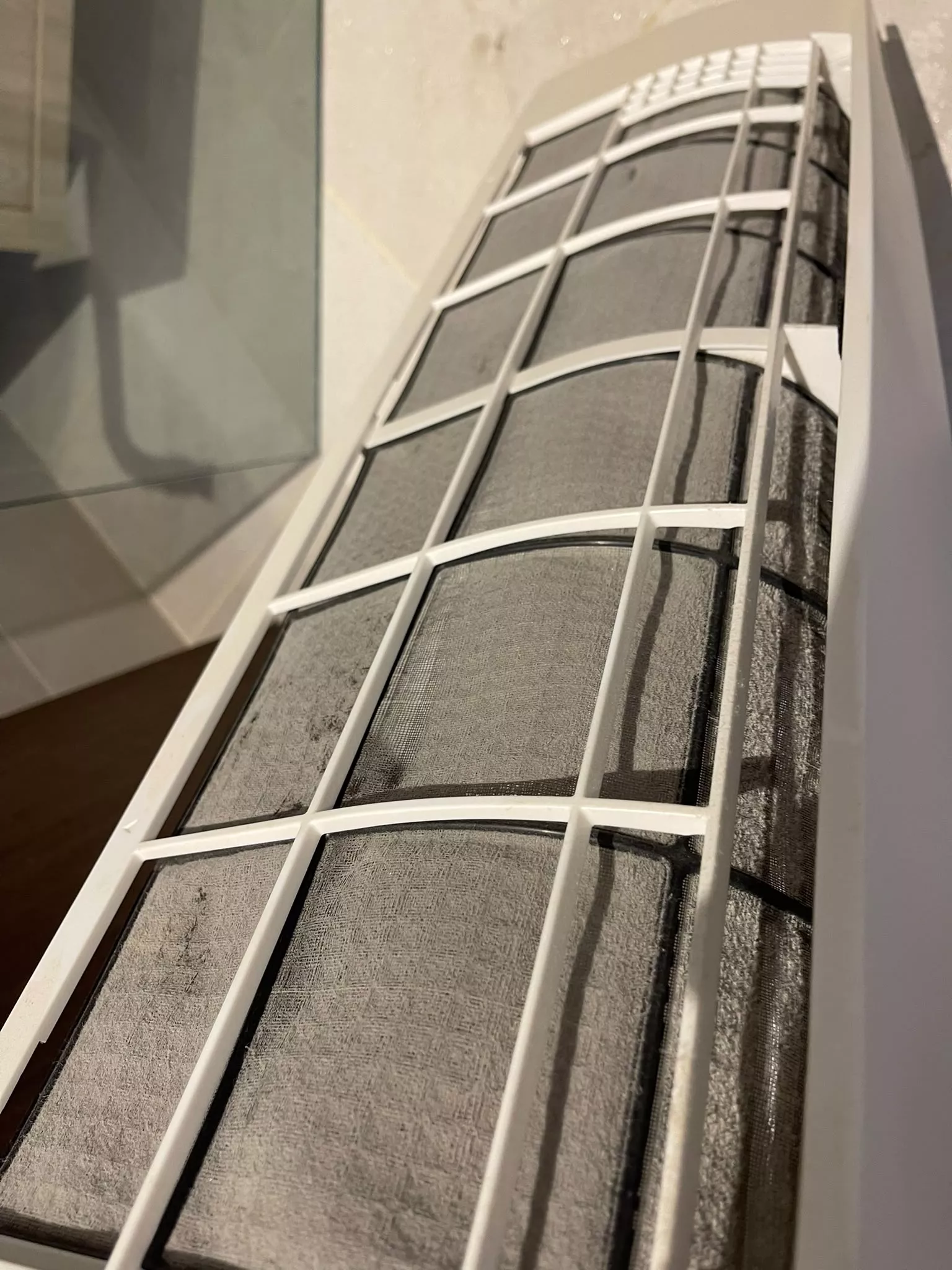
Inverter aircons use 30–50% less electricity than non-inverter models in Singapore's humid climate, saving $15–35/month per unit on typical residential use. The $200–400 higher upfront cost breaks even in 18–30 months. For HDB flats and condos running aircon 6+ hours daily, inverter pays for itself; for occasional use (spare bedrooms, weekend-only), non-inverter remains viable. Both require the same regular servicing schedule—every 3 months for heavy use, 6 months for moderate.
How Inverter and Non-Inverter Compressors Actually Work
The difference is in the compressor motor control. A non-inverter aircon runs on a fixed-speed compressor: it cycles fully on when the room warms above your set temperature, runs at 100% power until the target is reached, then shuts off completely. This on-off cycling happens every few minutes in Singapore's heat and humidity, causing power spikes each time the compressor restarts.
An inverter aircon uses variable-speed technology. After the initial cool-down, the compressor slows to a low-power cruise instead of shutting off. It continuously adjusts speed (20–100% capacity) to maintain temperature without cycling. The result: no restart power surges, lower average power draw, and steadier room temperature.
Why Singapore's Climate Favours Inverter
Singapore's 80%+ year-round humidity and 28–34°C daytime temperatures mean your aircon rarely gets to rest. A non-inverter unit cycling on-off every 8–12 minutes burns electricity at startup and fights constant thermal load. Inverter's ability to modulate power matches our always-warm conditions perfectly, which is why the savings here are higher than temperate climates where aircons run seasonally.
Real-World Electricity Cost Comparison
Numbers based on a typical 9,000 BTU (1.0 HP) bedroom unit running 8 hours daily at $0.35/kWh (SP Group 2025 tariff average for domestic low-tier consumption).
| Aircon Type | Power Draw (Running) | Monthly kWh | Monthly Cost | Annual Cost |
|---|---|---|---|---|
| Non-Inverter (EER ~2.8) | 900–1,100 W | ~240 kWh | $84 | $1,008 |
| Inverter (EER ~4.0–4.5) | 400–700 W (modulating) | ~150 kWh | $53 | $636 |
| Savings | — | ~90 kWh | $31 | $372 |
At 8 hours/day usage, inverter saves roughly $31/month per unit. Scale that across three bedrooms in an HDB 4-room flat and you're looking at $90+/month, or over $1,000 annually. For lighter use (4 hours/day), savings drop to $15–18/month but still compound over the unit's 8–12 year lifespan.
Break-Even Timeline
Inverter units cost $200–400 more than equivalent non-inverter models (same brand, same BTU). Divide that premium by monthly savings:
- Heavy use (8+ hours/day): 6–13 months to break even
- Moderate use (4–6 hours/day): 18–24 months
- Light use (2–3 hours/day, guest rooms): 30–40 months
For most Singapore households running bedroom aircons nightly, inverter pays for itself within the first two years and continues saving for the next decade.
Upfront Cost and Installation Differences
Here's what you'll actually pay in 2025 for popular 9,000 BTU (1.0 HP) models, including standard installation:
| Type | Budget Brands | Mid-Range (Daikin, Mitsubishi) | Premium (Mitsubishi Starmex, Daikin iSmile) |
|---|---|---|---|
| Non-Inverter | $550–750 | $800–1,000 | Rarely sold |
| Inverter | $750–950 | $1,050–1,350 | $1,500–1,900 |
Installation labour is identical—both need the same refrigerant piping, bracket, and electrical work. The price difference is purely the indoor/outdoor unit hardware. HDB installation rules (bracket placement, discharge clearance, condenser noise limits) apply equally to both types.
Servicing and Maintenance Costs
Good news: servicing frequency and cost are the same for inverter and non-inverter. Both need general servicing every 3–6 months depending on usage (dust, filter clogging, and drainage issues don't care about compressor type). At aircons.sg, standard servicing starts at $45 for 1 unit and includes the 9-point pre-check with every booking—covering filter cleaning, drainage check, blower inspection, and refrigerant pressure test.
Inverter units do have more complex circuit boards, so if the PCB (printed circuit board) fails outside warranty, replacement costs $150–280 versus $80–150 for non-inverter boards. However, this is rare—most quality inverter units (Daikin, Mitsubishi, Midea) run 8+ years without board issues if serviced regularly. Compressor lifespan is comparable or slightly longer for inverter because it avoids the mechanical stress of constant start-stop cycling.
When Non-Inverter Still Makes Sense
Inverter isn't always the rational choice. Consider non-inverter if:
- Occasional use only: Guest bedrooms, study rooms used 2–4 hours/week. At that usage rate, you'll take 5+ years to recoup the inverter premium, and by then you may be replacing the unit anyway.
- Rental properties with tenant turnover: If tenants pay their own electricity and you're footing the aircon purchase, you bear the upfront cost but don't capture the savings. Non-inverter keeps your capital outlay lower.
- Budget constraints: If $600 total is your ceiling for a bedroom unit and financing isn't an option, a reliable non-inverter from Midea or Daikin will serve you fine with proper servicing.
- Secondary cooling zones: Storerooms, small home offices where you'd rather spend the $300 saved on a second unit for another room.
Non-inverter technology is mature and reliable. You're not buying inferior equipment—you're choosing a tool matched to light-duty use.
Brand Reliability and Warranty Considerations
Inverter models from Daikin, Mitsubishi Heavy Industries, and Mitsubishi Electric have proven track records in Singapore, with compressor warranties typically 5 years and parts 1–3 years. These brands' inverter boards are well-engineered for our voltage stability and humidity.
Midea, Haier, and Gree offer competitively priced inverter units ($750–950 installed) with comparable energy ratings. Warranty is shorter (1–2 years parts, 3–5 years compressor), and anecdotal technician feedback suggests slightly higher PCB service rates after year 4–5, but for price-conscious buyers they deliver solid value.
For non-inverter, Daikin and Mitsubishi remain the gold standard—you'll find 10+ year-old non-inverter Daikin units still running in older HDB flats. Budget non-inverter units (Midea, EuropAce) are functional but expect noisier compressors and shorter lifespan (6–8 years vs. 10–12).
R32 Refrigerant and Inverter Compatibility
Nearly all new inverter models in Singapore use R32 refrigerant, which has lower global warming potential than older R410A and is mandated by BCA for new installations where possible. R32 works at higher pressures, so top-ups and leak repairs require proper gauges—mention your refrigerant type when booking servicing. Non-inverter units are split between R410A (older stock) and R32 (new models). Both inverter and non-inverter R32 units perform well in our climate; the environmental benefit is identical regardless of compressor type.
Installation and HDB/Condo Rules
Both inverter and non-inverter installations must comply with HDB's guidelines: outdoor condenser units require an L-bracket or ledge mount, must not obstruct common areas, and discharge must not drip onto lower floors. For condos, MCST approval is sometimes required if you're replacing an existing outdoor unit position or adding a new one—check your condo's house rules.
Inverter units are slightly quieter during sustained operation (compressor hum at low speed is 22–30 dB vs. 35–42 dB for non-inverter full-speed cycling), which matters if your condenser sits near a bedroom window or neighbour's wall. HDB noise complaints are rare for either type, but if you live in a tightly packed block, inverter's lower acoustic signature is a minor bonus.
Electrical load is similar—both draw peak current on startup (inverter's is slightly lower), so existing 15A or 20A circuits handle either type fine. No special wiring needed.
Common Mistakes When Choosing Between Inverter and Non-Inverter
- Overbuying capacity hoping to save electricity: A 12,000 BTU inverter in a small bedroom will short-cycle just like a non-inverter and waste the efficiency advantage. Size to room load (9,000 BTU for 100–120 sq ft, 12,000 for 150–180 sq ft).
- Ignoring usage patterns: Don't buy inverter for a spare bedroom you cool twice a month. The math doesn't work.
- Assuming inverter never needs servicing: Dust clogs filters and drainage regardless of compressor type. Skipping servicing kills efficiency gains and leads to compressor strain.
- Buying the cheapest inverter available: A $600 no-name inverter with a 1-year warranty is higher risk than a $700 Midea or $850 Daikin non-inverter. Brand matters for longevity.
- Forgetting to factor in electricity tariff trends: SP Group tariffs fluctuate. At $0.40+/kWh (peak rates in 2023–24), inverter savings jump to $40+/month. At $0.25/kWh (if we see that again), savings drop to $20/month. The case for inverter strengthens when power is expensive.
Frequently Asked Questions
Does inverter aircon really save 50% electricity?
In ideal conditions—steady use, properly sized unit, regular servicing—yes, inverter can cut consumption by 40–50% versus non-inverter. Real-world Singapore households see 30–40% savings on average because of variables like door opening, sunlight load, and thermostat setting. Even at the conservative end, that's $15–25/month per unit, which compounds significantly over years.
Can I convert my non-inverter aircon to inverter?
No. Inverter technology is built into the compressor motor and control board—it's not a retrofit add-on. If you want inverter efficiency, you need to replace the entire indoor and outdoor unit. The good news: installation brackets and piping routes can often be reused, saving some labour cost on replacement.
Do inverter aircons require special servicing?
No. Standard servicing (filter wash, drainage clear, coil cleaning, refrigerant pressure check) is identical. Technicians need to understand the PCB for diagnostics, but routine maintenance tasks don't change. At aircons.sg, our 9-point pre-check included with every service booking covers both inverter and non-inverter units with the same thoroughness.
Which is more durable, inverter or non-inverter?
Lifespan is comparable—both last 8–12 years with proper servicing. Non-inverter compressors endure more start-stop mechanical stress; inverter boards can fail if exposed to power surges (use a surge protector). Quality matters more than type: a Daikin non-inverter will outlast a cheap inverter from an unknown brand. For either type, regular servicing every 3–6 months is the single biggest factor in longevity.
Is inverter aircon quieter?
Yes, noticeably. Once an inverter unit reaches set temperature, the compressor hums at low speed (22–28 dB), quieter than a whisper. Non-inverter cycles between silent (off) and 35–42 dB (full blast), which some people find more disruptive. Indoor fan noise is the same for both. If bedroom noise matters, inverter has the edge.
Get Transparent Advice and Reliable Servicing
Whether you run inverter or non-inverter, both need consistent servicing to maintain efficiency and prevent breakdowns. At aircons.sg, every booking includes a 9-point pre-check with your service appointment (minimum $45 for 1 unit, covering the visit, inspection, and standard servicing). If we find issues—low refrigerant, choked blower, worn fan bearings—we'll quote the fix transparently on the spot, and the $45 minimum counts toward the total. Quoted prices are final. We're WhatsApp-first, same-day service available, and we warranty our workmanship for 90 days. Message us at +65 9107 2601 to book or ask questions—real techs, straight answers, no runaround.