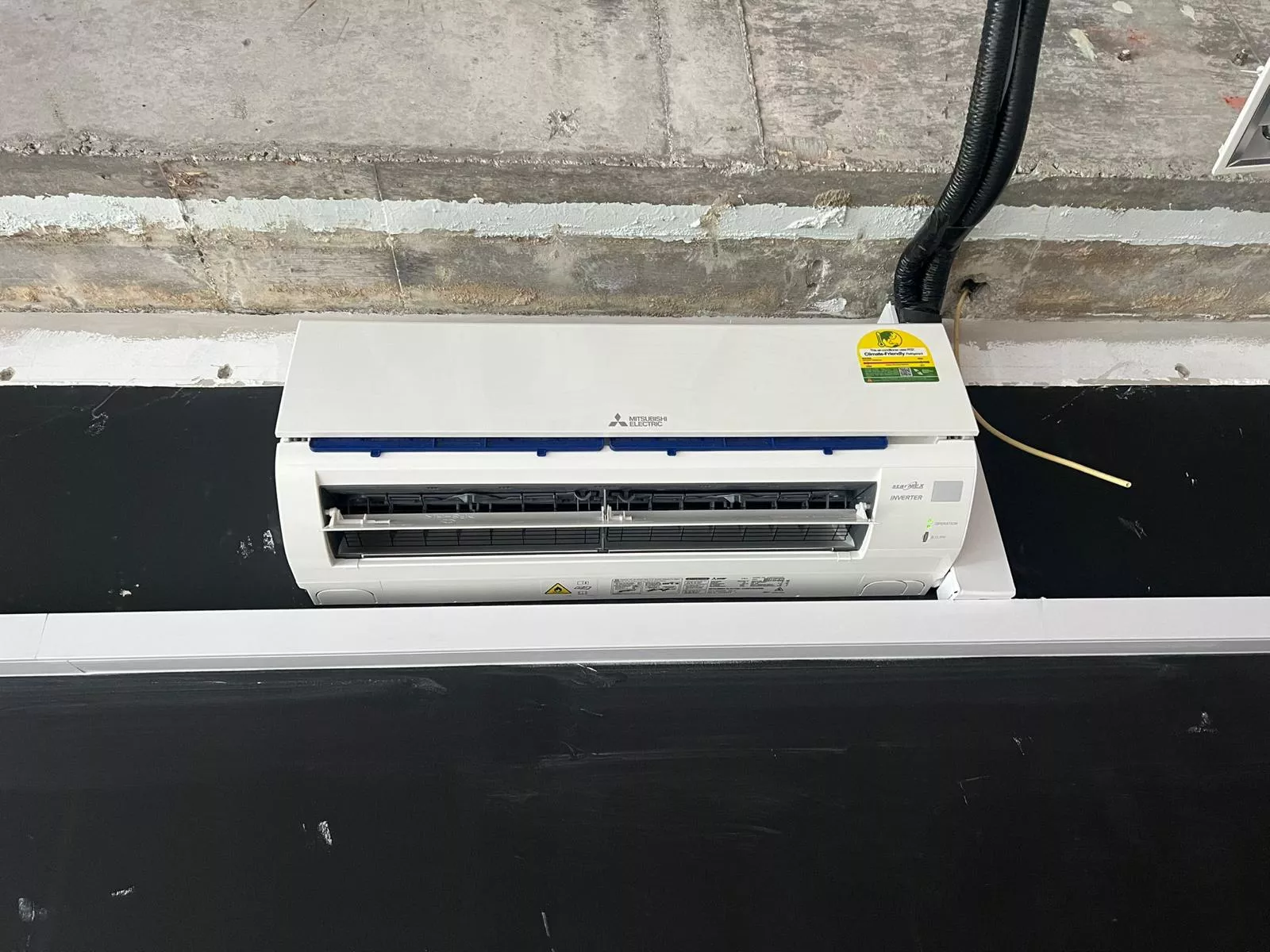
A chemical wash is necessary when your aircon shows persistent issues that general servicing can't fix: weak airflow despite clean filters, musty or mouldy smell within minutes of switching on, frequent water leaks from the indoor unit, ice forming on copper pipes, or the compressor cutting out repeatedly. In Singapore's humidity, these usually point to clogged evaporator coils, mould colonies deep in the drainage system, or blocked blower fan blades. Chemical wash costs $80–$150 per unit and involves dismantling the fan coil, soaking components in alkaline cleaner, and flushing the drain tray—taking 60–90 minutes per unit versus 20 minutes for general servicing.
What General Servicing Covers (and What It Doesn't)
General aircon servicing—what most people book every three months—handles surface-level maintenance. The technician removes and rinses the filter, wipes down the blower wheel exterior, clears the drain pipe with a pump or manual flush, checks refrigerant pressure, inspects electrical connections, and wipes the external casing. This takes 15–25 minutes per unit and costs $45 minimum for one unit, $25–$35 per additional unit when servicing multiple units in one visit.
General servicing works well for aircons that run normally—cool air, no smell, no leaks. It removes dust and lint before they harden into blockages. But it doesn't dismantle components, doesn't use chemical agents, and can't reach the spaces between evaporator coil fins or the hidden surfaces of the blower fan. Once grime hardens or mould takes hold, water rinsing alone won't shift it.
The Four Zones General Servicing Can't Deep-Clean
- Evaporator coil fins: Aluminium fins spaced 1–2 mm apart collect dust, cooking oil vapour (common in Singapore HDB kitchens), and cigarette tar. When the layer exceeds ~0.5 mm, airflow drops by 30–50%.
- Blower fan interior: The concave side of each blade traps a sticky mix of dust and condensation. A 1 mm coating adds enough weight to unbalance the motor, causing rattling and reducing lifespan.
- Drain tray underside and edges: Mould grows in the perpetually damp corners. General servicing only wipes the visible top surface.
- Drain pipe bends: Algae and biofilm form in the first elbow and at the outdoor discharge point. A quick flush might clear loose debris but won't dissolve the slime layer.
Seven Clear Signs You Need a Chemical Wash Now
1. Weak or Uneven Airflow (Even After Filter Cleaning)
When you stand directly under the aircon, the air barely moves your hair. One louver blows strongly, the next barely whispers. You've cleaned the filter yourself or just had servicing done, yet nothing changes. This means the evaporator coil is clogged—refrigerant is still flowing and cooling the coil, but air can't pass through the fins to pick up the cold. Chemical wash dissolves the compacted dust-and-oil layer, restoring full airflow. Expect to feel 60–80% improvement immediately after the wash.
2. Musty, Mouldy, or Sour Smell Within 30 Seconds of Switching On
The smell hits before the room even cools. It's not 'stale air' from being off overnight—it's active mould colonies living on the blower fan, drain tray, and coil surfaces. In Singapore's 80–90% humidity, mould spores colonise damp aircon components within 48 hours if organic matter (dust, skin cells, pollen) is present. General servicing wipes visible surfaces but doesn't kill embedded colonies. Chemical wash uses alkaline or acidic agents (pH 11–12 or pH 2–3) that destroy mould cell walls and flush out spores.
3. Water Leaking from the Indoor Unit (Repeatedly)
You've called for servicing twice in two months. The technician clears the drain pipe each time, the leak stops for a week, then returns. This cycle means the drain tray itself is coated in sludge, or the pipe has a biofilm layer that re-blocks within days. Chemical wash involves removing the drain tray, soaking it, scrubbing the outlet hole, and flushing the entire pipe length with chemical solution followed by high-pressure water. A proper chemical wash should stop recurrent leaks for 6–12 months, depending on usage intensity.
4. Ice Forming on Copper Pipes or Around the Indoor Unit Vents
Ice on the larger copper pipe (suction line) or around the louvers indicates the evaporator coil isn't absorbing heat efficiently. Two common causes: critically low refrigerant (which requires a gas top-up, $80–$180 depending on refrigerant type and amount), or a coil so blocked that refrigerant stays too cold because air isn't flowing over it to pick up heat. If refrigerant pressure checks out normal (R410A: ~120–130 psi suction side, ~300–330 psi discharge side), the coil is the problem. Chemical wash removes the insulating dirt layer so refrigerant can do its job.
5. The Compressor Cuts Out Every 10–15 Minutes (Short-Cycling)
The outdoor unit runs briefly, stops, starts again, stops again—never settling into a steady hum. Short-cycling happens when the system can't maintain proper pressure balance. A blocked evaporator coil causes suction pressure to drop too low, triggering the low-pressure cutoff switch. The compressor shuts down to protect itself, pressure equalises, the thermostat calls for cooling again, and the cycle repeats. This wears out the compressor relay and adds $15–$25/month to your electricity bill from constant start-up surges. Chemical wash usually fixes it if refrigerant level is correct.
6. Aircon Runs But Room Takes 45+ Minutes to Cool (Used to Take 15–20 Minutes)
You remember when the bedroom cooled in under 20 minutes. Now you run the aircon for an hour and it's still warm. Thermostat is set the same (22–24°C), fan speed unchanged. The aircon isn't broken—it's just moving a fraction of the air volume it should. A chemical wash typically restores 70–85% of original cooling speed. If it doesn't, you're likely looking at refrigerant loss or a failing compressor (both require additional diagnostics included in the 9-point pre-check that comes with every aircons.sg service booking).
7. Visible Mould, Rust Stains, or Black Dust Around the Louvers
Black or dark-brown spots on the white plastic louvers, rust streaks below the unit, or fine black dust settling on the wall beneath the aircon. The black dust is often mould spores mixed with carbon particles (if someone smokes indoors) or outdoor pollution that the aircon has pulled in and colonised. Rust stains mean the drain tray is corroding or overflow has been trickling down inside the wall cavity. Both need a chemical wash and a check of the drain tray material—older aircons (10+ years) sometimes need tray replacement ($40–$80 for the part plus labour).
Chemical Wash vs. Chemical Overhaul: What's the Difference?
| Aspect | Chemical Wash | Chemical Overhaul |
|---|---|---|
| Scope | Indoor fan coil unit only (evaporator coil, blower, drain tray, filters) | Indoor unit + outdoor condenser unit (condenser coil, compressor exterior, fan blades) |
| Dismantling | Blower wheel and drain tray removed, coil washed in-place | Full teardown of indoor unit; outdoor coil removed and soaked if accessible |
| Duration | 60–90 minutes per unit | 2.5–4 hours per system |
| Typical Cost (per unit) | $80–$150 | $180–$280 |
| When Needed | Musty smell, weak airflow, minor leaks, 12–18 months since last chemical service | Aircon >5 years old, never chemically serviced, major airflow loss, compressor overheating, pre-sale deep clean |
| Effectiveness for Mould | Removes 85–95% of indoor mould colonies | Removes 95–99%; also cleans outdoor coil that can harbour algae |
For most HDB and condo units experiencing the seven signs above, a chemical wash is sufficient and cost-effective. Chemical overhaul makes sense for aircons that haven't had any chemical service in five-plus years, or when the outdoor condenser coil is visibly caked (common in ground-floor units near roads, or seaside condos where salt spray coats the fins).
How Chemical Wash Is Done (What Actually Happens During the 60–90 Minutes)
Transparency matters. Here's the step-by-step process aircons.sg technicians follow for a standard chemical wash:
- Preparation (5 min): Lay protective sheeting on the floor and wall below the unit. Switch off the aircon at the circuit breaker—never just the remote. Disconnect the drain pipe.
- Dismantling (10–15 min): Remove the front cover, filter, and blower wheel. Unclip the drain tray (some models require unscrewing 2–4 bolts). Evaporator coil remains mounted but fully exposed.
- Chemical application (10 min): Spray alkaline coil cleaner (pH 11–12) onto the evaporator fins, coating both sides. Spray the blower wheel and drain tray submerged in a basin of the same solution. Let it sit for 8–12 minutes—the chemical breaks down oil, dissolves calcium deposits, and kills mould.
- Pressure rinsing (15–20 min): Use a handheld pressure sprayer (not a garden hose—controlled pressure prevents fin damage) to flush the coil from the clean side outward. Rinse the blower wheel and tray until water runs clear. Flush the drain pipe with chemical solution, then water.
- Reassembly and test (10–15 min): Reinstall the blower, tray, and cover. Reconnect the drain pipe. Switch on at the breaker, set the aircon to 18°C fan speed high, and let it run for 5 minutes. Check for leaks, listen for unusual noise, measure air temperature at the louver (should read 10–14°C if ambient is ~28°C).
- Cleanup (5 min): Wipe down the casing, remove sheeting, dispose of dirty water (not down a sink—it's alkaline and contains biofilm; responsible contractors bag it or dilute heavily before disposal per NEA guidelines).
Total time: 60–90 minutes for a single-fan-coil system aircon unit. If you're doing three bedrooms in one session, expect 2.5–3.5 hours as the technician works unit by unit.
Cost Breakdown and What Affects Pricing
Chemical wash pricing in Singapore typically ranges $80–$150 per indoor unit. Here's what moves the number within that range:
- System type: Standard wall-mounted (single fan coil) is $80–$100. Ceiling cassette or ceiling concealed units are $120–$150 because dismantling requires ladder work and the coil is larger.
- Brand and model complexity: Mitsubishi, Daikin, and Panasonic fan coils with tool-free clips are faster to dismantle. Older Carrier or York models with recessed screws add 10–15 minutes, sometimes reflected in a $10–$20 surcharge.
- High-floor or difficult access: Condo units above the 15th floor where the outdoor condenser sits on a narrow ledge may incur a $20–$40 access surcharge if outdoor work is part of the scope (e.g., chemical overhaul). For indoor-only chemical wash, floor height rarely affects cost.
- Bundling multiple units: First unit $100, second $80, third onward $70—volume discount is standard because the technician is already on-site with chemicals and equipment.
Quoted prices are final. The price quoted over WhatsApp at +65 9107 2601 is the final price. If the 9-point pre-check (included with every service booking, $45 minimum for 1 unit) reveals you need a chemical wash and you proceed, the $45 forms part of the total—so if chemical wash is quoted at $100, you pay $100 total, not $145.
How Often Should You Chemical Wash Your Aircon?
Frequency depends on usage intensity, indoor environment, and how diligently you keep up general servicing. Here's a practical reference table:
| Usage Pattern | General Servicing Interval | Chemical Wash Interval |
|---|---|---|
| Bedroom, used 6–8 hours nightly, no smoking, windows usually closed | Every 3 months | Every 12–18 months |
| Living room, used 4–6 hours daily, windows open frequently (facing main road), cooking nearby | Every 2–3 months | Every 9–12 months |
| Office or shop, 10–12 hours daily, high foot traffic | Every 6–8 weeks | Every 6–9 months |
| Aircon in kitchen or near kitchen (HDB open-plan layout), used daily | Every 2 months | Every 6–8 months |
| Rarely used (guest room, <10 hours/month) | Every 4–6 months | Every 24 months or when smell/airflow issue appears |
If you skip general servicing for six months and then encounter weak airflow or smell, don't assume you need chemical wash immediately—often a overdue general service plus a drain-pipe flush ($45 for 1 unit) will resolve it. The 9-point pre-check included with every aircons.sg service booking identifies whether chemical wash is genuinely needed or if standard servicing will suffice. Technicians measure airflow, check coil condition with a torch, and test drain flow—honest diagnosis, not upselling.
Frequently Asked Questions
Can I use DIY coil cleaner spray from the hardware store instead of paying for chemical wash?
DIY sprays (typically $8–$15 a can) are foaming surfactants that loosen surface dust. They work for light maintenance between professional services but can't replace a full chemical wash. You can't remove the blower wheel or drain tray yourself without risking damage to clips and seals, and DIY sprays lack the pH strength (usually pH 7–9, versus professional pH 11–12) to dissolve hardened oil or kill mould roots. Use DIY spray monthly if you want, but still book chemical wash every 12–18 months.
Will chemical wash fix my aircon if it's blowing warm air?
Warm air has three common causes: blocked evaporator coil (chemical wash fixes this), low refrigerant (needs gas top-up, $80–$180), or faulty compressor (needs repair or replacement, $350–$850). The 9-point pre-check identifies which one. If the technician measures low suction pressure and the coil is clean, it's refrigerant. If pressure is normal but airflow is weak and the coil is caked, it's chemical wash. Both issues can coexist—if so, do chemical wash first, then top up gas, because topping up gas on a blocked coil wastes refrigerant.
How long does the chemical wash effect last?
In typical bedroom use (6–8 hours nightly, windows closed, regular 3-month servicing maintained), a chemical wash keeps the aircon performing well for 12–18 months. Kitchens, smoking environments, or near-road units facing heavy traffic will see degradation in 6–9 months. The wash itself is permanent—it's new dirt accumulation that eventually requires repeating the process. Keeping up quarterly general servicing extends the interval because surface dust never gets a chance to harden into the stubborn layer that requires chemicals.
Is chemical wash safe for old aircons (10–15 years)?
Yes, but older units need a gentler approach. Aluminium evaporator fins on 1990s and early-2000s models are thinner (0.1 mm versus 0.15 mm on newer units) and more prone to corrosion if chemical sits too long. Experienced techs reduce dwell time to 6–8 minutes and use moderate-pH cleaners (pH 10 instead of 12) for aircons over 12 years old. The bigger risk with old units is brittle plastic clips and seals—sometimes dismantling the blower reveals cracks that need part replacement. aircons.sg technicians check clip condition during the pre-check and advise before proceeding if there's risk.
Do I need to be home during the chemical wash?
Yes. The technician needs access to the circuit breaker (to safely power off the aircon), running water (to mix and rinse chemicals), and sometimes a sink or bathroom to dispose of dirty water. You don't need to supervise every minute, but someone must be present to unlock doors and answer questions if an unexpected issue appears (e.g., a cracked drain tray that needs immediate replacement). Total duration is 60–90 minutes per unit, so plan to be home for a 2-hour window if doing one bedroom aircon.
When to Book Chemical Wash and What to Expect
If you recognise two or more of the seven signs covered earlier—weak airflow, mould smell, recurring leaks, ice formation, short-cycling, slow cooling, or visible mould—chemical wash is the next step. Don't wait until the aircon stops working entirely; a compressor running under strain (due to blocked coil) can fail within weeks, turning a $100 chemical wash into a $600–$900 compressor replacement.
aircons.sg offers same-day chemical wash for most requests made before noon (subject to technician availability). The process is straightforward: WhatsApp +65 9107 2601, describe the symptoms, and receive a transparent quote. Every chemical wash includes the 9-point pre-check—refrigerant pressure test, electrical connection inspection, thermostat calibration check, and airflow measurement—so if another issue is present (low gas, faulty capacitor, worn fan bearing), you'll know before committing to additional work. Prices quoted over WhatsApp are final; quoted prices are final. All chemical wash work is covered by a 90-day workmanship warranty: if the same issue recurs within 90 days and it's due to incomplete cleaning or reassembly error, the return visit and correction are free.
Book your chemical wash today via WhatsApp at +65 9107 2601. Technicians carry chemicals, pressure sprayers, and common spare parts (drain trays, clips, seals) in the van, so most jobs complete in one visit. Transparent pricing, no hidden fees, no upselling—just honest work from people who've been servicing aircons in Singapore HDB flats, condos, and landed homes for years.
Related: Aircon servicing in a rental: who pays? — what the tenancy clause usually says, and what to do at move-in and handover.
Also worth reading: what your aircon technician should show you before they leave — the four things to look at while the panel is still off.
Related: Washing your aircon filters yourself — the four signs the filters are no longer the problem.