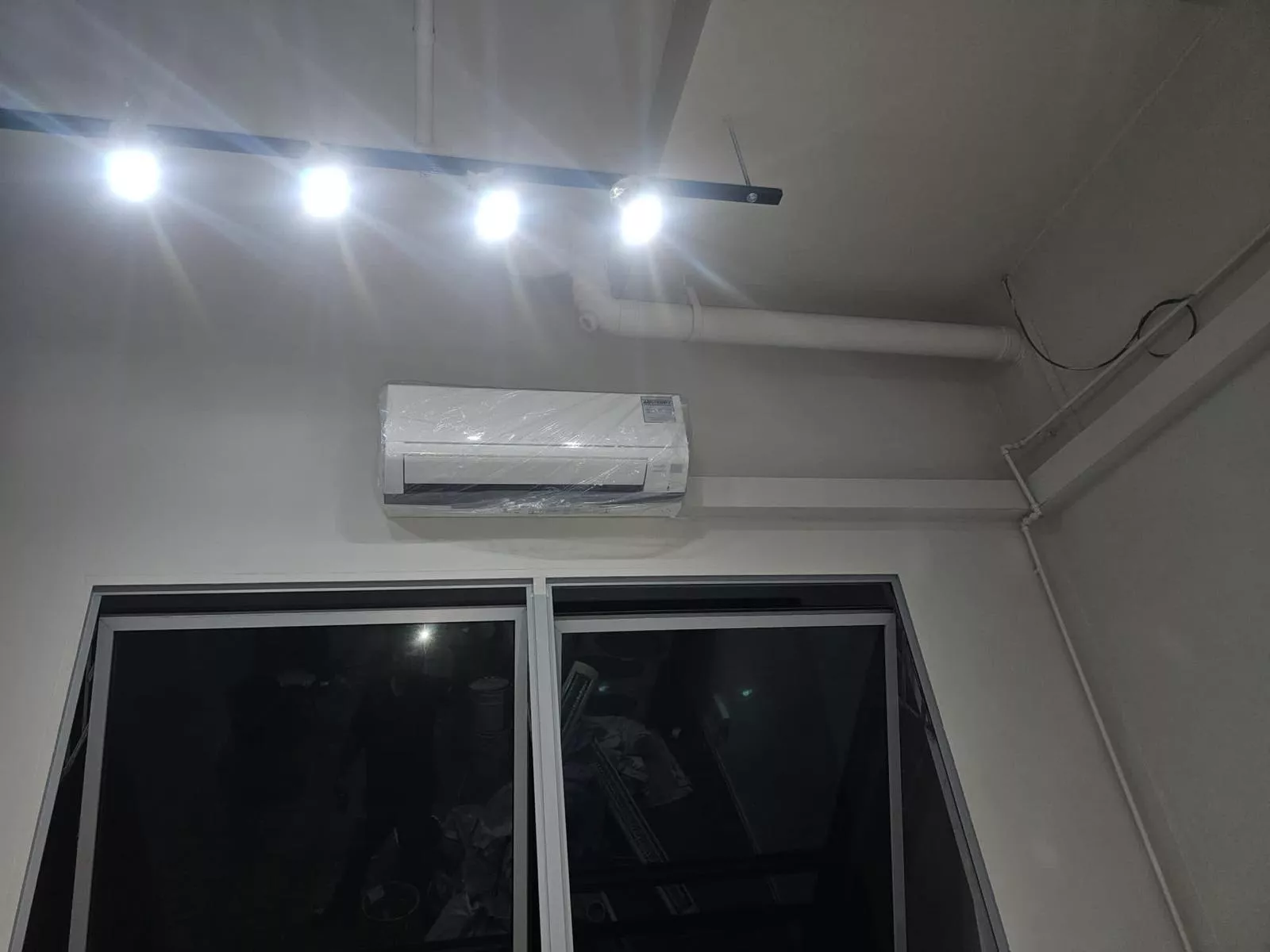
For Singapore offices under 500 sq ft with 1–3 rooms, individual split systems ($800–$1,200 per unit installed) are cheaper upfront and easier to maintain. For spaces above 800 sq ft, multi-room layouts, or 24/7 operations, VRV (Variable Refrigerant Volume) systems ($8,000–$15,000 installed for 4–6 indoor units) pay back within 3–5 years through 30–40% lower energy bills, centralised control, and quieter operation. The decision hinges on floor area, occupancy density, whether you own or lease, and your electricity budget.
What VRV and Split Systems Actually Are
VRV (Variable Refrigerant Volume) Systems
A VRV system uses one outdoor condenser to supply refrigerant to multiple indoor cassettes (ceiling, wall, or floor-mounted) via a branched copper network. The outdoor unit modulates compressor speed and refrigerant flow dynamically, sending only the cooling capacity each zone needs. Brands call it VRV (Daikin trademark), VRF (Variable Refrigerant Flow, generic term), or Multi V (LG). In Singapore, typical office installations run 4–10 indoor units off a single 8–12 HP outdoor condenser.
Split Aircon Systems
Each split unit pairs one indoor fan coil with one outdoor compressor via dedicated copper piping. To cool five rooms, you install five separate outdoor units (or use multi-split configurations, which share one outdoor unit among 2–4 indoors but lose most VRV advantages). Splits are the default choice for HDB flats, small clinics, and single-room offices because they are modular, cheap to install, and easy to replace unit-by-unit.
Upfront Cost Comparison
| System Type | Configuration | Installed Cost (SGD) | Cost per Room Cooled |
|---|---|---|---|
| Standard split (single unit) | 1 outdoor + 1 indoor, 9,000–12,000 BTU | $800–$1,200 | $800–$1,200 |
| Multi-split (2–4 indoors) | 1 outdoor + 2–4 indoors | $2,500–$4,500 | $625–$1,125 |
| VRV (4 indoor units) | 1 outdoor (6–8 HP) + 4 cassettes/wall-mounted | $8,000–$12,000 | $2,000–$3,000 |
| VRV (8 indoor units) | 1 outdoor (10–12 HP) + 8 cassettes | $15,000–$22,000 | $1,875–$2,750 |
VRV per-room cost drops as you add zones. For four rooms, splits cost $3,200–$4,800 total; VRV costs $8,000–$12,000. The break-even is in operating cost and space constraints, not installation price.
Installation Complexity and Timeline
Split systems: 1–2 days for up to four units. Each outdoor box needs ledge or bracket space; in older HDB or shophouse offices, ledge congestion is common. Splits require individual condensate drains and power points.
VRV systems: 3–5 days for design, pipe runs, ceiling void work, and commissioning. One outdoor unit (typically roof-mounted or rear-of-building platform) simplifies façade but demands MCST or landlord approval for commercial buildings. Refrigerant pipe runs can extend 50–100 metres with height differentials up to 30 metres, ideal for split-level offices or multi-storey shophouses.
Operating Cost and Energy Efficiency
Why VRV Cuts Electricity Bills by 30–40%
- Inverter compressor modulation: VRV outdoor units ramp down to 10–20% capacity when only one or two zones call for cooling. Four split systems running half-loaded still burn near-full compressor power each.
- Heat recovery (optional): Some VRV models redirect waste heat from cooled zones to warm perimeter offices or server rooms in mixed-use layouts, cutting reheat energy to near zero.
- Zoned control: Unoccupied meeting rooms, storerooms, or after-hours zones shut off individually. With splits, occupants forget; with VRV and a central controller or BMS integration, scheduling is automatic.
Real-World Energy Comparison (500 sq ft Office, 9am–6pm Weekdays)
| System | Monthly kWh | Monthly Cost (@ $0.35/kWh) | Annual Cost |
|---|---|---|---|
| 4 × non-inverter splits (9,000 BTU each) | 950–1,100 | $333–$385 | $3,996–$4,620 |
| 4 × inverter splits (9,000 BTU each) | 720–850 | $252–$298 | $3,024–$3,576 |
| VRV (6 HP outdoor, 4 indoors, zoned usage) | 480–600 | $168–$210 | $2,016–$2,520 |
Annual saving with VRV over inverter splits: $500–$1,050. Over five years, that is $2,500–$5,250—enough to offset 30–65% of the VRV premium. For 24/7 operations (clinics, co-working spaces, server rooms), payback shortens to 2–3 years.
When Split Systems Make More Sense
Small or Modular Offices
If your office is one or two rooms under 400 sq ft total, the capital cost gap ($800–$2,400 for splits vs $8,000 minimum for VRV) never pays back. Splits also let you buy one unit now, add another next quarter—VRV requires full upfront design and installation.
Leased Premises with Short Tenure
Tenants on 1–2 year leases cannot amortise VRV cost. Landlords rarely reimburse tenant improvements in Singapore shophouse or industrial unit leases. Splits are easier to remove and reinstall elsewhere, though you lose the refrigerant charge and risk copper-pipe damage.
Mixed Ownership or Strata-Title Subdivisions
If your office suite shares a building with other tenants who manage their own aircon, a shared VRV outdoor unit creates maintenance and cost-sharing disputes. Each tenant installing their own splits keeps billing and servicing independent.
Budget Constraints and Staged Growth
Startups, freelancers, and home-based businesses often start with one room and expand. Spending $10,000 on VRV for future-proofing is risky if revenue is unproven. Two splits today, two more in 18 months, is lower financial risk.
When VRV Systems Make More Sense
Four or More Rooms, Especially Open-Plan + Private Offices
VRV shines in layouts mixing open-plan hot-desking (high occupancy, high load, 9am–6pm) with meeting rooms (intermittent load) and manager offices (all-day moderate load). Zoned control prevents over-cooling empty rooms and under-cooling packed zones.
Limited Outdoor Condenser Space
Older commercial buildings, conservation shophouses, and high-floor offices in tight estates have scarce ledge or roof space. One VRV outdoor unit replaces six to eight split condensers, freeing façade real estate and reducing visual clutter. MCST and URA conservation approvals are easier with fewer outdoor boxes.
Noise-Sensitive Environments
Law firms, psychiatry clinics, recording studios, and co-working quiet zones benefit from VRV indoor units running at 22–28 dB(A) (library-quiet). Split systems, even inverter models, cycle compressors on-off, causing 35–42 dB(A) peaks. VRV's continuous modulation is near-silent.
Long Operating Hours or 24/7 Use
Clinics, gyms, co-working spaces, and IT server rooms running aircon 12–24 hours daily pay for VRV within two to three years purely on electricity savings. Heat-recovery VRV models can simultaneously cool server racks and warm treatment rooms in medical suites, doubling efficiency gains.
Integration with Building Management Systems (BMS)
VRV systems speak Modbus, BACnet, or proprietary protocols, enabling centralised scheduling, temperature logging, and fault alerts. Facilities managers in multi-tenanted buildings or chains (F&B, retail) prefer one dashboard over hunting down eight split-system remotes.
Maintenance and Servicing Costs
Routine Servicing Frequency and Cost
| System Type | Recommended Frequency | Cost per Service Visit (SGD) | Annual Cost (4 Units / Zones) |
|---|---|---|---|
| Split system (per unit) | Every 3 months | $45–$60 | $720–$960 (4 units × 4 visits) |
| VRV system (4 indoor units) | Every 3–4 months | $180–$280 per visit (all indoors + outdoor) | $720–$1,120 (4 visits) |
Per-visit cost is higher for VRV, but economy of scale keeps annual spend similar. VRV filters are often tool-free slide-out cassettes; splits need ladder access and cover removal. Downtime is shorter with VRV because the technician services all zones in one visit.
Chemical Overhaul and Gas Top-Up
VRV systems use larger refrigerant charges (8–15 kg R410A typical) and longer pipe runs, so gas top-ups ($120–$180 per kg) cost $960–$2,700 when needed. Splits hold 0.6–1.2 kg, so top-ups run $72–$216 per unit. Leak detection is harder in VRV due to concealed pipes; aircons.sg includes a 9-point pre-check with every service booking (minimum $45 for 1 unit) covering pressure test, thermistor calibration, and drain-line inspection to catch leaks early.
Chemical overhauls for VRV indoor cassettes cost $120–$180 each (similar to splits), but the outdoor unit chemical wash is $350–$500 due to coil size and refrigerant recovery. Budget $800–$1,200 every 18–24 months for a full VRV chemical service; $480–$720 for four splits on the same cycle.
Regulatory and Installation Considerations in Singapore
HDB Regulations
HDB does not permit commercial activity in residential flats, so VRV installations in HDB are rare and technically for 'home office' use only. If you run a registered business from an HDB flat, stick to splits to avoid HDB queries during inspections.
MCST Approval (Condos and Commercial Strata)
Condo and commercial building MCSTs regulate façade changes. VRV outdoor units on common rooftops or rear walls need MCST written approval, structural-load sign-off, and sometimes façade-colour matching. Splits on individual ledges usually fall under existing by-laws, but bracket reinforcement for heavier inverter models may still need approval.
Refrigerant Standards and Future-Proofing
Singapore follows the Montreal Protocol phase-down. R22 is banned for new installations; R410A is current standard; R32 is gaining share due to lower global-warming potential (GWP 675 vs 2,088 for R410A). VRV systems, being long-term investments, should specify R32 outdoor units now to avoid retrofit costs when R410A is restricted in future. Split systems are easier to swap out unit-by-unit as refrigerants evolve.
Electrical Load and Building Capacity
Four 9,000-BTU splits draw 4 × 1.2 kW = 4.8 kW peak. A 6-HP VRV outdoor unit draws 5–6 kW peak but averages 2–3 kW under part-load. Older shophouse and industrial units with 30–40 A single-phase supply may need TNB or SP Group upgrade for VRV; splits can run off existing circuits if staggered.
Common Mistakes When Choosing Between VRV and Splits
Undersizing VRV to 'Save Money'
Installing a 4-HP VRV outdoor for six indoor zones to cut cost leaves the system running at 90–100% capacity continuously, killing efficiency gains and shortening compressor life to 5–7 years instead of 10–12. Proper sizing targets 60–70% average load; pay for the 6-HP unit.
Ignoring Pipe-Run Limitations
VRV specs allow 50–100 m equivalent pipe length and 15–30 m height difference, but every elbow, tee, and vertical rise adds resistance. DIY layouts drawn without refrigerant-flow calculations fail commissioning. Use contractors experienced in VRV—aircons.sg works with Daikin, Mitsubishi Electric, and LG VRV systems and calculates pipe equivalent length during site survey.
Buying Multi-Split as a 'Cheap VRV'
Multi-split systems (one outdoor, 2–4 indoors) share one compressor with fixed-ratio refrigerant distribution. If one indoor calls for cooling, the outdoor runs near-full power, wasting energy. You lose VRV's modulation and zoning benefits while paying 70–80% of VRV cost. Multi-splits make sense only when façade space is constrained and energy cost is irrelevant (rare in Singapore).
Forgetting About Ceiling Void Access
VRV cassettes need 250–300 mm ceiling void for pipework and drainage. Offices in old shophouses or HDB shop-units with low slung ceilings (2.4–2.6 m) cannot fit cassettes without dropping ceiling further, crushing headroom. Wall-mounted or floor-standing VRV indoors are alternatives but lose aesthetic and airflow advantages.
Frequently Asked Questions
Can I add more indoor units to an existing VRV system later?
Yes, if the outdoor unit has spare capacity. A 6-HP condenser rated for six indoors can run four initially and add two more later, provided refrigerant piping included stub-outs and isolation valves. Retrofitting new branches without pre-installed stubs requires partial system shutdown, nitrogen purge, and vacuum testing—budget $800–$1,500 for the addition including pipe, labour, and gas top-up.
Do VRV systems need three-phase power?
Most residential and small-office VRV models up to 8 HP run on single-phase 230V. Units above 10 HP typically require three-phase 415V, common in industrial units and larger commercial buildings but rare in HDB shops or small strata offices. Check your electrical panel before specifying; single-to-three-phase upgrade costs $1,500–$3,000 via SP Group.
How long do VRV systems last compared to splits?
VRV outdoor units last 12–15 years with annual servicing; indoor cassettes 10–12 years. Split systems last 8–10 years for non-inverter, 10–12 years for inverter models. The difference comes from VRV compressors running at variable low speed (less wear) versus split compressors cycling on-off. In Singapore's humidity and 24/7 use cases, VRV longevity justifies the premium.
Can I control VRV zones individually or do they all run together?
Each indoor unit has independent on/off and temperature control via wired controller or infrared remote. Advanced VRV systems integrate with Daikin iTM, Mitsubishi AE-200, or LG BECON for smartphone app control, scheduling by zone, and energy monitoring. Splits require separate remotes or third-party smart plugs; centralisation is manual.
Is VRV louder than split systems?
VRV indoor units are quieter (22–32 dB(A)) because the compressor is outside and fan speed modulates smoothly. The outdoor unit is similar volume to a split condenser (48–58 dB(A)) but you have one instead of four to eight, concentrating noise in one spot—advantage if that spot is a rear alley or rooftop, disadvantage if it is next to a neighbour's window.
What aircons.sg Recommends
For offices under 500 sq ft or tenants on short leases, install quality inverter splits (Daikin, Mitsubishi Electric, Midea) and service them every three months to keep efficiency high. For owned premises above 800 sq ft, multiple zones, or operating hours beyond 9–6, VRV pays back in three to five years and delivers better comfort, lower noise, and easier facilities management. Either way, the 9-point pre-check included with every aircons.sg service booking (minimum $45 for 1 unit, covering technician visit, inspection, and standard servicing) catches refrigerant leaks, drainage clogs, and thermostat drift before they become expensive failures—and our quoted prices are final. WhatsApp us at +65 9107 2601 with your office layout, operating hours, and whether you own or lease; we'll calculate upfront cost, five-year operating cost, and payback period for both options, transparent and no-pressure. Same-day service available, 2-year workmanship warranty on installations and 90 days on repairs.