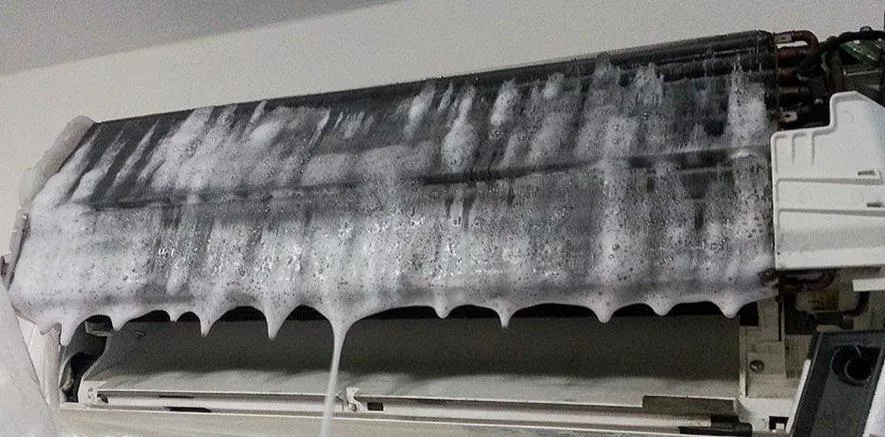
Aircon servicing prices in Singapore range from $25 for a basic cleaning to $250+ for a full chemical overhaul. The variation comes down to scope of work (general cleaning vs. chemical wash vs. refrigerant top-up), refrigerant type (R32, R410A, R22), access difficulty (high-floor units, ledge work), and parts replacement (PCB boards, compressors, thermistors). Most reputable providers quote $45–$80 for standard servicing of one unit, which includes dismantling, jet-wash, filter cleaning, and inspection — but additional work (gas, chemicals, parts) costs extra. Understanding these cost drivers helps you evaluate quotes and avoid paying for work you don't need.
What's Actually Included in Standard Servicing vs. Add-Ons
The biggest pricing confusion stems from bundling. Some companies advertise $25 servicing but exclude dismantling, refrigerant checks, or condensate tray cleaning — then upsell those as 'extras'. Others quote $80 for a comprehensive package that includes everything. Here's the honest breakdown:
Standard General Servicing ($45–$80 per unit)
- Filter cleaning: wash and dry reusable filters
- Fan coil cleaning: blower wheel, evaporator coil surface wipe
- Condensate tray flush: clear drain line, test flow
- Exterior wipe-down: louvres, covers, sensor
- Gas pressure check: verify refrigerant level (no top-up)
- Functional test: cooling, thermostat, swing
At aircons.sg, the $45 minimum for one unit includes a 9-point pre-check covering all of the above, plus the visit and diagnosis. If your system needs nothing beyond this scope, $45 is the final price. If the technician identifies a gas leak, choked coil, or faulty PCB, the additional work is quoted transparently on-site, and the $45 counts toward the total.
Chemical Wash ($90–$150 per unit)
When coils are choked with mould, dust, or nicotine residue that a standard wipe cannot remove, a chemical wash is required. The fan coil and blower are dismantled fully, soaked in alkaline cleaning solution, rinsed with high-pressure water, and reassembled. This takes 60–90 minutes per unit and uses specialised chemicals and containment bags to prevent mess. If a company quotes $50 for a 'chemical wash', they're likely doing a surface spray, not a full dismantle-and-soak.
Gas Top-Up ($60–$120 per unit)
Refrigerant pricing varies by type and quantity. R410A costs $60–$80 per unit for a typical 0.5–0.8 kg top-up; R32 is similar. R22 (phased out, harder to source) can hit $100–$120. Honest providers will measure the actual pressure deficit and charge by weight, not a flat 'top-up fee'. If your system needs gas every few months, you have a leak — top-ups are a temporary fix. A proper repair involves leak detection (soap test, electronic sniffer), brazing or valve replacement, vacuum purge, and recharge, which costs $150–$300 depending on location.
Access Difficulty and High-Floor Premiums
In HDB and condo settings, condensers are often installed on ledges, high external walls, or service yards that require working at height. This introduces both safety requirements and time overhead, which is reflected in pricing.
| Access Type | Typical Premium | Why |
|---|---|---|
| Ground-level or easily accessible ledge (≤4th floor) | $0 | Standard access, no additional equipment |
| High-floor ledge (5th–12th floor) | +$10–$20 per unit | Ladder work, safety harness, extra time |
| High-floor external wall (13th+ floor or no ledge) | +$30–$50 per unit | Rope access or gondola, MOM safety compliance |
| MCST-restricted access (condo service yard) | +$20–$40 per job | Booking coordination, time-slot constraints |
These premiums aren't arbitrary. Working at height above the 3rd storey in Singapore requires a Work-at-Height permit and trained personnel under the Workplace Safety and Health Act. Reputable companies factor insurance, harness inspection, and compliance into their pricing. If a quote seems unusually low for a 15th-floor unit, ask whether the technician is Work-at-Height certified and whether the company carries liability insurance.
Refrigerant Type and Regulatory Phase-Outs
The refrigerant in your system significantly affects service and repair costs. Singapore follows international HFC phase-down schedules, which means older refrigerants become scarcer and more expensive over time.
R410A (Most Common, 2010–2022 Installs)
Widely available, moderate cost ($60–$80 per kg), environmentally better than R22 but still a high-GWP (global warming potential) gas. Most multi-split and inverter systems installed in the last decade use R410A. It operates at higher pressure (around 120 psi on the low side), so leaks are less common but more catastrophic when they occur.
R32 (New Standard, 2020 Onwards)
Lower GWP than R410A, slightly better energy efficiency, similar pricing ($60–$80 per kg). NEA and BCA encourage R32 adoption for new installations. If you're buying a new aircon in 2025, it will almost certainly use R32. Service costs are comparable to R410A, but availability is excellent.
R22 (Phased Out, Pre-2010 Systems)
Banned for new installations since 2020 under the Montreal Protocol. Existing stocks are legal to use for servicing, but supply is dwindling. Expect $100–$120 per unit for a top-up. If your R22 system has a compressor failure or major leak, replacement is often more economical than repair — parts are expensive and technicians familiar with R22 are fewer.
Parts Replacement and Hidden Failures
A standard servicing quote doesn't include parts. When components fail, costs escalate quickly. Here's what commonly fails and what it costs:
- Thermistor (temperature sensor): $30–$50 + labour ($20–$30). Symptoms: erratic cooling, constant compressor cycling.
- Capacitor (fan or compressor start capacitor): $30–$60 + labour ($30–$40). Symptoms: fan won't spin, compressor hums but doesn't start.
- PCB board (indoor or outdoor): $120–$350 + labour ($50–$80). Symptoms: no power, error codes, remote unresponsive. Branded OEM boards (Daikin, Mitsubishi) cost more than generic units.
- Compressor: $400–$800 + labour ($100–$150). By this point, replacing the entire outdoor unit or whole system is often justified.
- Fan motor (indoor blower or outdoor fan): $80–$180 + labour ($50–$80).
Honest providers will diagnose the fault, show you the failed part, and give you a transparent quote before proceeding. If a technician says 'your PCB is spoil' without testing or showing you an error code, get a second opinion. At aircons.sg, every diagnosis is explained in plain language, and you see the part before we replace it.
Why Some Quotes Are Suspiciously Low
You'll see $25 or $30 servicing deals advertised online or via flyers. These are usually loss leaders designed to get a technician in your home, where the real upselling begins. Common tactics include:
- Excluding dismantling: the $25 price covers only a filter rinse and external wipe. Full dismantle-and-wash is quoted as an extra $40–$60.
- Mandatory chemical wash upsell: technician declares your coils 'too dirty' for standard cleaning (even if they're not) and insists on a $120 chemical wash.
- Gas top-up pressure scam: technician reports low gas pressure (sometimes after deliberately releasing some) and charges $80–$100 to 'fix' it.
- Minimum 3-unit booking: the $25 rate applies only if you service 3+ units; one unit costs $60.
There's no magic. A thorough one-unit service — with transport, labour, cleaning solution, and insurance — costs a provider $35–$50 in direct costs. A sustainable, honest price for standard servicing is $45–$80 per unit. If someone quotes significantly below that, ask exactly what's included in writing before booking.
Transparency and the 9-Point Pre-Check Model
At aircons.sg, every service booking (minimum $45 for 1 unit) includes a 9-point pre-check: visual inspection of coils, blower, drain line, refrigerant pressure, electrical connections, thermostat calibration, airflow, and operational test. If your system is healthy and only needs standard cleaning, you pay $45 and the job is done in 30–45 minutes. If the pre-check reveals a gas leak, choked coil, or faulty part, the technician explains the issue, quotes the fix transparently, and you decide on the spot. The $45 covers the visit and diagnosis; if you proceed with the recommended work, it's part of the total. If you decline, you've paid for the professional assessment — no hidden fees, no pressure.
This model aligns incentives honestly. The technician's job is to diagnose accurately and quote fairly, not to upsell unnecessary work. Because quoted prices are final, the price quoted on-site is the final price you pay.
Frequently Asked Questions
How often should I service my aircon in Singapore's climate?
Every 3 months for units running daily (bedroom, living room). Every 6 months for occasional-use units (guest room, study). Singapore's 80%+ humidity accelerates mould and dust buildup. Regular servicing prevents choked coils, maintains efficiency, and catches small issues (slow leaks, worn bearings) before they become expensive failures. Skipping servicing for a year typically results in 15–25% higher energy consumption and a higher risk of compressor overload.
Can I negotiate aircon servicing prices?
For multi-unit bookings (3+ units), many providers offer a per-unit discount — expect $5–$10 off per additional unit. Single-unit pricing is usually fixed because the cost structure (transport, labour, materials) doesn't compress much. Be wary of steep discounts that come with pressure to buy add-ons. Honest pricing is transparent upfront; if you want a lower price, book during off-peak periods (weekdays, non-holiday months) when some companies run promotions.
What's the real cost difference between chemical cleaning and chemical overhaul?
A chemical wash ($90–$150) dismantles and chemically cleans the indoor fan coil unit only. A chemical overhaul ($180–$250) does the same for both indoor and outdoor units, including the condenser coil and compressor exterior. Overhaul is necessary if the outdoor unit is heavily soiled (near construction, industrial area) or if cooling is weak despite a clean indoor coil. For most residential units serviced regularly, a chemical wash every 1–2 years is sufficient; overhaul is needed every 3–4 years or on-demand for neglected systems.
Do I need to be home during servicing?
Yes, for liability and access. The technician needs entry to the indoor unit, power isolation at the DB board, and your approval for any additional work discovered during the pre-check. Servicing one unit takes 30–45 minutes; chemical wash takes 60–90 minutes. If you can't be home, arrange for a family member or helper to be present. Some companies accept written pre-approval for standard work, but this increases dispute risk if unexpected issues arise.
Why do some companies charge a call-out fee and others don't?
Call-out fees ($20–$40) are common when diagnosis or minor repairs are quoted separately from servicing. At aircons.sg, there's no separate call-out fee — the $45 minimum for one unit covers the visit, the 9-point pre-check, and standard servicing if that's all you need. The fee structure is simpler and avoids the 'diagnosis ransom' problem where you pay $30 just for someone to tell you what's wrong, then pay again for the fix.
Book Transparent, No-Surprises Aircon Servicing
Aircon servicing prices vary because scope, access, refrigerant, and parts all affect cost — but honest pricing should never be a guessing game. At aircons.sg, every job starts with a $45 minimum (1 unit) that includes the 9-point pre-check, visit, and standard servicing. Additional work is quoted transparently on-site, and you decide whether to proceed. No hidden fees, no pressure upsells. Same-day service available, 90-day workmanship warranty on all jobs. WhatsApp us at +65 9107 2601 with your unit count and location, and we'll give you a straight answer and a firm quote before we arrive.
Related: Aircon servicing cost in Singapore — full price breakdown, including every case where the price changes on the day.
Related: one of the real differences behind the price is the warranty — what a workmanship warranty covers, and what voids the manufacturer's.