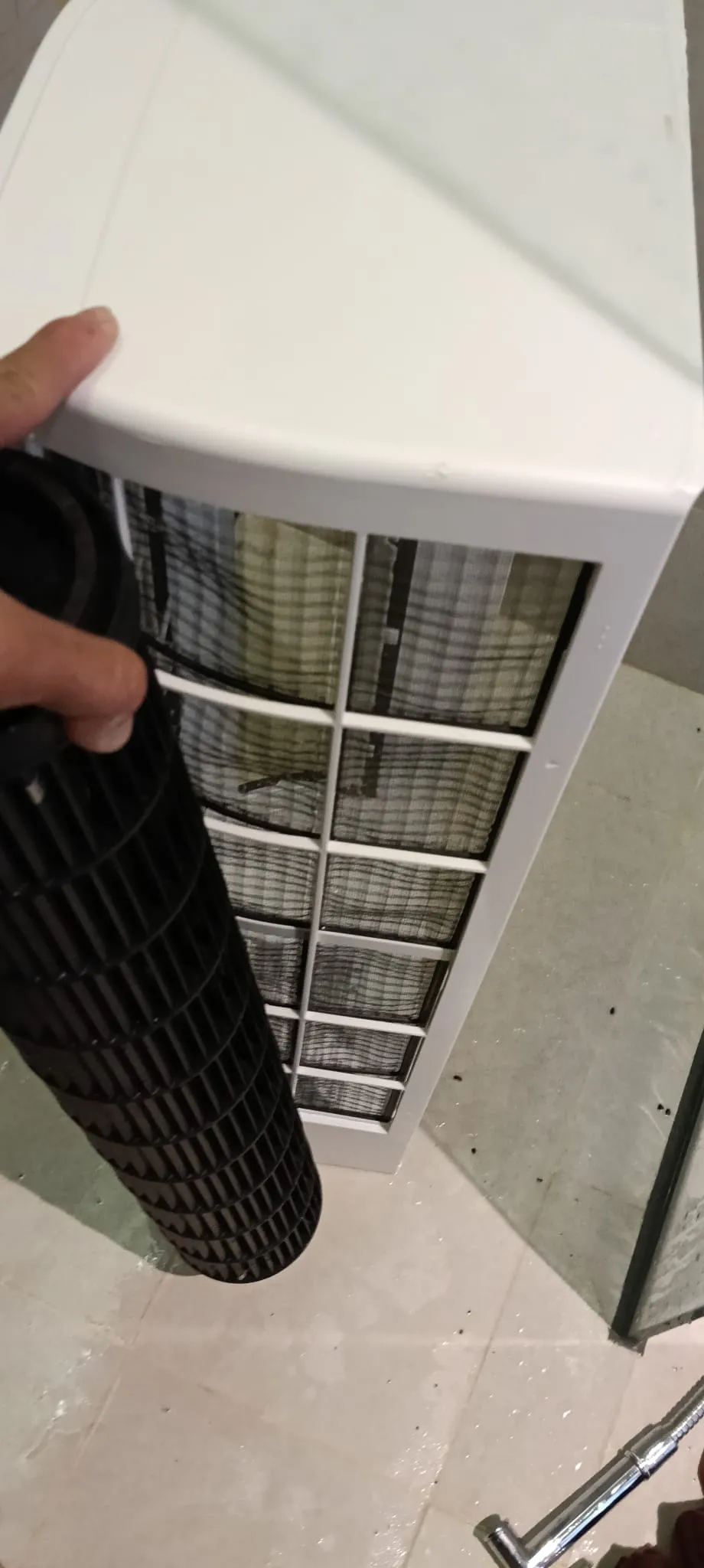
A vinegar or sour smell from your aircon is caused by bacterial growth on wet evaporator coils, mould in the drain pan, or stagnant water in a clogged condensate pipe — all thriving in Singapore's 80%+ humidity. Standard servicing ($45 for 1 unit) clears light cases; persistent odours need a chemical wash ($80–$120) or drain flushing ($60–$100). The 9-point pre-check included with every aircons.sg service booking identifies the exact source so you pay only for the fix you need.
What Causes the Vinegar or Sour Smell
The sour or vinegar odour is almost always biological: bacteria, mould, or algae feeding on moisture and dust inside your aircon. Singapore's relentless humidity means evaporator coils stay damp between cooling cycles, and any dust or organic debris becomes a breeding ground.
Bacterial Growth on Evaporator Coils
When your aircon cools warm air, moisture condenses on the evaporator coil. If dust, pollen, or cooking oils have settled on the coil fins, bacteria colonise the damp surface. As they metabolise organic matter, they produce acetic acid and other volatile organic compounds — that's the vinegar smell. This is especially common in units near kitchens or in HDB flats where outdoor pollution (PM2.5, vehicle exhaust) infiltrates through open windows.
Mould in the Drain Pan and Blower Wheel
The drain pan sits below the evaporator coil to catch condensate. If it's not regularly flushed, a thin layer of biofilm (algae, mould, bacteria) forms. The blower wheel, which circulates air, also accumulates dust and moisture; mould spores embed in the gaps between blades. Every time the fan spins, it aerosolises these microbes and their metabolic by-products, pushing sour air into your room.
Clogged or Slow-Draining Condensate Pipe
In Singapore HDB and condo units, condensate pipes often run several metres to a common discharge point. Algae and sludge can partially block the pipe, causing water to back up into the drain pan. Stagnant water turns acidic as bacteria multiply, and the smell wafts back through the unit. High-floor units (above 10th storey) sometimes have inadequate drainage slope, worsening the problem.
Dirty or Saturated Air Filter
A clogged filter restricts airflow, which lowers evaporator coil temperature and increases condensation. More moisture plus trapped dust equals faster microbial growth. If your filter hasn't been cleaned in over six weeks, it's likely part of the problem.
How to Diagnose the Exact Source
Before paying for a chemical wash you may not need, run through these checks. The 9-point pre-check included with any aircons.sg service booking ($45 minimum for 1 unit) covers all of them, but you can triage at home first.
Visual Inspection of the Filter and Front Panel
Switch off the aircon. Remove the front panel and slide out the filter. Hold it up to light: if you see a grey or brown film, or if water beads instead of draining through the mesh, it's saturated with dust and oils. Rinse it under a tap with mild detergent. If the smell persists after reinstalling a clean filter, the issue is deeper — coil or drain pan.
Check the Drain Outlet
Locate your outdoor condensate discharge point (usually a small PVC pipe near the compressor or along the external wall). Run your aircon on cool for 15 minutes; you should see steady dripping. No drip, or only occasional drops, means a clog. Pour 200 ml of water mixed with a tablespoon of bleach down the drain pan access (consult your manual); if it doesn't flow out within two minutes, the pipe is blocked.
Smell Test at the Air Outlet
Stand close to the air discharge louvre while the unit runs. If the vinegar smell is strongest in the first 60 seconds then fades, it's likely residual moisture on the coil or blower. If it's continuous and intensifies when you lower the temperature, bacteria are actively colonising the wet coil.
Listen for Gurgling or Water Sloshing
A gurgling sound from the indoor unit during operation suggests water isn't draining fast enough — either a partial clog or an air lock in the pipe. This stagnant water is a prime source of sour odour.
Fix Options and What They Cost in Singapore
Once you've identified the source, here's what each fix involves and the typical price range. Quoted prices are final.
| Fix | What It Does | Price Range (SGD) | When You Need It |
|---|---|---|---|
| Standard Servicing | Vacuum & wash filter, wipe coil face, flush drain pan, top up drain trap water, test operation | $45 (1 unit) | Light dust, faint smell, routine 8–12 week maintenance |
| Chemical Wash | Dismantle front cover, soak coil & blower in alkaline cleaner, high-pressure rinse, reassemble | $80–$120 | Persistent vinegar smell, visible mould on coil, reduced cooling despite clean filter |
| Chemical Overhaul | Full strip-down, coil removed from casing, blower wheel dismantled, all parts soaked & scrubbed | $150–$220 | Heavy mould, unit not serviced in 18+ months, water leakage plus odour |
| Drain Pipe Flushing | Clear blockage with pressurised water or vacuum, apply algaecide tablets | $60–$100 | No/slow drip at outlet, gurgling, water pooling in drain pan |
| Drain Pipe Replacement | Install new PVC run from unit to discharge (HDB or condo external wall) | $120–$250 | Crushed/cracked pipe, vertical run kinked, MCST requires re-routing for façade works |
What the 9-Point Pre-Check Covers
Included with every service booking at aircons.sg ($45 minimum for 1 unit), the pre-check identifies:
- Filter condition (blockage, oil saturation)
- Evaporator coil cleanliness (dust layer, mould patches)
- Blower wheel fouling
- Drain pan biofilm and water level
- Condensate flow rate
- Refrigerant pressure (to rule out low gas masking as poor cooling)
- Thermostat accuracy
- Compressor noise and vibration
- Electrical connections and capacitor health
If additional work is needed — chemical wash, drain flush, gas top-up — you get a transparent quote on the spot. The $45 minimum is part of the total cost if you proceed; if you decline, it covers the visit and diagnosis.
DIY Steps to Reduce Odour Between Servicings
You can't replicate a chemical wash at home, but these steps buy time and prevent mild odours from escalating.
Fortnightly Filter Rinse
Remove the filter every two weeks. Rinse under warm tap water (no harsh detergents; dish soap is fine). Let it air-dry completely — at least two hours in Singapore's humidity — before reinstalling. A damp filter invites mould faster than a dirty one.
Monthly Drain Pan Flush
If your indoor unit has a removable drain pan cover (common in Daikin, Mitsubishi wall-mounts), lift it and pour 100 ml of white vinegar or diluted bleach (1:10 with water) into the pan. Let it sit for five minutes, then run the aircon on cool to flush it out. Do this once a month during the rainy season (November–January) when humidity peaks.
Run Fan Mode After Each Cooling Session
When you're done using the aircon, switch to fan-only mode for 10–15 minutes. This dries the evaporator coil and blower wheel, starving bacteria of moisture. Many newer units (Mitsubishi Electric MSY-GN, Daikin iSmile) have an auto-dry function; enable it in the remote settings.
Keep the Room Ventilated When the Aircon Is Off
Stale, humid air accelerates mould growth inside the unit. Crack a window or run a ceiling fan when the aircon isn't in use. This is especially important in bedrooms and study rooms where the aircon cycles on and off overnight.
When to Call for Professional Servicing
DIY maintenance works for prevention, but once the vinegar smell is established, home remedies rarely eliminate it. Here's when to WhatsApp aircons.sg at +65 9107 2601.
Smell Persists After Filter Cleaning
If you've rinsed the filter, flushed the drain pan, and run fan mode, yet the sour odour returns within hours, bacteria have colonised the coil or blower. Standard servicing ($45) will clear light biofilm; heavier cases need a chemical wash.
Visible Mould on Louvres or Around Air Outlet
Black, green, or grey spots around the air discharge louvre mean mould spores are being blown into your room. This is an air-quality issue, especially risky for children, elderly, or anyone with asthma. A chemical wash removes the colony; delaying risks respiratory irritation and worsens the infestation.
Water Leaking from Indoor Unit
If the vinegar smell is accompanied by water dripping from the front panel or pooling beneath the unit, the drain is definitely clogged. Continuing to run the aircon risks water damage to walls, flooring, and electrical components. Same-day service is available — most drain flushes are completed within 45 minutes on-site.
Reduced Cooling Performance
A bacteria-coated evaporator coil insulates the metal fins, reducing heat exchange efficiency. You'll notice the room takes longer to cool, or the set temperature (e.g. 24 °C) feels warmer than usual. If refrigerant pressure is normal during the pre-check, a chemical wash restores performance without a gas top-up.
Singapore-Specific Considerations
HDB Condensate Pipe Regulations
HDB flats built before 2000 often have shared condensate discharge pipes running vertically down the building exterior. If your pipe connects to a common stack, a blockage in a neighbour's section can back up into yours. HDB guidelines require that any new pipe installation or major re-routing be reported to the town council; aircons.sg handles the documentation and obtains necessary approvals as part of drain replacement jobs.
Condo MCST Approval for External Works
If drain pipe replacement requires drilling through an external wall or altering façade fixtures, you need MCST (condo management) approval. aircons.sg prepares the application (floor plan, scope of work, contractor insurance) and coordinates with building management. Typical approval takes 5–10 working days; we schedule the job once clearance is confirmed.
High-Humidity Months (November–February)
During the Northeast Monsoon, indoor humidity often exceeds 80% even with the aircon running. Evaporator coils stay wet longer, and bacterial growth accelerates. If your unit is due for servicing in October or November, consider scheduling it before the rainy season starts — a pre-emptive chemical wash in September or early October prevents the worst of the monsoon odours.
R32 vs R410A and Coil Corrosion
Newer aircons (post-2020) use R32 refrigerant, which operates at slightly higher pressure than R410A. If a coil has micro-leaks (from corrosion or poor installation), refrigerant can escape and allow moisture ingress, which accelerates rust and bacteria growth. During the pre-check, the technician measures static pressure; abnormal readings flag potential leaks that must be sealed before a chemical wash, or the odour will return within weeks.
Frequently Asked Questions
Can I use a store-bought aircon cleaning spray to remove the vinegar smell?
Retail foaming cleaners (e.g. those sold at hardware shops) coat the coil surface but don't penetrate between the fins or remove biofilm from the blower wheel. They may mask the odour for a few days, but bacteria regrow quickly. A proper chemical wash uses industrial alkaline detergent and high-pressure rinsing to strip biofilm from all internal surfaces — something a spray can cannot achieve. Save your money and book a chemical wash ($80–$120) for a lasting fix.
How often should I service my aircon to prevent sour smells?
Standard servicing every 8–12 weeks keeps filters and drain pans clean, which prevents most odour issues. If you run your aircon daily (common in Singapore), aim for every 8 weeks. Units in dusty areas (near construction, main roads) or homes with cooking odours benefit from a chemical wash once a year. The 9-point pre-check included with each service booking tells you whether a chemical wash is due or if standard servicing suffices.
Is the vinegar smell harmful, or just unpleasant?
The odour itself (acetic acid, volatile organic compounds from bacteria) is generally not toxic at the low concentrations found in aircon discharge. However, the bacteria and mould producing the smell can trigger allergic reactions, asthma, rhinitis, and headaches — especially in children, elderly, or immunocompromised individuals. Mould spores (Aspergillus, Cladosporium) are known respiratory irritants. Eliminating the smell also eliminates the microbial source, improving indoor air quality.
Why does the smell come back a few weeks after a chemical wash?
If the condensate drain wasn't flushed during the chemical wash, stagnant water in the pipe re-seeds the coil and drain pan with bacteria. Always pair a chemical wash with drain pipe flushing ($60–$100) if there's any sign of slow drainage. Other causes: a refrigerant leak allowing moisture into the system, or a damaged drain pan that pools water. The pre-check identifies these root causes so the fix is permanent.
Can I prevent the smell by running the aircon at a higher temperature?
Running at 26–28 °C instead of 22–24 °C reduces condensation slightly, but Singapore's ambient humidity is so high that the evaporator coil will still be wet during operation. The real fix is keeping the coil and drain system clean, not adjusting temperature. A higher set-point does save energy (roughly 5–8% per degree Celsius), but it won't stop bacterial growth if dust and moisture are present.
Book a Pre-Check and Fix the Smell Today
Vinegar or sour odours don't resolve on their own — they worsen as bacteria multiply. The fastest path to clean, odour-free air is a proper diagnosis followed by the right fix, whether that's standard servicing, a chemical wash, or drain flushing. Every aircons.sg service booking (from $45 for 1 unit) includes the 9-point pre-check, so you know exactly what's needed and what it costs before any work begins. Same-day slots are available for urgent cases. WhatsApp +65 9107 2601 with your postal code and number of units, and we'll confirm timing within the hour. no hidden fees, no runaround — just transparent pricing and technicians who've seen every aircon smell Singapore humidity can produce.