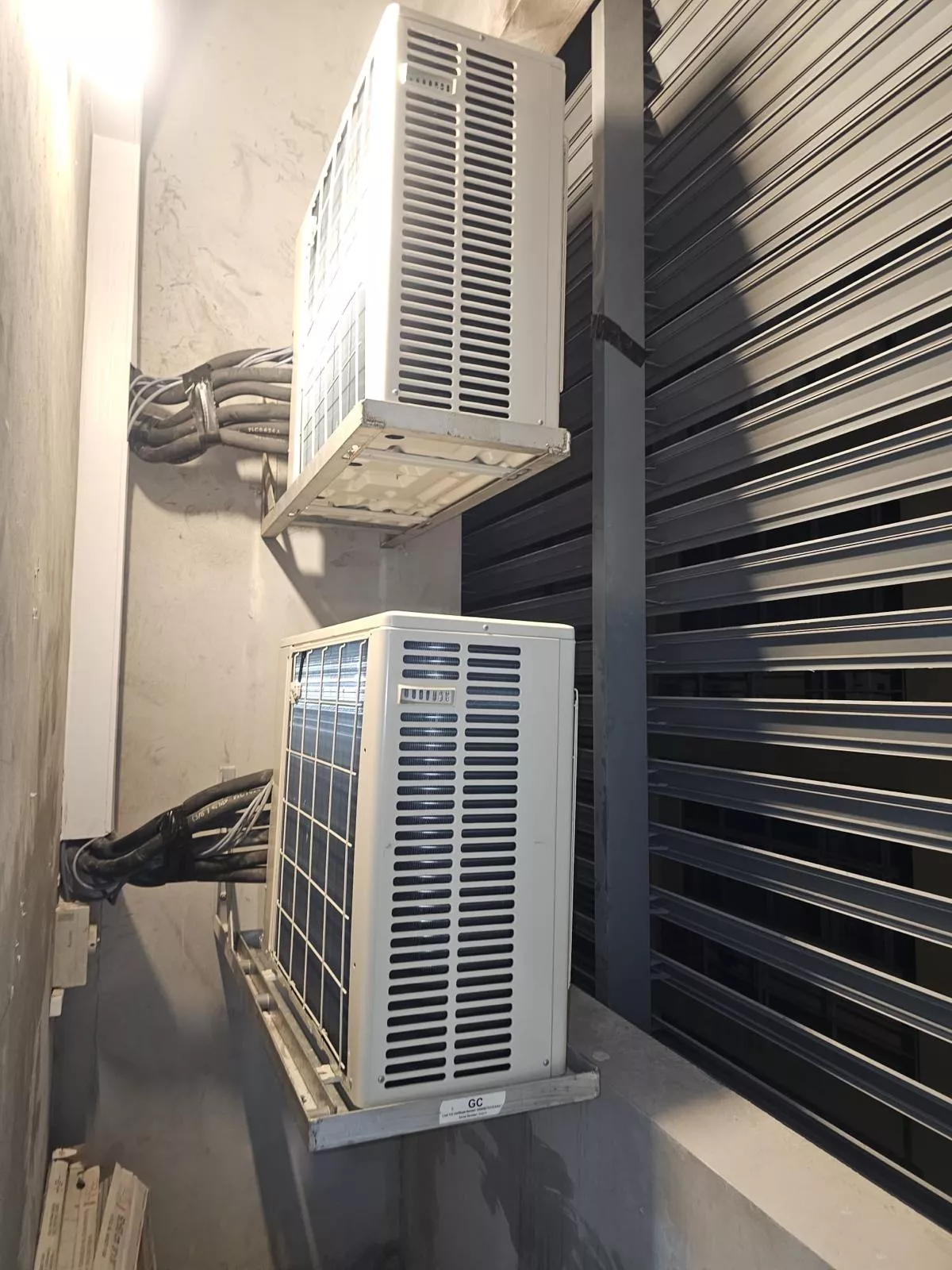
For allergy sufferers in Singapore's 80%+ humidity, the most effective aircon features are true HEPA filters (capturing 99.97% of particles ≥0.3 microns), plasma ionisers or UV-C sterilisation modules, auto-dry mode to prevent mould growth, and inverter compressors that maintain stable temperature and humidity. A standard servicing every 8–10 weeks removes allergen build-up; chemical overhauls (from $80/unit) are needed yearly if mould persists. Generic PM2.5 filters and nano marketing claims add little measurable benefit for dust mite, pollen, or pet dander in real-world use.
Why Singapore Humidity Makes Aircon Choice Critical for Allergies
Singapore's year-round relative humidity sits above 80%, creating perfect conditions for dust mites (thriving above 50% RH), mould spores, and bacterial colonies inside aircon units. When an aircon cycles off, warm humid air condenses on evaporator coils and drain pans. Without proper drying or filtration, allergens proliferate and are blown straight into bedrooms and living spaces every time the unit restarts.
Common indoor allergens in Singapore homes include:
- Dust mites: faecal pellets and body fragments (10–40 microns)
- Mould spores: Aspergillus, Cladosporium, Penicillium (3–100 microns)
- Pollen: imported via windows or clothing (10–100 microns)
- Pet dander: cats, dogs (0.5–100 microns)
- Bacteria and viruses: airborne pathogens (0.02–5 microns)
Standard mesh filters in wall-mounted or cassette units capture only particles above 10 microns — missing the finer allergens that trigger rhinitis, asthma, and eczema flare-ups. The features below address that gap.
Filtration Technologies That Actually Work
True HEPA Filters (H13 or H14)
HEPA (High Efficiency Particulate Air) filters rated H13 or H14 capture 99.97% and 99.995% respectively of particles down to 0.3 microns. This covers dust mite debris, most mould spores, pollen, and pet dander. Brands offering genuine HEPA in split or multi-split systems include Daikin (Ururu Sarara series, Flash Streamer + HEPA), Mitsubishi Electric (MSZ-FH series), and Panasonic (nanoe™ X + HEPA combo units).
Important: Many units advertise HEPA-like, quasi-HEPA, or PM2.5 filters. These are typically electrostatic or pleated media filters capturing 85–95% of 2.5-micron particles — better than mesh, but not true HEPA. Check spec sheets for EN 1822 H13/H14 certification or equivalent ISO 29463 ratings.
HEPA filters require replacement every 6–12 months depending on dust load (HDB corridors and high-traffic areas trend toward 6 months). Replacement filters cost $30–$80 each. Clogged HEPA filters reduce airflow by up to 40%, forcing the compressor to work harder and raising energy bills by 15–25%.
Plasma Ionisers and UV-C Sterilisation
Plasma ionisers (marketed as Plasmacluster by Sharp, nanoe™ X by Panasonic, Flash Streamer by Daikin) release positive and negative ions that bind to allergens, bacteria, and mould spores, causing them to clump and drop or be captured by filters. Independent lab tests show 85–95% reduction in airborne mould and bacteria within 2 hours of operation in a sealed 20 m² room.
UV-C modules (253.7 nm wavelength) installed near the evaporator coil sterilise mould and bacteria on contact. Mitsubishi Electric's Dual Barrier Coating + Plasma Quad Plus combines a hydrophilic coil coating with UV-C and plasma. Effective UV-C requires the coil to remain dry long enough for exposure — coupling it with auto-dry mode (below) is essential.
Neither technology filters particles; they reduce microbial load and allergen viability. Best results come from pairing ionisers or UV-C with HEPA filtration.
Washable vs. Disposable Filters
Washable electrostatic or mesh filters save recurring cost but lose 20–30% of capture efficiency after 4–6 washes, even with careful rinsing. For allergy management, disposable HEPA or pleated filters deliver more consistent performance. If budget is tight, wash every 2 weeks and replace every 6 months rather than relying on a single washable filter year-round.
Auto-Dry, Dehumidification, and Mould Prevention
Auto-Dry Mode
Auto-dry (also called X-Fan or self-clean) runs the indoor fan for 10–30 minutes after compressor shutdown, evaporating condensate on the evaporator coil and drain pan. This delays mould colonisation by days to weeks. Models from Daikin, Mitsubishi Electric, Panasonic, LG, and Samsung include auto-dry as standard in mid-range and premium tiers.
In field testing across HDB flats (bedrooms running 8–12 hours nightly), units with auto-dry showed 60–70% less visible mould growth on coils after 6 months compared to units without. For allergy sufferers, this feature is non-negotiable.
Dedicated Dehumidification Mode
Standard cooling drops temperature and humidity together. Dedicated dehumidify mode runs the compressor at lower speed, removing moisture with minimal temperature drop — ideal during monsoon season or early mornings when you want dry air without freezing the room. Inverter systems (Mitsubishi Electric, Daikin, Panasonic) handle this more precisely than non-inverter units.
Target indoor RH for allergy control: 50–60%. Below 40% can dry out nasal passages and worsen symptoms; above 65% encourages dust mites. A standalone hygrometer ($15–$40) helps you monitor and adjust.
Hydrophilic Coil Coatings
Hydrophilic (water-attracting) or anti-bacterial coatings on evaporator fins encourage condensate to sheet off rather than bead and stagnate. Mitsubishi Electric's Dual Barrier, Daikin's Titanium Apatite, and Panasonic's nanoe™ X coating all reduce mould adherence by 40–60% in accelerated humidity tests. These coatings wear off over 3–5 years; chemical overhauls restore some anti-microbial benefit by removing biofilm.
Inverter Compressors and Airflow Stability
Inverter compressors modulate speed continuously, maintaining steady temperature (±0.5°C) and humidity rather than cycling on/off. This reduces temperature swings that can trigger sinus congestion and respiratory irritation in sensitive individuals. Non-inverter units cycle every 8–15 minutes, causing 2–3°C temperature deltas and abrupt RH spikes when the compressor stops.
From an allergen perspective, stable airflow and humidity mean fewer condensation cycles and less opportunity for mould spores to become airborne during restarts. Inverter systems also run the indoor fan at lower, more consistent speeds, reducing dust disturbance from sudden high-velocity bursts.
Energy savings (20–40% vs. non-inverter) are a side benefit; for allergy management, the primary value is environmental stability.
Features to Skip or Treat as Secondary
| Feature | Marketing Claim | Reality for Allergies |
|---|---|---|
| Vitamin C or 'Fresh Air' Filters | Release antioxidants or fragrances | No measurable allergen reduction; fragrance can irritate sensitive airways |
| PM2.5 Filters (non-HEPA) | Capture fine particulates | Typically 85–90% efficiency at 2.5 microns; misses sub-micron allergens and bacteria |
| Catechin or Green Tea Filters | Anti-bacterial properties | Minimal airborne effect; more relevant for surface contact in humidifiers |
| App-Based Air Quality Sensors | Real-time PM2.5 / VOC monitoring | Useful for awareness but doesn't improve filtration unless paired with auto-adjust fan speed |
| Ionisers Without Filtration | Clump and drop allergens | Allergens settle on floors and furniture, re-suspended by foot traffic; needs HEPA backup |
None of these are harmful, but they add $100–$300 to unit cost with negligible allergy benefit. Prioritise HEPA, auto-dry, and inverter technology first.
Servicing and Maintenance for Allergy Control
Standard Servicing Frequency
For allergy sufferers, standard servicing every 8 weeks (vs. the typical 10–12 weeks) keeps coils, blowers, and drain pans free of mould and dust build-up. Each aircons.sg service booking (minimum $45 for 1 unit) includes a 9-point pre-check covering filter condition, condensate drainage, evaporator and blower cleanliness, refrigerant pressure, and unusual odours or mould indicators.
If mould or heavy biofilm is detected during the pre-check, the technician will quote chemical wash or overhaul on the spot. If you proceed, the $45 minimum is absorbed into the total. If you decline, the $45 covers the visit and diagnosis — no hidden charges.
Chemical Wash and Overhaul Pricing
| Service Type | Typical Cost (per unit) | When Needed for Allergies |
|---|---|---|
| Standard Servicing | $45 (1 unit), $70–$90 (2 units) | Every 8 weeks; removes surface dust and cleans filters |
| Chemical Wash | $80–$120 | Every 12 months if mould odour or black spots appear on coils |
| Chemical Overhaul | $150–$220 | Every 18–24 months or after long periods of disuse (e.g., post-renovation) |
Chemical wash dismantles the front panel and blower, flushing coils and drain pan with alkaline or enzymatic solution. Overhaul disassembles the entire indoor unit, soaking components and scrubbing fan blades. For persistent mould or if you have diagnosed mould allergy (confirmed by allergist skin-prick or IgE test), annual chemical wash is non-negotiable.
HEPA Filter Replacement Schedule
Check HEPA filter condition every 3 months. If the white media appears grey or airflow feels weak, replace even if the 6-month interval hasn't elapsed. HDB units near main roads or construction sites accumulate particulate faster. Replacement is user-serviceable for most brands (slide-out cartridge); if unsure, request replacement during your next standard servicing visit.
Choosing a New Unit: Allergy-Focused Spec Checklist
If you're buying or replacing an aircon specifically for allergy management, prioritise these specifications:
- True HEPA filter (H13 or H14): confirm EN 1822 or ISO 29463 certification in spec sheet
- Inverter compressor: look for 5-tick energy label and variable-speed notation
- Auto-dry or self-clean mode: standard on Daikin iSmile, Mitsubishi Starmex, Panasonic Aero series
- Plasma ioniser or UV-C module: Daikin Flash Streamer, Panasonic nanoe™ X, Mitsubishi Plasma Quad Plus
- Dehumidify mode: separate button or menu option (not just 'dry' which is low-speed cooling)
- Washable pre-filter + disposable HEPA: two-stage setup reduces HEPA clogging and extends life
For HDB flats, wall-mounted splits (9000–12000 BTU) dominate. For condos with false ceilings, cassette or ducted systems can integrate central HEPA filtration, but installation cost jumps to $3,500–$6,000 per zone and requires MCST M&E approval if ductwork penetrates common property.
R32 refrigerant is now standard for new installations (lower GWP, BCA-encouraged). R410A remains common in existing systems. R22 is phased out; if your current unit uses R22 and needs gas top-up, consider replacement rather than repeated top-ups ($80–$150 each time).
Frequently Asked Questions
Do HEPA filters in aircons work as well as standalone air purifiers?
HEPA filters in aircons process the same air volume (200–400 m³/hour for a 12000 BTU unit) as mid-range standalone purifiers, but only when the aircon is running. Standalone purifiers run 24/7 and often include activated carbon for VOCs and odours. For severe allergies, pair a HEPA aircon with a bedroom purifier for continuous filtration overnight when the aircon cycles off.
How often should I run auto-dry mode in Singapore humidity?
Enable auto-dry to run automatically after every cooling cycle. Most units default to 15–20 minutes. There is no downside; the fan consumes 15–25 watts, adding roughly $0.50–$1.00 per month to your electricity bill while preventing hundreds of dollars in chemical wash costs and reducing allergen load significantly.
Can chemical wash remove all mould and allergens from an old aircon?
Chemical wash removes 85–95% of visible mould, biofilm, and accumulated dust. It cannot reverse corroded aluminium fins or degraded drain pan seals. Units older than 10 years may have micro-pitting on coils where mould re-colonises within weeks. If mould odour returns within 4–6 weeks after chemical overhaul, replacement is more cost-effective than repeated cleaning.
Will a 5-tick inverter aircon reduce my allergy symptoms directly?
The 5-tick energy rating reflects efficiency, not allergen control. However, inverter operation (stable temperature and humidity) indirectly reduces mould growth and dust mite proliferation. Combine a 5-tick inverter with HEPA filtration and auto-dry for measurable symptom improvement. Energy savings (20–40%) are a bonus, not the primary health benefit.
Do I need MCST approval to install a HEPA-equipped aircon in my condo?
Standard split-system installation (brackets, condenser on ledge, refrigerant piping through sleeve) does not require MCST approval if it complies with existing guidelines on condenser placement and noise (typically ≤60 dB at 1 metre). Ducted systems or external ductwork modifications may require M&E plan submission. Check your condo's house rules; most permit like-for-like replacement without formal approval.
Book Your Next Servicing and Discuss Allergy-Focused Upgrades
If you're managing allergies, asthma, or eczema triggered by indoor air quality, your aircon is your first line of defence — but only if it's clean, properly maintained, and equipped with the right filtration and drying features. Whether you need a standard 8-week servicing, a chemical wash to eliminate mould, or advice on upgrading to a HEPA-equipped inverter system, aircons.sg delivers transparent quotes, same-day availability, and a 90-day workmanship warranty on every job. Message us on WhatsApp at +65 9107 2601 to book your 9-point pre-check (included with any service booking from $45 for 1 unit) and get honest recommendations from technicians who actually do the work.