You are renting. The flat has one tired unit in the living room and nothing in the bedrooms, or it has nothing at all, and you are about to spend two years sleeping badly. So you start looking at installation quotes.
Then a sensible question arrives: you do not own this place. What happens to the aircon when you move out?
Almost nobody asks that before the units go up, and it is the question that decides whether this was a reasonable spend or an expensive gift to somebody else. Here is how it actually works in a Singapore rental, and what to settle in writing before an installer is booked.
The first thing to understand: an installed aircon stops being portable
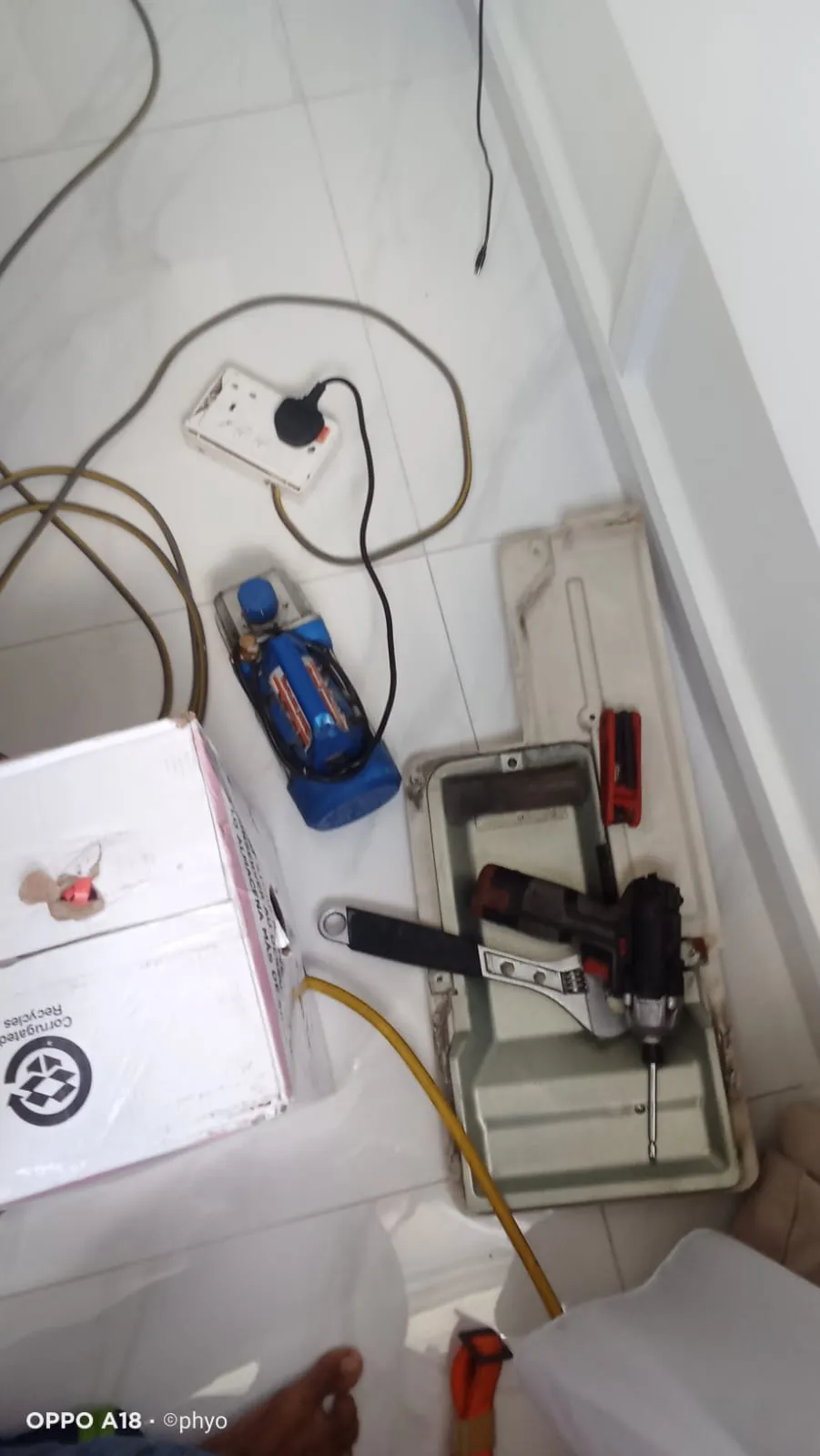
A split-system aircon is not an appliance you plug in. Installing it means core-drilling through the wall, running copper refrigerant pipes and a drain line inside trunking, bolting a bracket or feet to the condenser ledge, and usually running a dedicated power point.
When you leave, the fan coil and the condenser can be taken down. Almost nothing else can. The holes stay. The trunking stays, or it comes off and leaves a scarred line of paint and silicone across the wall. The bracket bolts stay in the ledge. The pipe run buried behind a false ceiling stays.
That is the whole reason this needs a conversation with the landlord first rather than after. You are not asking permission to put an appliance in a room. You are asking permission to alter the property.
Get written consent, and be specific about what you are asking
Verbal approval from a landlord or an agent is worth very little two years later, when the agent has changed and the handover inspection is being done by someone who was not part of the conversation.
Ask for consent in writing — an email reply is enough — and put four things in it:
- What is being installed and where. Number of fan coils, which rooms, where the condenser sits.
- Who owns the units at the end of the tenancy. This is the one that costs money if it is left vague.
- Whether the landlord wants them removed at handover, or left in place. Both are legitimate answers. Not deciding is not.
- That the drilling, trunking and bracket work is accepted as part of the installation, and will not be treated as damage at handover.
If the landlord wants the units removed and the walls made good, price that now, not later. Removal plus patching and repainting is real work, and it lands on you at the worst possible moment — the week you are also moving house.
The three situations, and what each one should cost you
1. The flat has no aircon and you want it. The strongest position is the one most tenants never try: ask the landlord to pay for the installation and own the units, in exchange for a small rent adjustment or a longer lease. He gets a permanent improvement to his property. You get an aircon you do not have to remove, do not have to insure, and are not responsible for replacing. Many landlords say yes, because a flat with aircon rents faster than one without.
If he will not, and you install at your own cost, decide before you start whether you intend to take the units with you. If you do, you are paying for installation twice — once here and once at the next place — and you will be reinstalling second-hand units into a different pipe run. If you do not, you are buying an aircon for the landlord and should negotiate something for it.
2. The landlord's existing unit has failed. This is not your capital cost, and it is worth being clear about that early. Most Singapore tenancy agreements make the tenant responsible for maintenance — routine servicing, and often minor repairs up to a stated sum — while the landlord remains responsible for replacing equipment that has reached the end of its life. A compressor that has died after ten years is not a maintenance item.
Where this goes wrong is when the tenant cannot show the unit was serviced. Then the argument becomes "it failed because you neglected it", and it is an argument you lose without receipts. Which brings us to the part that matters most.
3. You want to add one unit to one room. The cheapest and least disruptive option, and the one where the ledge decides everything. A single additional condenser needs somewhere to sit, and in an HDB flat that means the designated aircon ledge, with the condensate piped to the proper discharge point. If the ledge is already full, adding a unit is a bigger conversation than the quote suggests.
Keep the servicing records. They are the only thing that settles the argument later
This is the single most useful habit for a tenant, and it costs nothing beyond keeping emails.
Every service visit should leave you with a dated invoice naming the units. Keep all of them in one folder. At handover, when a landlord suggests the aircon has been run into the ground, a two-year run of dated servicing invoices ends the discussion in about thirty seconds. Without them, you are arguing from memory against someone holding a deposit.
It also matters during the tenancy. If a unit fails and the landlord is responsible for replacement, the first thing he will ask is whether it was serviced. Have the answer ready. We go through who is responsible for what in more detail in aircon servicing in a rental — tenant or landlord.
Condo and private tenancies: the MCST has its own view
In a condominium the landlord's consent is necessary but not sufficient. The management corporation has rules about what may be mounted on a facade or a ledge, where a condenser may discharge, and when noisy work may be carried out. Some require an application and a refundable deposit before any contractor is allowed in with tools.
Ask the landlord to confirm the MCST position in writing too, or ask him to make the application himself — he is the owner, and in many developments only an owner can lodge it. A tenant who has an installer turn up and get stopped at the guardhouse has lost a morning and part of a deposit.
The same rules apply to servicing contractors and to working hours, which is worth knowing before booking anything: MCST rules and approved contractor lists covers how that usually works.
The four things to settle before you book an installer
- Written landlord consent, naming the units, the locations, and who owns them at the end.
- Removal or leave-in-place, decided now, with the cost of removal and making good understood if that is the answer.
- MCST approval if it is a condo, lodged by the owner.
- The condenser position confirmed on site — ledge space, drainage route, and where the condensate discharges. Water dripping onto the unit below is the fastest way to acquire a neighbour dispute you will still be dealing with a year later.
If you are the one paying, also get the installation invoice with the model and serial numbers on it, and photograph the ledge and the walls before work starts. The workmanship warranty on an installation belongs to whoever the invoice names — see what a workmanship warranty actually covers — and a photograph taken before the first hole is drilled has settled more handover arguments than any clause in a tenancy agreement.
If you are the landlord reading this
Two things are worth doing, and neither is expensive. Put the servicing obligation in the tenancy agreement in plain words — how often, and that invoices are to be produced on request. And decide in advance whether you want tenant-installed aircon left behind or taken away, because a tenant who is told at handover usually cannot do either well.
A unit installed and left in a flat you own is generally worth having. A unit ripped out on the last day of a tenancy leaves you with holes to patch and a wall to repaint, and you will be doing it in the gap before the next tenant arrives.
The short version
An installed aircon becomes part of the property, not part of your luggage. Get written consent naming the units and stating who owns them at the end. Decide removal-or-leave now, and price it. In a condo, have the owner lodge the MCST application. Keep every servicing invoice for the whole tenancy. And if the flat has no aircon at all, ask the landlord to pay and own it before you reach for your own wallet — it is the one version of this where nobody has to argue at handover.
Renting, and not sure what you are allowed to install?
Tell us the property and what you are trying to do, and we will tell you what fits, where the condenser can go, and what the landlord will need to agree to before anyone drills anything. Message us on WhatsApp, or see what a job involves on aircon installation and aircon servicing.
If your tenancy is ending, the related question is whether the aircon is yours to take, and whether moving it is worth the cost.
If the ledge already has units on it, also read when a condenser bracket has to be replaced.