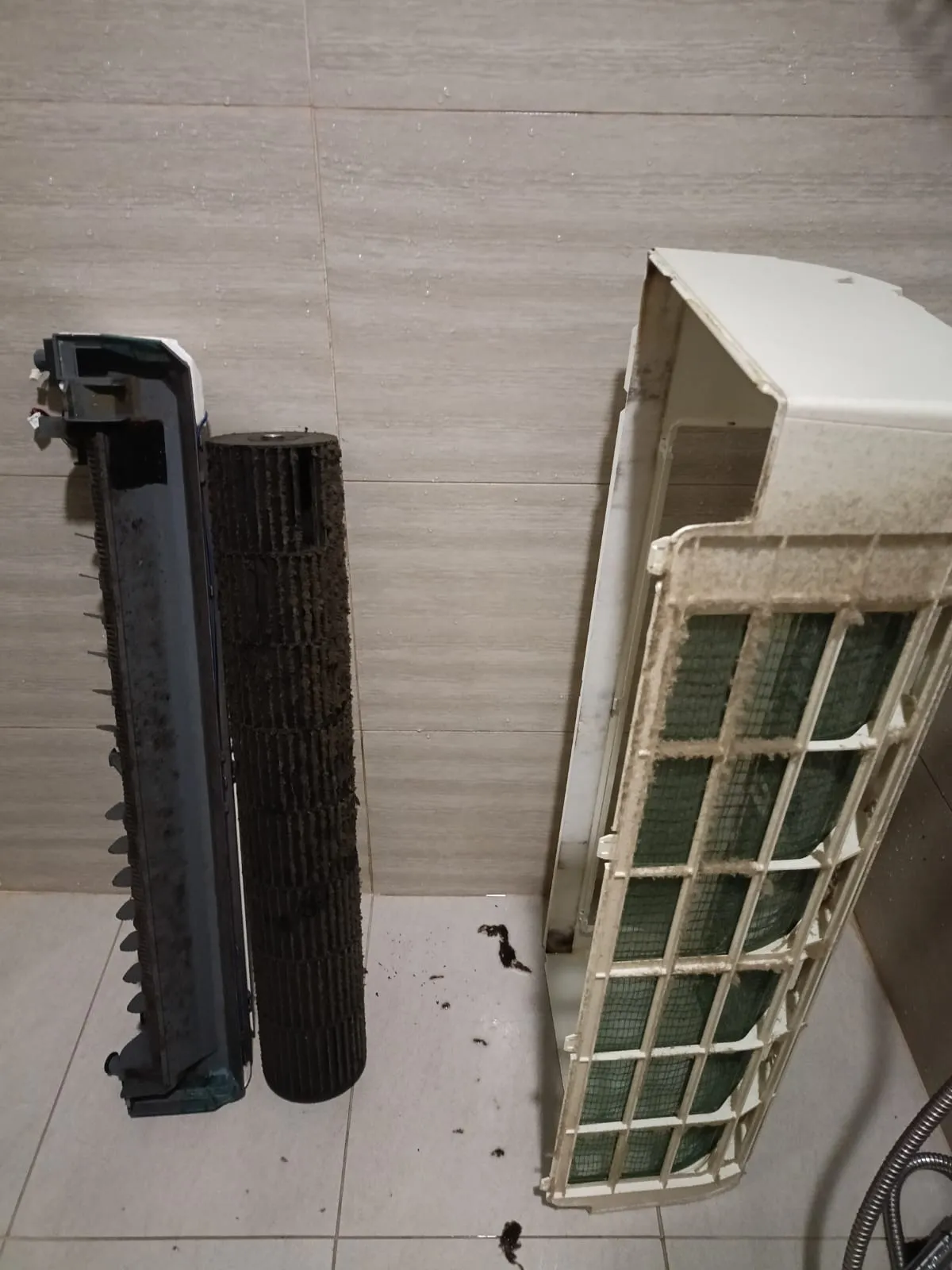
Aircon servicing is one of the most argued-about lines in a Singapore tenancy, and almost every argument comes from the same place: nobody read the clause until something stopped working. The short version is that your tenancy agreement decides it, not custom and not what a friend's landlord does. This guide sets out what those clauses usually say, where the disputes actually start, and what to do at each end of a tenancy so the argument never happens.
The tenancy agreement decides — read the clause first
Before anything else, open your TA and find two things: the servicing clause and the repair clause. They are different, and confusing them is the single biggest cause of trouble.
Most residential tenancies in Singapore put routine aircon servicing on the tenant, at a stated frequency, and require the units to be handed back in working order. Most also put major repairs on the landlord, with a minor-repair threshold below which the tenant pays. What that frequency is, what counts as "servicing", and where the threshold sits vary from agreement to agreement — so the general pattern is a starting point, never an answer. Your clause governs.
Two questions worth resolving on day one, in writing:
- What counts as servicing under this agreement? A general service and a chemical wash are not the same job. If the clause just says "servicing", agree which one is expected before the first visit rather than after.
- What happens if a unit fails and it was never serviced? This is the clause that decides who pays for a compressor. It is worth knowing before it matters.
Where the disputes actually start
In practice, almost every landlord–tenant aircon dispute we see traces back to one of four situations.
1. The units were already dirty at handover
A tenant moves in, runs the aircon, and it barely cools. It was neglected long before they arrived — but there is no record of that, so the conversation becomes their word against the landlord's. A photo taken on move-in day ends this argument permanently.
2. "Servicing" was done, but not really
A cheap visit that wipes the filter and leaves is technically a service. It does nothing for a blower barrel packed with grime or a drain line starting to block. Six months later the unit leaks or stops cooling and the landlord reasonably asks whether it was maintained. Keep receipts that say what was actually done, not just that someone came.
3. A repair gets called maintenance, or the reverse
A gas top-up because the unit is low after years of use is a different thing from a gas top-up because there is a leak in the piping. The first is upkeep; the second is a fault in the property. Getting the diagnosis in writing decides who pays.
4. Nobody serviced anything for a year and it is now handover week
This is the expensive one, and it is covered below.
What servicing actually costs, so the clause is not abstract
It is easier to agree who pays when both sides know the number. Our prices are published in full on the pricing page, and the displayed price is the final price:
- General servicing — $45 for 1 unit, $70 for 2, $95 for 3, $115 for 4, and $25 per unit from 5 units.
- Chemical wash — $135 for 1 unit, $245 for 2, $345 for 3, $425 for 4, and $100 per unit from 5 units.
- Chemical overhaul — $200 for 1 unit, $370 for 2, $515 for 3, $640 for 4, and $150 per unit from 5 units.
- Repair visits start with our 9-point pre-check, $45 minimum for 1 unit, covering the visit and the diagnosis. Any work needed is quoted after the pre-check confirms what is actually wrong.
Split across a year, routine servicing on a System 3 is a smaller number than most tenants expect and far smaller than the repair it prevents. That is the argument worth having with yourself, never mind the landlord. The difference between the service types is set out in signs your aircon needs a chemical wash.
If you are the tenant
- Photograph every unit on move-in day, including the filter behind the cover, and email the photos to the landlord or agent the same day. The email timestamp is the evidence, not the photo.
- Service on the schedule in the agreement, not when you notice a problem. If the clause says quarterly, book quarterly, even in a month when the units seem fine.
- Keep every invoice, and make sure it names the service performed and the number of units. A receipt that just says "aircon" proves nothing at handover.
- Report faults in writing, immediately. A fault reported late can become your problem, because running a faulty unit usually makes the damage worse.
- Do not attempt a top-up or a repair yourself to avoid a bill. If it goes wrong, the cost lands on you and the landlord has a stronger case.
If you are the landlord
- Hand over clean units. A property handed over with well-maintained aircon sets the standard for the whole tenancy and removes the tenant's best defence.
- Write the frequency and the service type into the TA. "Regularly" is not enforceable in any useful sense.
- Ask for the invoices during the tenancy, not at the end. Finding out at handover that nothing was done leaves you with a repair bill and a deposit argument.
- Keep the units' age and history somewhere you can find it. When a unit fails at fifteen years old, that is age, not neglect, and the record is what makes the distinction credible.
The handover visit is worth booking early
The most common call we get on this subject is a tenant in their last week, trying to get several units back to acceptable condition before the inspection. By then it is usually not a general service that is needed — a unit that has run a year without proper cleaning generally needs a chemical wash or an overhaul, which costs more and takes longer.
Book the handover service two to three weeks before the inspection, not two days. That gives time for the pre-check to find anything that needs repair, for the repair to be quoted and done, and for you to hand over with the invoice in your hand. If you are the landlord, ask for the same window before the next tenant moves in.
What we do on a service, so both sides know what was paid for
Every booking includes the 9-point pre-check before any work starts, so the visit identifies the actual problem rather than guessing at it. A general service covers filter cleaning, coil wipe, drainage flush and a gas check — the routine three-monthly upkeep. A chemical wash is the deeper clean of the coil, removing mould, biofilm and stubborn grime, and is the one to book when cooling has dropped or a smell has appeared. There are no weekend surcharges within our standard hours, 9am–9pm Monday to Saturday and 10am–6pm Sunday, and the price you see is what you pay.
If the pre-check finds a genuine fault rather than dirt, you get that in writing — which is exactly the document that settles who pays.
Book a tenancy service
Tell us the property type, how many units, and whether this is a move-in, a routine service or a handover. If it is a handover, say so — we will tell you honestly whether a general service will pass or whether the units need more.
WhatsApp 9107 2601 to book a tenancy service →
Related reading: how often you should service your aircon · when a general service is not enough · hidden servicing fees to watch for · relocating your aircon when you move house
Also worth reading: aircon servicing in Sengkang and Punggol — what a service visit covers and what it costs.
Related: if you are the tenant and there is no aircon to service yet, what a tenant can and cannot install in a rented flat covers the consent, ownership and removal questions to settle before anyone drills.
The same split applies to the steelwork holding the outdoor unit up - when a condenser bracket has to be replaced.