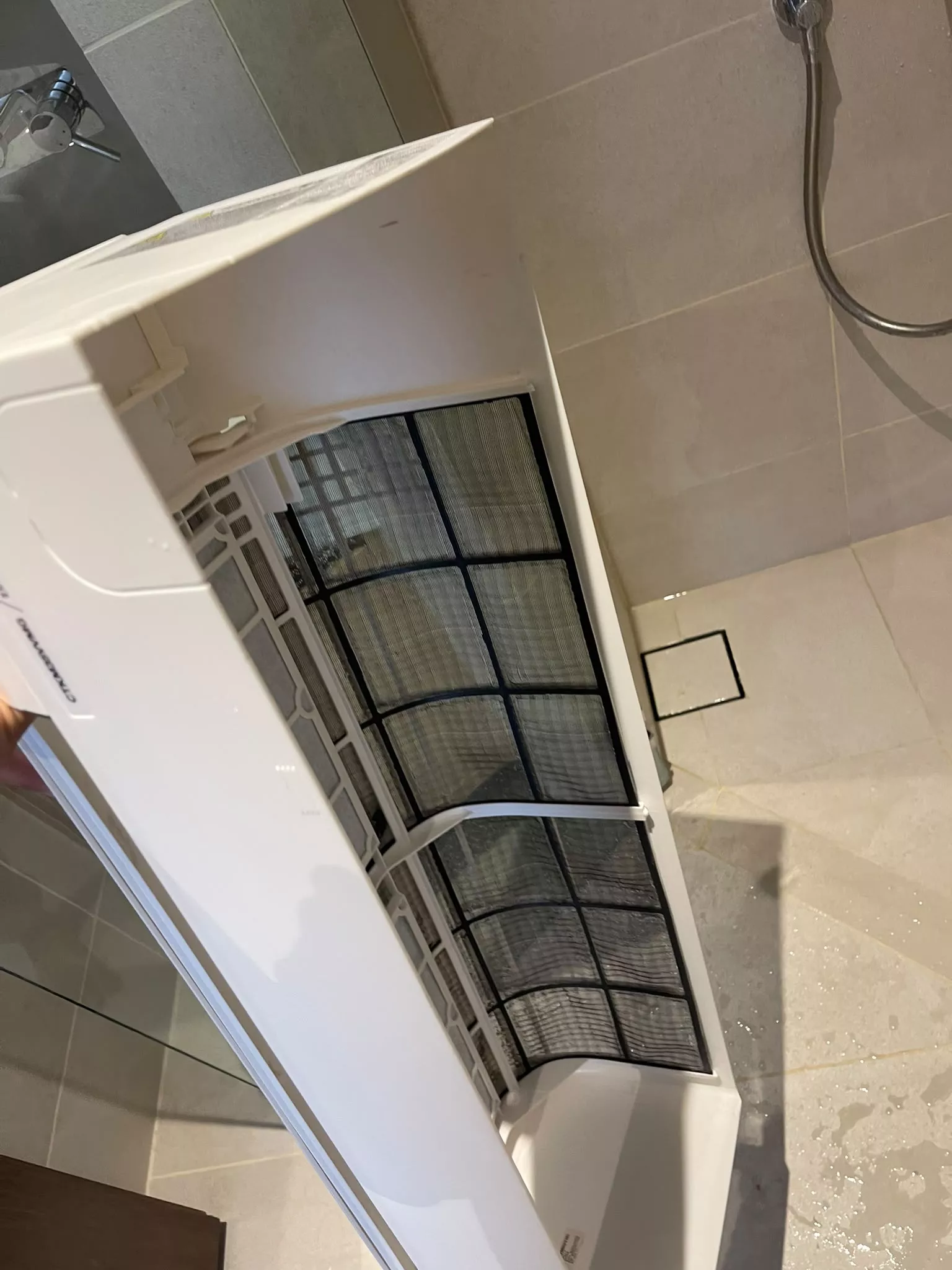
For most Singapore households, service your aircon every three months (quarterly). If you run it daily for 8+ hours — common in bedrooms or living rooms — monthly servicing prevents clogged filters, water leaks, and compressor strain. Light-use units (guest rooms, storage areas) can stretch to every six months, but Singapore's 80%+ humidity accelerates dust and mould build-up faster than you think. Skipping the schedule costs you 20–30% more in electricity and shortens compressor life by years.
Why Singapore's Climate Demands Frequent Servicing
Singapore sits at 1°N latitude with year-round humidity between 75% and 90%. Your aircon doesn't get a winter break. Every day, the evaporator coil condenses moisture from the air, and that moisture mixes with dust, pollen, and outdoor pollutants to form a sludge inside the unit. Left unchecked for more than three months, this sludge:
- Blocks airflow — forcing the compressor to work harder and spike your power bill by 20–30%
- Breeds mould and bacteria — that musty smell when you switch on? That's colonies growing on wet coils
- Clogs the drain pipe — leading to water leaking from the fan coil unit onto your wall or floor
- Reduces cooling capacity — a dirty filter can cut airflow by 40%, making the room feel warm even at 18°C
HDB and condo units face additional challenges: high-floor installations (above 10th storey) trap more airborne particulates from traffic and construction, and shared condensing-unit ledges (common in newer condos) mean dust from neighbours' units can migrate into yours. If you live near a main road, construction site, or industrial zone, monthly servicing isn't overkill — it's necessary.
Recommended Servicing Frequency by Usage Pattern
Not all aircons are equal. A guest-room unit switched on twice a month has different needs than a 24/7 bedroom unit. Here's the honest breakdown:
| Usage Pattern | Operating Hours/Day | Recommended Frequency | Why | |
|---|---|---|---|---|
| Heavy (bedrooms, living rooms, home offices) | 8–24 hours | Every 1 month | Daily condensation + long run times = fastest filter clogging and coil fouling | |
| Moderate (dining areas, occasional bedrooms) | 4–8 hours | Every 3 months | Standard Singapore household schedule; balances cost and performance | |
| Light (guest rooms, storerooms, study rooms) | 0–4 hours | Every 6 months | Minimal runtime, but humidity still promotes mould; don't skip entirely | |
| Commercial (offices, retail, clinics) | 10–14 hours | Every 1 month | High foot traffic = more dust, lint, and particulates; downtime = lost revenue |
If you have pets (dogs, cats), multiply shedding by Singapore's humidity and you'll find fur clogs filters 30–40% faster. Monthly servicing becomes non-negotiable.
What Happens If You Skip the Schedule
We've seen units left unserviced for 12+ months. The typical damage:
- Compressor failure — repair costs $350–$800; replacement $600–$1,200 depending on brand and capacity
- Frozen evaporator coil — caused by blocked airflow; requires chemical overhaul ($120–$180 per unit) to remove ice and sludge
- Water leakage — clogged drain pipe floods your wall or ceiling; water damage repair often exceeds $500
- Refrigerant leak — corroded coils from accumulated acid; gas top-up costs $80–$150 per kg, but if the leak isn't sealed, you're topping up every few months
Compare that to a $45 standard servicing visit every three months ($180/year for one unit) and the math is clear.
What's Included in Each Servicing Type
Not all 'servicing' is the same. Here's what actually happens during each type, and when you need which one:
Standard Servicing (Every 1–3 Months)
This is your routine maintenance. At aircons.sg, every standard servicing booking (from $45 for 1 unit) includes a 9-point pre-check covering:
- Remove and wash air filters
- Vacuum and wipe down fan coil unit exterior
- Clear drain pipe and check for blockages
- Inspect evaporator coil for dirt build-up (surface cleaning only)
- Check refrigerant pressure (visual gauge check)
- Test thermostat and control settings
- Measure airflow and cooling performance
- Inspect condensate tray for cracks or overflow
- Check electrical connections and safety cut-outs
Standard servicing does not dismantle the unit or use chemicals. It maintains a unit that's already in good condition. If the pre-check reveals heavy coil fouling, refrigerant loss, or mechanical issues, the technician will quote transparent prices for chemical wash or gas top-up on the spot. The $45 minimum covers the visit and diagnosis; if you proceed with additional work, it's part of the total.
Chemical Wash (Every 12–18 Months, or When Cooling Drops)
Chemical wash dismantles the fan coil unit and soaks the evaporator coil, blower wheel, and filters in alkaline cleaning solution to dissolve built-up grime, mould, and nicotine (if you smoke indoors). Typical cost: $80–$120 per unit depending on capacity and brand. You need this when:
- Airflow feels weak even after standard servicing
- Persistent musty smell that won't go away
- Water leaks despite cleared drain pipes (indicates coil blockage)
- Unit hasn't been chemically cleaned in over 18 months
Chemical Overhaul (Every 2–3 Years, or for Severe Neglect)
Includes everything in chemical wash plus dismantling and cleaning the outdoor condensing unit (compressor, condenser coil, fan motor). Costs $120–$180 per unit. Required for:
- Units exposed to heavy external pollution (near construction, main roads)
- Compressor running hot or tripping circuit breakers
- Refrigerant leaks caused by corroded condenser coils
- Complete system restoration after long-term neglect
Cost Reality: What You'll Actually Pay
Transparent pricing matters because 'promotional' packages often hide fees. Here's the real cost landscape in Singapore as of 2025 (quoted prices are final):
| Service Type | Typical Market Price (per unit) | aircons.sg Price |
|---|---|---|
| Standard servicing (1 unit) | $45–$80 | From $45 |
| Standard servicing (3 units) | $120–$200 | Package rates via WhatsApp |
| Chemical wash | $80–$150 | From $80 |
| Chemical overhaul | $120–$220 | From $120 |
| Gas top-up (R410A, per kg) | $80–$150 | Transparent quote on-site |
| Compressor replacement | $600–$1,200 | Depends on brand and capacity |
Annual cost example for a typical 4-room HDB flat (3 aircon units, moderate use): $180 standard servicing every 3 months × 4 visits = $720/year. Add one chemical wash per unit annually ($240) = $960/year total. Compare that to a single compressor replacement ($800) plus the electricity waste from running a clogged unit, and preventive servicing pays for itself in under 18 months.
Why 'Cheap' Packages Cost More Long-Term
$25 servicing promotions exist, but they're loss leaders. The technician rushes through in 10 minutes, skips the drain pipe check, and returns three months later to quote you $180 for a chemical wash you wouldn't have needed with proper servicing. Aircons.sg's 9-point pre-check (included with every service booking from $45) catches small issues — a partially blocked drain, early-stage coil fouling, low refrigerant — before they become expensive failures. You pay a fair price upfront and avoid surprise bills later.
Special Considerations for Singapore Housing Types
HDB Flats
Most HDB units use window or split-system aircons installed on external ledges. You don't need HDB approval for routine servicing, but if the technician needs to access the ledge externally (for condensing-unit chemical overhaul), some older estates require a CSSS-certified contractor. Aircons.sg handles the compliance; you don't need to apply separately. For high-floor units (above 10th storey), expect the technician to request access via the unit interior rather than abseiling — safety regulations have tightened since 2022.
Condominiums
MCST rules vary by development. Newer condos (post-2015) often have centralised condensing-unit platforms or compartments that require MCST notification 48 hours before servicing. Aircons.sg checks your condo's requirements during booking and coordinates access. Some condos mandate chemical overhaul discharge into designated drainage points (not over the balcony edge) to avoid staining facades — we bring containment trays and pump the waste water into your indoor drain.
Landed Properties
Landed homes typically have larger multi-split systems (1 outdoor unit serving 3–5 indoor units). Servicing frequency remains the same (every 1–3 months per indoor unit), but the outdoor unit needs chemical overhaul every 18–24 months due to garden dust, pollen, and insect nests in the condenser fins. Cost scales with the number of indoor units sharing the outdoor compressor.
Frequently Asked Questions
Can I service my aircon myself to save money?
You can wash the filters yourself (remove, rinse under tap, air dry, reinstall) every two weeks to extend time between professional servicing. But you can't safely access the evaporator coil, blower wheel, drain pipe interior, or refrigerant system without dismantling the unit and risking refrigerant leaks or electrical shorts. DIY filter cleaning is good hygiene; it doesn't replace quarterly professional servicing, which catches issues you can't see or reach.
How do I know if my aircon needs chemical wash instead of standard servicing?
Three signs: weak airflow even after replacing/cleaning filters, persistent musty or sour smell within 10 minutes of switching on, or water leaking from the fan coil despite a cleared drain pipe. All three indicate heavy coil fouling that standard servicing can't remove. The 9-point pre-check included with every aircons.sg service booking will identify this — the technician inspects the coil and measures airflow, then quotes chemical wash if needed. You're never upsold; the recommendation is based on what the gauge and inspection show.
Does brand affect servicing frequency?
Not significantly. Daikin, Mitsubishi, Panasonic, Midea, Samsung — all accumulate dust and mould at the same rate in Singapore's climate. Premium brands may have better coil coatings (gold-fin, blue-fin) that resist corrosion longer, but you still need quarterly servicing. The main variable is usage hours, not brand. A budget Midea unit used 4 hours/day lasts longer between chemical washes than a Daikin unit running 12 hours/day.
What's the difference between R32, R410A, and R22 refrigerant?
R22 is phased out (banned for new installations since 2020 under Singapore's NEA regulations); if your unit still uses it, top-ups are expensive ($120–$180/kg) and you should plan for replacement. R410A is the current standard (2010–present); top-ups cost $80–$120/kg. R32 is newer (2018 onwards), more energy-efficient, and easier to recycle; top-up cost is similar to R410A. Servicing frequency is identical across all three — the refrigerant type doesn't change how fast your filters clog.
Can I skip servicing if I don't use the aircon often?
No. Even idle units in Singapore's humidity grow mould on the wet evaporator coil and trap dust in the blower. A unit switched on twice a month still needs servicing every six months minimum. Skipping servicing entirely and then switching it on after months of inactivity blows mould spores and dust straight into the room — respiratory irritation and allergic reactions are common. If the room is truly unused (storeroom, rarely opened study), service every six months and run the aircon for 15 minutes monthly to keep components lubricated and prevent drain-pipe blockages from dried-up water traps.
Why Aircons.sg Gets the Schedule Right
Every service booking with aircons.sg includes the 9-point pre-check (from $45 for 1 unit, covering the technician visit, inspection, and standard servicing). If the pre-check reveals additional needs — gas top-up, chemical wash, parts replacement — we quote transparently on the spot, and the $45 minimum is part of the total. If you decline the recommended work, the $45 covers the visit and diagnosis. No hidden fees, no surprise add-ons. We're also WhatsApp-first: message us at https://wa.me/6591072601 with your unit count and location, get a quote in under 5 minutes, and book same-day service if you need it. Every job comes with a 90-day workmanship warranty because we do the work ourselves — no subcontractors, no outsourced call centres. Direct, transparent, no-nonsense servicing by people who've been inside thousands of Singapore aircon units and know exactly what three months of humidity does to an evaporator coil.
Related: Aircon servicing in a rental: who pays? — what the tenancy clause usually says, and what to do at move-in and handover.
Also worth reading: aircon servicing in Sengkang and Punggol — what a service visit covers and what it costs.