You are packing up the flat and someone says it: "Just bring the aircon along. It is only four years old." It sounds like the thrifty choice. A System 3 costs real money, the units on the ledge still work, and leaving them behind feels like throwing away a few thousand dollars.
Sometimes it is the right call. Often it is not, and the reason has very little to do with how old the unit is. It has to do with what actually gets reused when a system moves — which, in most Singapore homes, is a lot less than people expect.
Here is what relocating an aircon really involves, the five things that decide whether it is worth it, and what to check before you commit either way.
What "taking it with you" actually means
Moving an aircon is not one job. It is a removal at one address and an installation at another, with a unit in between that has to survive the trip.
At the old place, the refrigerant has to be pumped down into the outdoor unit so it is not vented, the electrical connection isolated, the piping cut, and both the fan coils and the condenser taken off their brackets. At the new place, it is very nearly a fresh installation: new brackets, new copper piping run to wherever the rooms are, new drainage, an electrical point, then vacuuming, a leak test, a gas charge and a performance test on every unit.
The part that surprises people is the piping. Copper refrigerant pipe is cut to the run it serves and is usually inside trunking or concealed in the ceiling. It does not come out in a reusable length, and even if it did, the new home has different distances between the ledge and the bedrooms. In practice you are buying new piping either way — which removes one of the biggest assumed savings before you start.
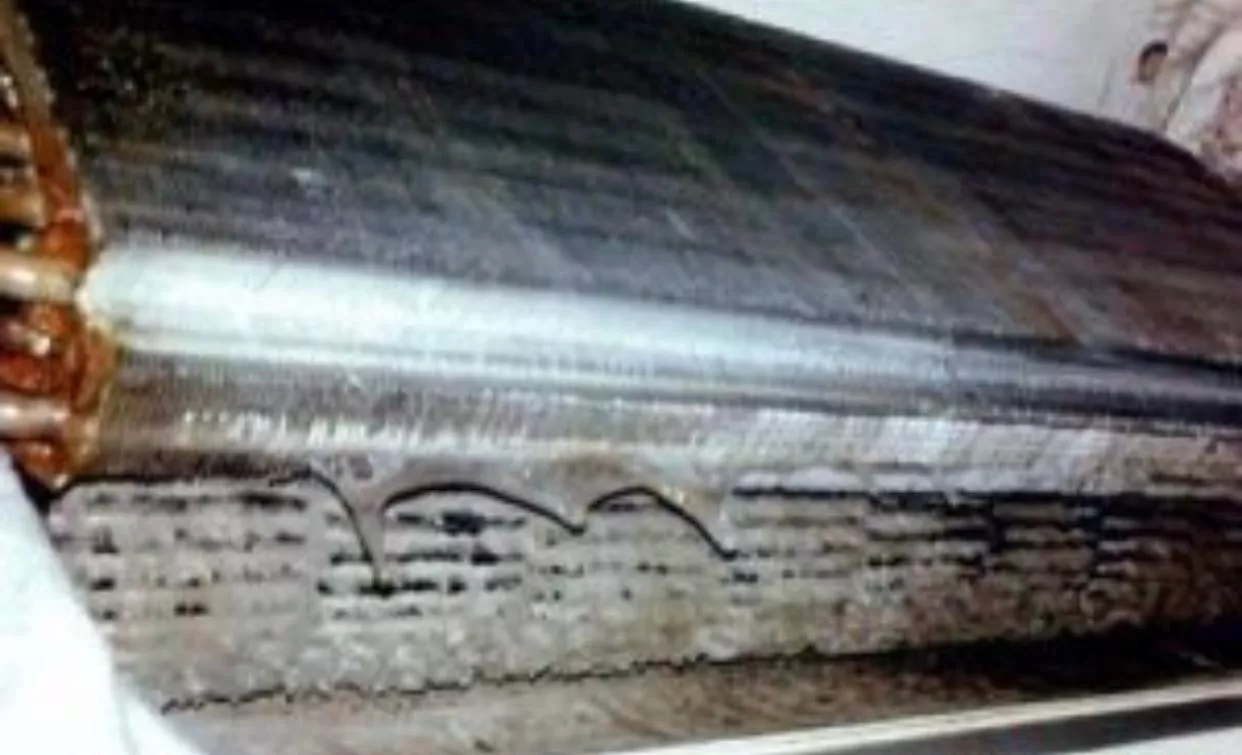
The photo on this post shows an evaporator coil part-way through a clean. That coil is the part of the system that decides whether an older unit is worth moving at all, and it is the part nobody looks at before deciding.
The five things that actually decide it
1. What refrigerant the unit runs on
Check the label on the outdoor unit. It will say R22, R410A or R32. This single line tells you more about whether to move the system than the age does.
R32 is what current units use. R410A is the generation before it. R22 is the oldest of the three, and a unit still running it belongs to a generation that is generally being replaced rather than extended. We publish flat gas top-up prices for all three — R32 at $170, R410A at $130 and R22 at $115 — so you can see for yourself that these are all still live in Singapore homes. But paying to relocate an R22 system, and then discovering it needs work, is money spent on the wrong end of the unit's life.
2. Whether the units are even yours
If you are moving out of a rented flat, the aircon may be listed on the tenancy inventory as the landlord's fixture — including units a previous tenant installed and left. Read the inventory before you book anyone to take it down. We have written separately about what tenants can and cannot do with aircon in a rented flat, and the same document usually settles this question.
3. Whether it suits the new place at all
A System 3 sized for a three-bedroom flat does not automatically suit the next home. Room sizes change, sun exposure changes, and the distance from the ledge to the furthest bedroom changes — which is the measurement that drives piping cost. A unit that was correctly sized in the old flat can be undersized or oversized in the new one, and an undersized unit runs constantly without ever getting the room properly cold.
4. The condition of the fan coils, not their age
Age is a weak signal. A four-year-old unit in a flat beside a main road, serviced twice, can be in worse condition than an eight-year-old unit that has been maintained. What matters is the state of the coil and the blower wheel — and that is visible during a service, not from the outside. Our note on how long an aircon actually lasts in Singapore goes into what shortens that life.
5. What the alternative genuinely costs
This is where the decision usually turns, and it is why the comparison has to be made with real numbers rather than a feeling. Our installation prices are published: a single split starts from $1,200, System 2 from $2,200, System 3 from $2,800 and System 4 from $3,500 on the standard inverter tier, with premium tiers from $1,500, $2,800, $3,300 and $4,500 respectively.
Relocation is quoted rather than listed, because it depends entirely on what comes down, what has to be replaced and how far the new piping has to run. We do not publish a relocation price for the honest reason that a fixed number would be a guess until someone has seen both the units and the new property. The site survey is free, and it is the only way to put a real figure beside the ones above.
The comparison that matters is not "moving is cheaper than buying". It is: what does moving cost, and what am I getting for it — a system with some years left, or one that arrives at the new place already needing attention.
What to check before you decide
Four things, all of which you can do this week:
- Read the outdoor unit label and note the refrigerant and the year, if it is printed.
- Find your tenancy inventory or your purchase invoice and confirm the units are yours to move.
- Ask your original installer whether moving the unit affects the workmanship warranty they gave you. This is a question, not an assumption — installers differ, and the answer is worth having in writing before the unit comes off the wall.
- Get the new place measured before agreeing to anything, so the piping run is a number rather than an estimate.
If you do move it, insist on these
A relocation done properly looks like an installation done properly. The refrigerant should be pumped down rather than released. The system should be vacuumed and leak-tested before it is charged at the new address — not simply topped up and switched on. Every unit should be performance-tested before the installer leaves, and you should be told the measured piping length rather than handed a round number.
If the unit has not been cleaned recently, have it done while it is off the wall and accessible. It will never be easier to get at than at that moment. Our published service prices apply the same way as for any other unit — $55 for a general service on one unit, $135 for a chemical wash on one unit.
If you leave it behind
If the units stay, service them before handover. A buyer or an incoming tenant who switches on a unit that blows warm on the first evening will be back to you about it, and a general service is $55 for a single unit. The same logic runs in reverse when you are the one moving in — which is the subject of our guide to checking the aircon before you buy a resale flat.
The short version
Moving an aircon is worth it when the units are genuinely yours, reasonably young, running R32 or R410A, in good internal condition, and roughly right for the new home. When two or more of those are missing, the money is usually better spent on a system that is correctly sized for where you are actually going to live.
If you are weighing it up, WhatsApp us on 9107 2601 — tell us the system type, the rough age and the refrigerant on the label, and we will tell you honestly whether it is worth moving before anyone comes out to look.