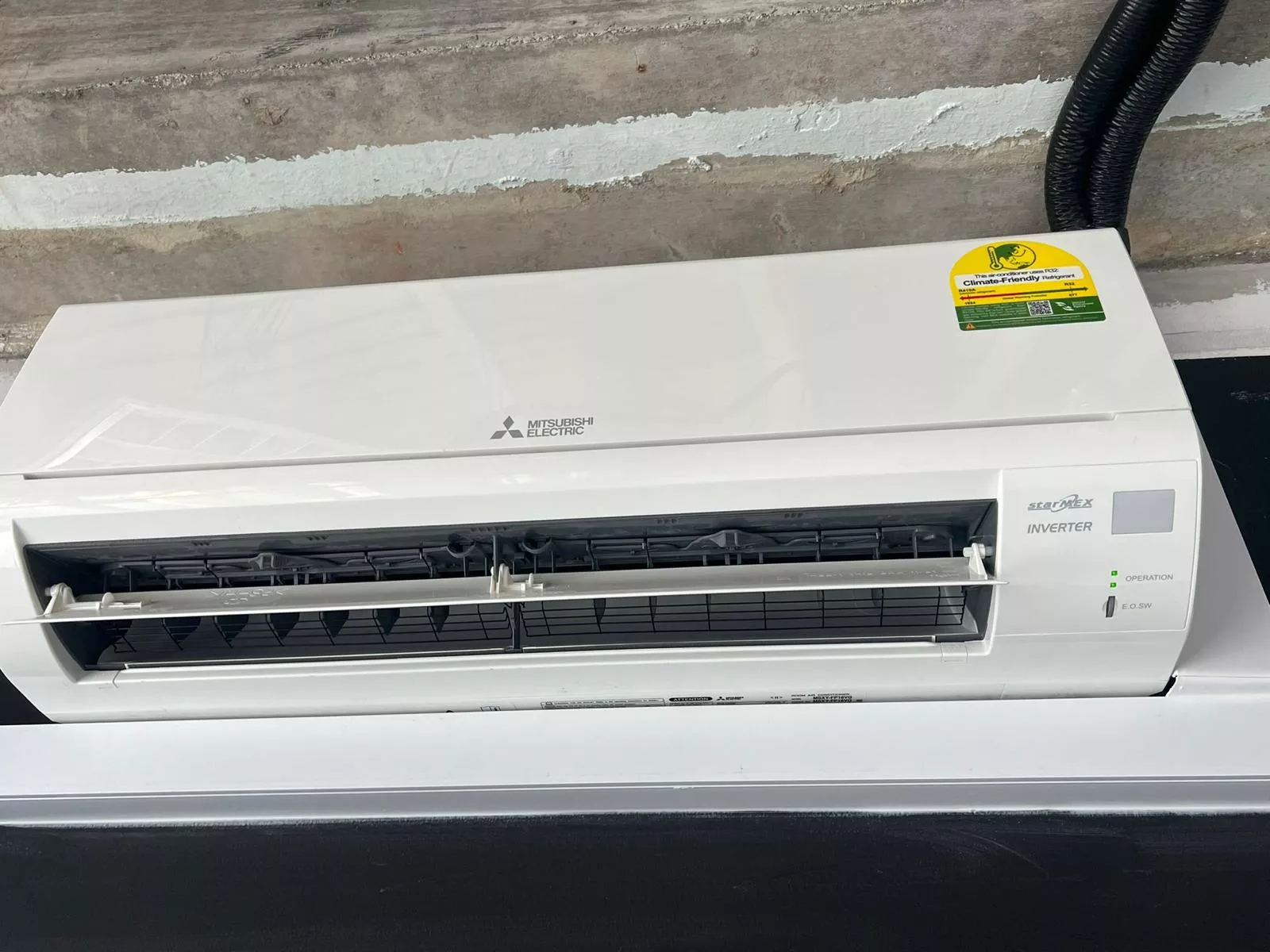
For a typical 3-room or 4-room BTO in Singapore, budget $2,400–$4,500 for complete aircon installation covering living room and bedrooms. That includes system-3 or system-4 units (4-tick inverters, 9000–12000 BTU per indoor unit), condensing unit, copper piping up to 15m per indoor, trunking, wiring, and HDB-compliant bracket. Add $200–$400 per room if you choose a 5-tick inverter or premium brand like Mitsubishi Electric or Daikin. Quoted prices are final.
Understanding System Aircon vs Standalone Units for BTO
Most new BTO flats come with zero aircon installation—just empty rooms and a designated ledge or area for the condensing unit. You choose between:
- System aircon (multi-split): One outdoor condensing unit serves 2–5 indoor fan-coil units. Copper pipes and drain pipes run concealed in false ceiling or trunking. Typical for 3-room and larger HDB.
- Standalone window or split units: One outdoor compressor per indoor unit. Cheaper upfront ($400–$700 per room), but noisier, less efficient, and you multiply the number of outdoor units—problematic for high-floor BTOs where MCST or HDB ledge space is limited.
For a BTO, system aircon is the overwhelmingly popular choice because:
- HDB ledges (especially 10th floor and above) have strict weight and bracket regulations; one condensing unit is easier to secure than three.
- Inverter system units deliver 30–50% energy savings versus non-inverter window units.
- Quieter indoor operation (18–22 dB for 5-tick models).
- Higher resale value—buyers expect system aircon in modern flats.
Detailed Cost Breakdown: What You Pay and What's Included
Installation quotes vary by brand tier, tick rating, refrigerant type, and pipe-run complexity. Here's the realistic 2025–2026 landscape:
| Package | Brand Examples | Tick Rating | Typical Price (System-3) | Typical Price (System-4) |
|---|---|---|---|---|
| Budget tier | Midea, Haier, Europace | 3-tick or 4-tick | $2,200–$2,800 | $2,800–$3,600 |
| Mid tier | Mitsubishi Heavy Industries (MHI), Panasonic, Fujitsu | 4-tick inverter | $2,600–$3,400 | $3,400–$4,200 |
| Premium tier | Daikin, Mitsubishi Electric (MSY/MSZ), LG ARTCOOL | 4-tick or 5-tick inverter | $3,200–$4,000 | $4,200–$5,200 |
What's Typically Included in a Standard BTO Installation Quote
- Indoor fan-coil units (9000 BTU for bedrooms, 12000 BTU for living room).
- Outdoor condensing unit (compressor capacity matched to total indoor load, usually 24000–36000 BTU for system-3 or system-4).
- Copper refrigerant piping: up to 15m per indoor unit. Beyond that, expect $15–$25/metre surcharge.
- PVC drain pipe and condensate pump if needed (high-floor units often require a pump; add $80–$150).
- Trunking to conceal pipes along walls and ceiling (white PVC, 60mm or 80mm).
- Electrical wiring from DB board to indoor and outdoor units, plus isolator switches.
- L-bracket or platform bracket for outdoor unit, HDB-compliant (galvanised steel, bolted to ledge or external wall).
- Refrigerant gas charge: R32 or R410A, pre-filled in most modern units; initial charge included.
- Testing and commission: leak test (nitrogen pressure), vacuum, first power-on.
Common Add-Ons and Hidden Costs
- Extra pipe run: If your BTO layout requires >15m per indoor (e.g., master bedroom far from service yard), budget $15–$25/m.
- Condensate pump: Mandatory for units above 10th floor or where gravity drain is impossible—$80–$150.
- False ceiling or bulkhead: Not included in aircon quotes. If you want concealed piping and a sleek look, your interior designer or contractor builds the false ceiling; coordinate rough-in before that goes up.
- Upgrade to 5-tick inverter: Add $150–$300 per indoor unit.
- Wi-Fi module or smart control: $60–$120 per system (Daikin, Mitsubishi Electric, Panasonic offer app control).
- Anti-vibration pad: Optional for outdoor unit, $30–$50, reduces noise transmitted to neighbours.
HDB and BCA Rules You Must Know Before Installation
Singapore's Housing & Development Board and Building & Construction Authority enforce strict guidelines for aircon installation, especially in BTOs where structural integrity and fire safety are non-negotiable.
Outdoor Unit Placement and Bracket Compliance
- Designated ledge or platform: Most BTOs have a service yard ledge. The outdoor unit must sit on an HDB-approved L-bracket or platform bracket, bolted into the ledge or reinforced wall, not hung from window grilles.
- Weight limit: Standard ledge supports ~150kg. A typical 24000–36000 BTU condensing unit weighs 50–80kg; factor in bracket and safety margin.
- Drainage: Condensate from the outdoor unit must drain to the common discharge pipe, not drip onto lower floors (fines apply).
- Noise: NEA guidelines cap residential aircon noise at 55 dB(A) during day, 50 dB(A) at night, measured at 1m. Premium inverters comfortably meet this; cheap non-inverter units may not.
Electrical and Wiring Standards
Your BTO distribution board (DB) should have dedicated MCB breakers for aircon circuits. A system-3 or system-4 typically needs:
- One 20A or 32A breaker for the outdoor unit (3-phase if total load >15,000 BTU per phase, but most residential BTOs are single-phase).
- Separate 10A or 16A breakers for each indoor unit or grouped by room.
- 2.5mm² or 4mm² cable from DB to outdoor; 1.5mm² to each indoor.
Licensed electricians must certify the installation; reputable aircon contractors include this or work with a Licensed Electrical Worker (LEW).
Refrigerant Regulations: R32 vs R410A
As of 2025, Singapore has no outright ban on R410A, but R32 is the clear winner for new installations:
| Refrigerant | Global Warming Potential (GWP) | Energy Efficiency | Availability in 2026 |
|---|---|---|---|
| R22 | 1,810 | Low (non-inverter era) | Phased out; do not buy |
| R410A | 2,088 | Good (4-tick inverters) | Still common, being replaced |
| R32 | 675 | Higher (5-tick capable, 10% better than R410A) | Standard in all major brands |
Choose R32 for future-proofing: easier top-ups, lower environmental levy risk, and better cooling per watt in Singapore's 28–34°C ambient temperatures.
Timeline: When to Book and What Happens on Install Day
Booking Window
Most BTO buyers book aircon installation 2–4 weeks before key collection or during the renovation period. Peak months (June–August, December–January school holidays) see 3–4 week lead times; off-peak you can get same-week or even same-day quotes and site surveys.
Recommended sequence:
- Before false ceiling: If your ID is building a false ceiling, the aircon contractor does a rough-in—pipes and wiring laid in the ceiling void, indoor unit positions marked. Coordinate this 1–2 weeks before ceiling board goes up.
- After false ceiling and painting: Full installation—mount indoor units, outdoor unit, connect pipes, test. Takes 1 full day (6–8 hours) for system-3 or system-4.
What Happens on Installation Day
- 08:00–09:00: Technicians arrive, confirm indoor unit positions, drill core holes through external wall for piping.
- 09:00–12:00: Mount indoor units, run copper and drain pipes in trunking, install outdoor bracket, position and secure condensing unit.
- 12:00–14:00: Electrical wiring, connect refrigerant lines (flare joints or brazing), install isolator switches.
- 14:00–16:00: Pressure test with nitrogen (hold 550 psi / 38 bar for 30 min), vacuum pump to remove moisture (hold -755 mmHg for 30 min), open refrigerant valves, power on, test cooling in each room.
- 16:00–17:00: Clean up, hand over remote controls, explain operation and filter cleaning, issue warranty card.
You or a representative must be present to unlock the flat, approve unit positions, and sign off. BTO estates sometimes require a renovation permit from HDB (one-time $30–$50 admin fee paid by owner or contractor).
Six Questions Every BTO Owner Should Ask Before Signing
Transparent contractors welcome tough questions. If a quote looks too good, dig deeper—missing items often surface after deposit is paid.
1. What Exactly Is Included in Your Quote?
Ask for a line-item breakdown: brand and model of indoor and outdoor units, metres of copper pipe included, type of trunking, whether condensate pump and electrical wiring are covered. A one-line $2,500 system-3 package with no detail is a red flag.
2. Is This an Inverter Unit, and What Tick Rating?
Non-inverter systems still exist in the budget segment; they are louder, less efficient, and not worth the $200 saving. Confirm 4-tick or 5-tick inverter in writing. Check the model number on the NEA Energy Label website if you're unsure.
3. How Long Is the Warranty, and Who Handles Claims?
Standard manufacturer warranty: 1 year parts and labour (some brands offer 5-year compressor warranty). The installer should provide at least a 90-day workmanship warranty covering leaks, bracket issues, wiring faults. Ask: do I call you or the brand service centre? (Best answer: call the installer first; they liaise with brand if it's a parts defect.)
4. What Refrigerant, and Do You Carry It for Future Top-Ups?
Insist on R32. If the quote specifies R410A, ask why—older stock or discounted model may be fine if the price reflects it, but R32 is the smarter long-term pick. Confirm the contractor stocks the refrigerant for servicing (not all small operators do).
5. Will You Pull a Vacuum and Pressure-Test?
This is non-negotiable for system aircon longevity. A proper install includes:
- Nitrogen pressure test (550 psi, 30 minutes) to detect leaks in flare joints.
- Vacuum pump (-755 mmHg, 30 minutes) to remove air and moisture; moisture causes compressor corrosion and reduces cooling.
If the installer says 'we use the refrigerant to flush'—walk away. That shortcut costs you years of compressor life.
6. Do You Coordinate With My ID or Main Contractor?
If you have an interior designer or renovation contractor building false ceilings, the aircon team must schedule rough-in before board-up. Confirm the installer will liaise directly or provide a rough-in drawing and attend a joint site meeting.
Common Mistakes BTO Owners Make (and How to Avoid Them)
Choosing BTU Based on Room Size Alone
Online BTU calculators assume ideal conditions. Singapore's reality: west-facing walls, floor-to-ceiling windows, top-floor units, and open-concept living rooms all increase heat load. A 12 m² bedroom facing west may need 10,000 BTU, not the textbook 9,000. Trust an installer who asks about sun exposure, window area, and ceiling height.
Skipping the Site Survey to Save Time
A $2,800 quote over WhatsApp photo might become $3,400 when the installer discovers your master bedroom needs 20m of pipe run or the ledge requires a custom bracket. Always insist on a free on-site measurement before signing—reputable firms do this as standard.
Paying Full Deposit Upfront
Standard practice: 50% deposit on quote acceptance, 50% on completion and testing. Never pay 100% before install. If a contractor demands full payment upfront, that's a solvency red flag.
Ignoring Servicing and Chemical Wash Costs in Your Budget
Aircon installation is just the start. Annual general servicing (every 3–4 months in Singapore humidity) costs $25–$45 per indoor unit. Chemical overhaul every 2–3 years is $80–$150 per indoor. Budget $300–$500/year for a system-3. Neglect servicing and your 5-tick inverter becomes a 2-tick power hog within 18 months.
Frequently Asked Questions
Can I install aircon before collecting my BTO keys?
No. HDB strictly prohibits contractor access before key collection. You may conduct a site survey with the installer during the defects inspection period (before key collection), but physical installation only starts after you have legal possession and submit any required renovation permits.
Do I need MCST approval for BTO aircon installation?
BTO flats are HDB public housing, not condominiums, so there is no MCST. You follow HDB guidelines: outdoor unit on designated ledge, no hacking of structural beams, and condensate must drain to the common pipe. No separate approval letter required, but keep your installation invoice for HDB records if queried.
Is a chemical wash necessary for a brand-new aircon system?
No. A new system has clean coils and blowers. Your first service should be a standard general service (filter clean, coil rinse, drain check) at 3–4 months of use. Chemical wash becomes necessary after 12–18 months when dust and mould accumulate in humid Singapore conditions. Insist on the 9-point pre-check included with servicing at aircons.sg to catch issues early.
What if my BTO flat has no false ceiling—can I still install system aircon?
Yes. Pipes and wiring run in surface-mounted trunking along walls and ceiling edges. It's less aesthetically seamless than concealed piping, but functionally identical and $400–$800 cheaper than building a false ceiling solely for aircon. Most 3-room and 4-room BTO owners without full renovation go this route.
How long before I need to top up refrigerant gas?
A properly installed, leak-free system should never need a top-up for 5–10 years. If you're topping up gas annually, you have a leak—fix the leak (flare joint, corrosion pinhole, or vibration crack), then recharge. Gas top-up without fixing the root cause is throwing money away and harms compressor longevity.
Ready to Install Aircon in Your New BTO?
aircons.sg installs system aircon for BTO flats across Singapore—HDB-compliant brackets, R32 inverter units from Daikin, Mitsubishi Electric, Panasaki, and Midea, full pressure test and vacuum, 90-day workmanship warranty, and transparent pricing. Minimum service booking is $55 for 1 unit (includes technician visit, the 9-point pre-check, and standard servicing). Installation quotes are obligation-free; same-day site survey available. WhatsApp us at +65 9107 2601 with your BTO block, floor plan, and preferred install date—we'll send a line-item quote within 2 hours, and our team will walk you through every question on this list before you commit a single dollar.