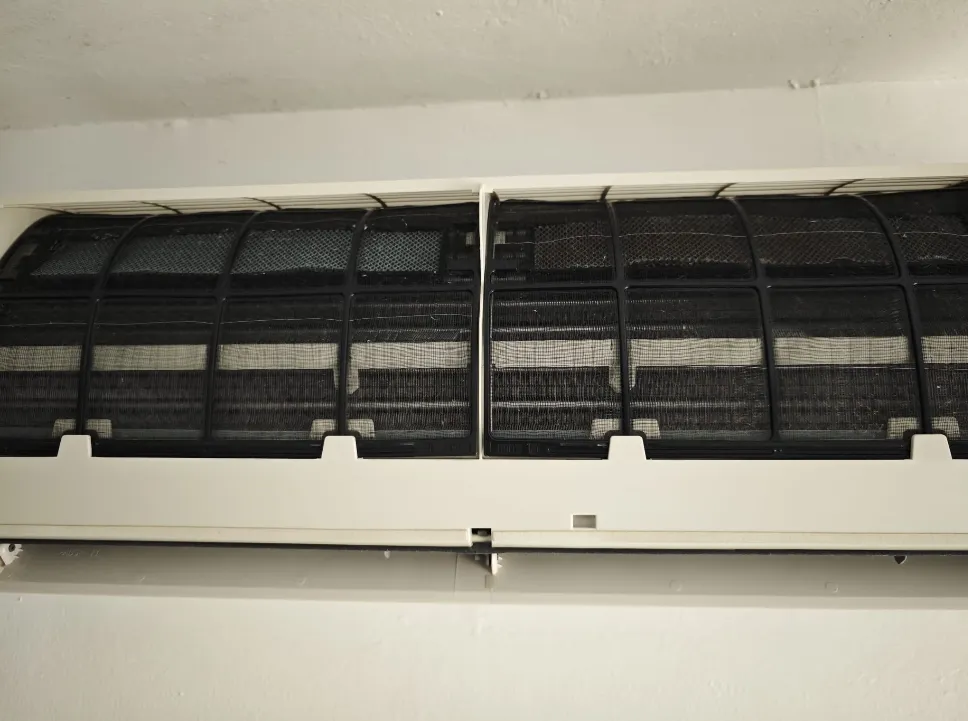
The technician has opened the unit, tested a few things, and then said the sentence that makes the bill jump: "The PCB is gone." It is a short diagnosis, it is hard for a homeowner to check, and it is usually followed by a figure you have no way to compare. Some of the time it is simply true. Some of the time it is the name given to a fault that nobody finished tracing.
This guide is for the moment between hearing that sentence and saying yes. It explains what the board is, what else can look like a board fault, the questions worth asking before you approve a quote, and what to have ready so the next visit goes faster. It is written for anyone with a wall-mounted split unit or a multi-split system, whoever installed it.
What the PCB actually is
PCB stands for printed circuit board. In an aircon it is the control board: the part that takes the instruction from your remote, reads the sensors, and tells the fan and the compressor what to do. The indoor unit has one. The outdoor unit has its own. They talk to each other, so a fault on either one can stop the whole system, and which board is at fault changes the job.
That is the first thing to find out, because "the PCB" on its own is not enough information to price anything. Ask which board, in which unit, and what makes the technician think so.
Why "PCB" is a conclusion, not a diagnosis
A dead or unresponsive aircon has a short list of usual suspects, and the board is only one of them. On our repair page, a unit that will not turn on is listed against three causes: the capacitor, the PCB, or the remote signal. Before anyone writes "PCB" on a quote, the cheaper causes should have been ruled out. In practice that means checking the following.
- Power reaching the unit. The breaker, the isolator switch and the supply to the indoor unit. A unit with no power looks identical to a unit with a dead board.
- The remote and its signal. Flat batteries, or a remote that has lost its pairing, can make a healthy unit look dead. Our post on checks before you call about a unit that will not turn on lists what is safe for you to try yourself.
- The capacitor. A small, common part that helps motors start. A unit that hums or clicks without starting is the classic case. It is a separate, usually much smaller job than a board.
- An error code. Many units show a blinking light or a code on the display. The code narrows the field a great deal, and it is worth photographing before anything is reset. See what a blinking light means and what to tell the technician.
This is also why a good diagnosis starts with the simple things. On our own 9-point pre-check, the first point is a power and thermostat test that confirms the electrical supply, the board's response and the remote and thermostat function before anything is taken apart. The board is checked early, but only alongside the things that can imitate a board fault.
What a board problem tends to look like
None of these proves a board fault, and every one of them can have another cause. They are the patterns that make a board worth suspecting once the simpler causes have been cleared:
- The unit is completely dead, with no lights, although power is reaching it.
- Lights come on but the unit does not respond to the remote or to the manual button.
- An error code that returns after the unit has been switched off at the isolator for a few minutes and switched back on.
- The unit starts and stops on its own, or ignores the temperature you set.
- The indoor fan runs but the outdoor unit never starts, and the capacitor has already been checked.
Ask what probably killed it
A board does not usually fail for no reason, and the reason matters, because fitting a new board into the same conditions can end in the same failure. The question to ask is simply: why did this one fail?
- A power event. If the unit stopped working after a thunderstorm or a power trip, say so. Our post on what to check after a thunderstorm trip covers the order to do things in, and why restarting repeatedly is the wrong move.
- Water. A blocked drain that has been leaking onto the indoor unit can reach the electronics. If there was water, the drain fault needs fixing as well as the board, or the new board is exposed to the same leak.
- Age. A board in a unit that is ten or more years old is one worn part in a system where everything else is the same age. That is a different decision from a board in a unit that is three years old.
Six questions to ask before you approve the quote
- Which board, indoor or outdoor, and what did you test to conclude that? You are not trying to catch anyone out. A technician who has done the work can answer in a sentence.
- What did you rule out first? Power at the isolator, the remote, the capacitor, the error code. If none of these were checked, ask for them to be checked before you commit.
- What is the part, and is it new? The quote should name the part and say whether it is a new part for your model. Photograph the nameplate on the unit first, so the part can be matched to the exact model and not to a guess.
- What does the quote include? The part, the labour and any follow-up visit if the fault does not clear. Ask for it written down, on WhatsApp or on paper.
- Can I see the old board? It costs the technician nothing to show you the part that was replaced, and it is one of the simplest ways to confirm that something was actually changed.
- Is the unit still under the manufacturer's warranty? If it is, a failed board may be the manufacturer's business and not yours. Our post on what a workmanship warranty covers explains the difference between the installer's warranty and the manufacturer's, which comes from the brand and follows the unit. Read your own warranty card for the conditions, because we cannot tell you what your brand's says.
Repair or replace
The same rule applies to a board as to any large repair. Our repair page gives a general rule of thumb: if the repair costs more than half of what replacement would, and the unit is more than 8 years old, replacement usually makes more sense, while newer or higher-end units often justify the repair. It is a rule of thumb, not a verdict, and the unit's age, its repair history and whether it is still cooling well all matter.
For the wider picture, see our posts on when a compressor fails, repair or replace and how long an aircon lasts in Singapore. A board repair on a unit at the end of its life is the classic way to pay twice.
What the price should and should not look like
On our price list, a standard repair for drainage or electrical faults is $80. Compressor and PCB replacement is quoted on site, and there is no published figure for it, because the price depends on the unit and on which board has failed. That is also why we do not put a number in this post. If someone gives you a firm price for a board over the phone without seeing the unit, ask what the figure is based on.
If you decide not to go ahead with the recommended fix, the $55 minimum for 1 unit covers the visit and the diagnosis, as set out on our pre-check page. A diagnosis you can walk away from is worth more than a quote you feel pressured into.
What to have ready before the technician arrives
- A photo of the nameplate on the indoor unit, and on the outdoor unit if you can reach it safely.
- A photo of any error code or blinking light, taken before you switch anything off.
- When the problem started, and whether it followed a thunderstorm, a power trip or a water leak.
- What you have already tried, such as new remote batteries or switching the unit off at the isolator.
- Whether the unit is still within any installation or manufacturer warranty, and where the paperwork is.
Do not open the unit yourself, and do not keep resetting the breaker. If the breaker keeps tripping, leave it off and call.
If you would like us to look at it
Tell us the brand if you know it, how many units you have, what the unit does or does not do, and any code you have seen. WhatsApp us on 9107 2601 and we will tell you how the visit works before we come. Our 9-point pre-check is explained on the pre-check page, and the published prices are on the pricing page. Our post on what your technician should show you before they leave is a useful list to have in hand whoever you call.