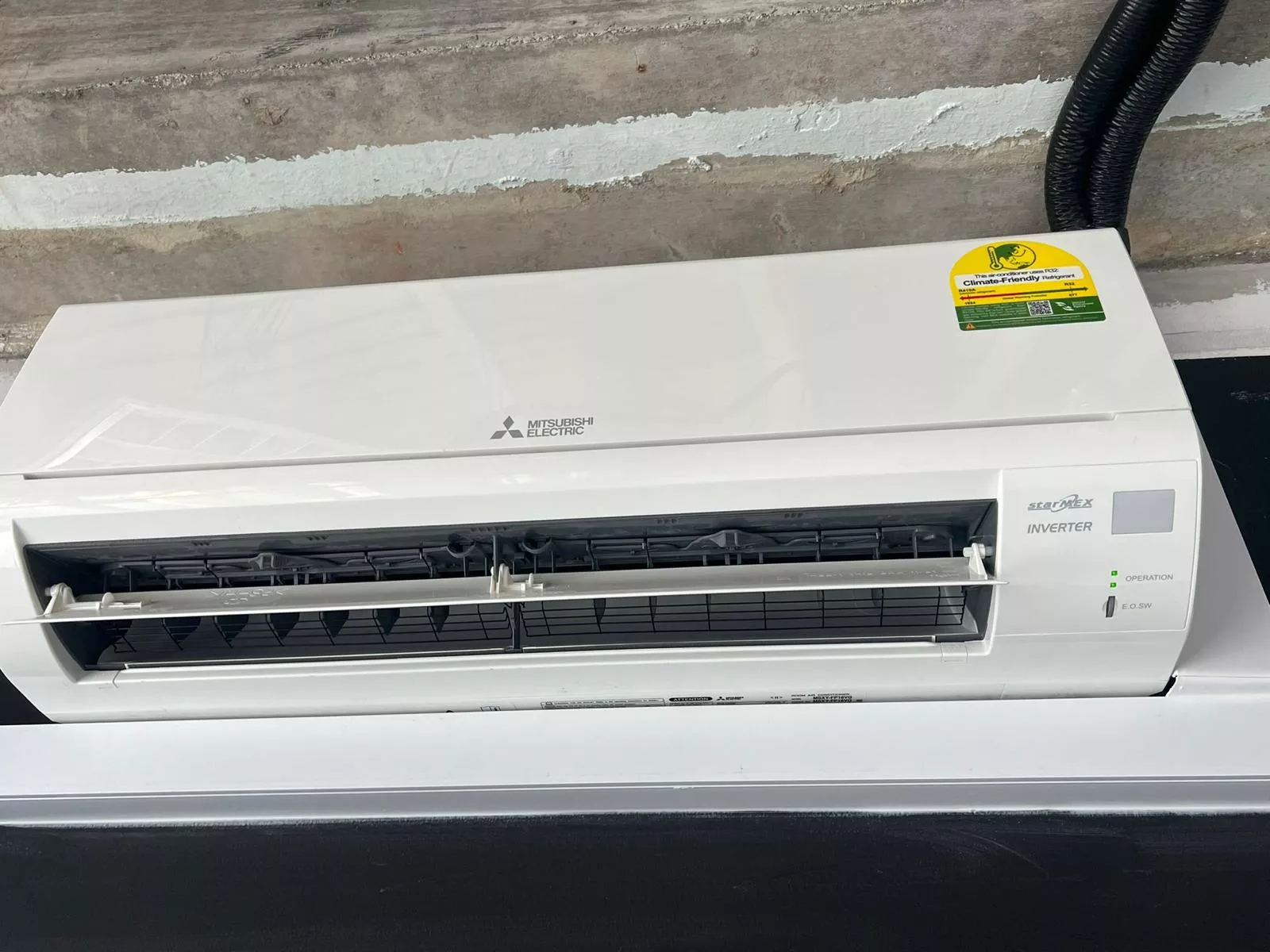
A properly maintained aircon in Singapore lasts 10–15 years on average. HDB units typically reach 8–12 years due to higher daily runtime (often 10–16 hours) and smaller room volumes that cycle the compressor harder. Condo units with lower usage patterns and regular servicing commonly achieve 12–15 years. The difference comes down to runtime hours, servicing frequency, refrigerant quality, and installation environment—not the unit brand alone.
Why HDB Aircons Wear Out Faster Than Condo Units
Daily Runtime and Compressor Cycles
HDB flats average smaller room sizes (10–15 m² bedrooms, 20–30 m² living rooms) compared to condo layouts (12–20 m² bedrooms, 35–50 m² living areas). A 9,000 BTU aircon in a compact HDB bedroom reaches set temperature quickly, then cycles the compressor on and off every 8–12 minutes. In a condo bedroom with higher ceilings and better insulation, the same unit cycles every 15–20 minutes. More cycles mean more wear on the compressor relay, capacitor, and refrigerant valves.
24/7 Operation in Rental and Multi-Generational Homes
Many HDB households run aircons continuously: elderly residents at home during the day, shift workers sleeping in daytime, or rental units where tenants leave units running. A 3-room HDB with two aircons running 16 hours daily clocks 5,840 hours per year per unit. A condo unit used 8 hours nightly for sleep totals 2,920 hours annually—exactly half the load. At this pace, the HDB aircon reaches effective end-of-life (compressor efficiency drops below 70%, repair costs exceed replacement value) in 8–10 years; the condo unit in 14–16 years.
External Unit Exposure
HDB compressors often sit on brackets exposed to full sun, rain, and windblown dust from nearby construction or expressways. Condo developments typically install compressors in recessed ledges, under eaves, or on shaded balconies with better airflow planning. UV degradation of plastic fan blades, corrosion of aluminium fins, and dust clogging reduce HDB compressor lifespan by 15–20% compared to sheltered condo installations.
Refrigerant Type and Lifespan Impact
| Refrigerant | Typical Aircon Age | Availability in SG (2025) | Lifespan Impact |
|---|---|---|---|
| R22 | Pre-2015 units | Phased out; black-market top-ups | Replace now—parts obsolete, leaks common |
| R410A | 2010–2023 units | Widely available, stable pricing | 12–15 years with proper servicing |
| R32 | 2020–present | Standard for new installs | Expected 15+ years; lower operating pressure reduces valve wear |
If your aircon still uses R22, plan for replacement within 12 months. Top-up gas is increasingly contaminated (mixed with cheaper substitutes that damage compressors), and no reputable technician warranties R22 work beyond 30 days. R410A units installed after 2015 have another 5–8 years of economic service life if maintained. R32 units benefit from lower operating pressures (15–18 bar vs. 24–26 bar for R410A), which reduces stress on compressor seals and extends lifespan by an estimated 10–15%.
Maintenance Frequency and Real-World Lifespan
Servicing Schedule by Usage Pattern
| Usage Profile | Recommended Servicing | Expected Lifespan |
|---|---|---|
| HDB, 12+ hours daily | Every 6–8 weeks | 8–10 years |
| HDB, 6–10 hours daily | Every 10–12 weeks | 10–12 years |
| Condo, 6–8 hours nightly | Every 12–16 weeks | 12–14 years |
| Condo, occasional use (guest room) | Every 6 months | 15+ years |
Skipping servicing accelerates failure. A clogged filter forces the blower motor to work 30–40% harder; a dirty evaporator coil reduces heat exchange efficiency by 25–35%, making the compressor run longer to reach set temperature. We see 6-year-old aircons with seized compressors in HDB flats that were never serviced—and 18-year-old condo units still running strong with quarterly maintenance logs.
Chemical Wash Timing
Standard servicing (dismantling, filter wash, coil vacuum, drain flush) handles surface dirt. A chemical overhaul is needed every 18–24 months for HDB units, every 24–36 months for condo units. This involves removing the evaporator coil, soaking in alkaline cleaner, flushing the drain tray, and checking refrigerant pressures. Delaying chemical wash past 3 years allows mould, algae, and oxidised aluminium to bond permanently—you'll smell mustiness even after servicing, and the coil's heat-transfer capacity drops 40–50%. At that point, replacing the indoor unit ($350–$500 for a system-2 aircon) is often cheaper than attempting restoration.
When to Repair vs. Replace
The 50% Rule
If a single repair costs more than 50% of a new equivalent unit's price, replace the aircon. A compressor replacement for a 9,000 BTU unit runs $450–$650 including labour and gas top-up. A new Mitsubishi Starmex / Daikin iSmile system-1 (9,000 BTU, R32, 5-tick) retails $650–$850 installed. Unless your existing aircon is under 4 years old, replacement makes better economic sense.
Common 8–10 Year Failures
- Compressor seizure: $450–$700 repair. If the aircon is over 8 years old, replace the entire system.
- Refrigerant leak (evaporator coil): $280–$400 to re-weld and top up gas. Check the outdoor coil too—if both are pitted, replace.
- PCB (control board) failure: $180–$320 for the part plus $80–$120 labour. Availability is hit-or-miss for discontinued models; lead time can be 3–6 weeks.
- Fan motor (indoor blower): $150–$250. Worth fixing if the compressor and coils are clean.
- Capacitor: $60–$100. Always replace during servicing if the aircon is over 6 years old—it's a wear item.
Multiple Simultaneous Failures
An aircon showing two or more major faults (e.g., weak compressor + PCB error + refrigerant leak) is telling you it has reached end-of-life. Fixing one issue often exposes the next within 6–12 months. We've seen customers spend $800 over 18 months chasing failures on a 10-year-old unit—they could have bought two new inverter aircons for that amount.
Brand Reliability and Actual Longevity in Singapore
Tier 1: Japanese Brands (12–15 Years Typical)
Daikin, Mitsubishi Electric, Panasonic. Compressors are built in Thailand or Malaysia under Japanese QC. Inverter boards use Nichicon or Rubycon capacitors (rated 105°C, 5,000–10,000 hour lifespan). Parts availability remains strong for models up to 12 years old. Expect 12–15 years in condo settings, 10–12 years in HDB with heavy use.
Tier 2: Korean Brands (10–12 Years Typical)
Samsung, LG. Competitive pricing, decent inverter tech, but PCB failures are more common after year 7. Compressors perform well, but plastic components (drain pans, fan blades) show UV brittleness earlier than Japanese equivalents. Good for condo use; acceptable for HDB if serviced religiously.
Tier 3: Chinese Brands (8–10 Years Typical)
Midea, Gree, Haier. Lowest upfront cost, shorter lifespan. Compressors are noisier and less efficient after 6 years. Parts support is inconsistent—some models are orphaned within 5 years. Suitable for rental properties or budget-conscious HDB owners who plan to replace every 8 years.
Multi-Split Systems (System-2, System-3, System-4)
A single outdoor compressor serving 2–4 indoor units reduces average lifespan by 10–15% compared to individual split units. If one indoor unit develops a leak, the shared refrigerant circuit affects all zones. If the single compressor fails, the entire system goes down, and repair costs $600–$1,200. For HDB, individual splits offer better redundancy. For condos with aesthetic MCST restrictions (limited compressor placement), multi-splits are a trade-off.
Installation Quality and Lifespan
Pipework and Gas Charging
Poor installation kills aircons early. Common mistakes: pipework longer than 5 metres without additional gas top-up (under-charged system runs hot), kinked refrigerant lines (restricts flow, compressor overworks), insufficient pipe insulation (condensation drips, energy loss), and drain pipes sloped upward (water backs up, overflows, damages PCB).
We've diagnosed 4-year-old aircons with burnt-out compressors because the installer never vacuum-pumped the lines before gas charging—moisture in the system corrodes the compressor internals and forms ice blockages. A proper install includes:
- Vacuum pump run for 20–30 minutes to remove air and moisture
- Refrigerant top-up calculated by pipe length (add 5–10 g per metre beyond the standard 3 m)
- Pressure test at 40 bar for 15 minutes before final charge
- Drain pipe tested with 2 litres of water to confirm flow
- Compressor bracket secured with M10 bolts into concrete (not expansion plugs into brick)
MCST and HDB Installation Rules
HDB requires compressor units on the service yard ledge or approved brackets within the air-well. Condo MCST often mandates concealed piping, uniform compressor positions, and noise limits (typically 60 dB at 1 metre). Installations that ignore these rules get rejection notices, and hasty re-work (re-routing pipes, relocating compressors) stresses joints and increases leak risk. Always confirm placement with HDB or MCST before installation—it saves you a $200–$400 rework call.
Frequently Asked Questions
Can I extend my aircon's lifespan beyond 15 years?
Possible but not economical. After 15 years, even with perfect maintenance, inverter efficiency drops 20–30%, refrigerant leaks become frequent (coil pitting from humidity), and replacement parts are discontinued. A new 5-tick inverter aircon saves $15–$25 monthly on electricity and includes a 5-year compressor warranty—payback period is under 3 years versus nursing an old unit.
Does inverter technology last longer than non-inverter?
Yes, by 15–25%. Inverter compressors ramp speed smoothly (1,200–4,500 RPM) instead of hard on/off cycles, reducing mechanical stress and capacitor wear. The trade-off: inverter PCBs are more complex and fail more often after year 8. Overall lifespan averages 12–14 years for inverter vs. 9–11 years for non-inverter in Singapore conditions.
How do I know if my aircon is near the end of its life?
Watch for: compressor takes longer than 20 minutes to cool the room, unusual grinding or rattling from the outdoor unit, frequent E-code errors on the display, musty smell that persists after chemical wash, electricity bills climbing 20–30% year-on-year, or refrigerant needing top-up more than once every 2 years. Any two of these signals replacement is due within 12–18 months.
Should I replace all aircons at once or one at a time?
If your aircons were installed together and are all 10+ years old, replace them together. You'll negotiate better pricing ($1,800–$2,200 for three system-1 units vs. $750 each separately), avoid multiple installation appointments, and synchronise your servicing schedule. Staggered replacement makes sense only if units have different usage patterns (e.g., master bedroom runs daily, guest room rarely used).
What's included in the aircons.sg 9-point pre-check?
The 9-point pre-check is included with any service booking (minimum $55 for 1 unit). It covers: refrigerant pressure test, compressor amp draw, evaporator and condenser coil inspection, drain flow test, thermostat calibration, blower motor noise check, PCB error code scan, bracket and pipe integrity, and airflow measurement. If additional work is needed (gas top-up, chemical wash, parts replacement), you'll receive a transparent quote before proceeding. The $55 minimum forms part of the total if you proceed, or covers the visit and diagnosis if you decline.
Get a Transparent Lifespan Assessment and Servicing Quote
Wondering whether your aircon has another 2 years or 8 years left? Book a servicing session with aircons.sg and get the 9-point pre-check included with your booking (from $55 for 1 unit). Our technicians will measure refrigerant pressures, test compressor performance, inspect coils for corrosion, and give you a straight answer: repair, chemical overhaul, or replace. We don't upsell—if your aircon is running fine, we'll tell you to keep servicing it every 3 months and call us when something changes. Transparent pricing, 90-day workmanship warranty, same-day availability. WhatsApp us at +65 9107 2601 to schedule your session or ask about replacement options for ageing units.
Related: Servicing aircon in older HDB estates — what is actually different.
Related: age is one of the three questions that decide whether a failed compressor is worth replacing. The other two, and the arithmetic, are in what to check when you are told the compressor is gone.