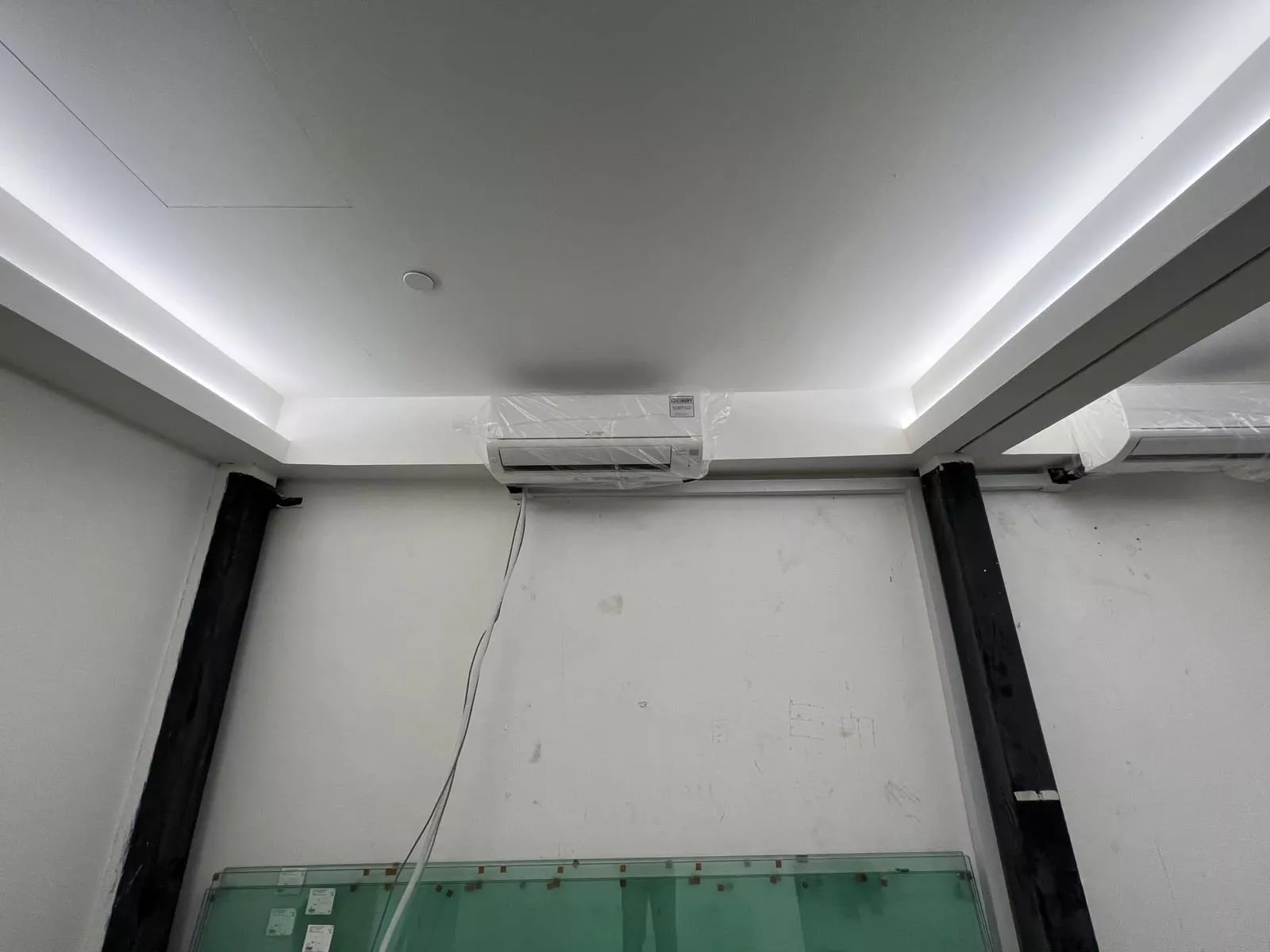
When your aircon runs but doesn't cool, four issues cause 80% of cases in Singapore: clogged filters (fix yourself in 10 minutes), incorrect thermostat settings (check it's below 24°C), low refrigerant from slow leaks ($120–$180 top-up), or dirty condenser coils ($80–$120 chemical overhaul). Start with the filter and thermostat — both are free checks. If the problem persists after cleaning and confirming settings, you likely need refrigerant or a chemical wash, which a standard servicing appointment (from $55 for 1 unit) will diagnose through a 9-point pre-check.
Check Your Aircon Filter First
A clogged filter is the single most common reason an aircon runs but doesn't cool properly. In Singapore's high-humidity environment (80%+ year-round), dust, lint, and mould accumulate fast. A blocked filter restricts airflow, reducing cooling capacity by 20–40% even when the compressor runs at full power.
How to Clean Your Filter (10-Minute Fix)
- Power off the aircon at the wall switch or breaker — never remove the cover while running.
- Open the front panel (most split units have clips at the sides or bottom).
- Slide out the filter mesh — it's usually a plastic frame with fine mesh or pleated material.
- Rinse under a tap with lukewarm water. For heavy buildup, use a soft brush and mild detergent.
- Air-dry completely (20–30 minutes in Singapore humidity) before reinstalling. Never reinstall a wet filter.
- Reinstall and test — run the aircon at 22°C for 15 minutes and check if cooling improves.
If you haven't cleaned your filter in over three months, this step alone solves the problem 40% of the time. For households with pets, smokers, or windows open frequently, clean monthly. Standard servicing includes filter cleaning, but between professional visits, this is the one task every homeowner should handle.
Thermostat and Settings: The Obvious Culprits
Before assuming a mechanical fault, verify your settings. We've attended callouts where the issue was simply mode selection or target temperature set too high. Singapore's ambient temperature averages 28–32°C; your aircon needs to run at least 6°C below ambient to feel cool.
What to Check
- Mode: Confirm you're in Cool mode, not Fan, Dry, or Auto. Auto mode may cycle the compressor off prematurely in some models.
- Temperature setting: Set to 22°C or lower for testing. If the room doesn't cool within 20 minutes, the issue isn't the setpoint.
- Fan speed: Try High or Auto — Low fan speed reduces air circulation and makes the room feel warmer even if the coil is cold.
- Timer settings: Some remotes have sleep or economy timers that ramp temperature up automatically. Disable all timers for troubleshooting.
- Remote battery: Weak batteries can send incomplete signals. Swap in fresh AAA batteries.
Stand directly under the indoor unit and feel the airflow on your hand. If the air is cool (noticeably colder than room temperature) but the room stays warm, your aircon is working — you may have insufficient BTU capacity for the room size, or heat sources (west-facing windows, poor insulation) overwhelming the unit. If the air is barely cooler than ambient, continue troubleshooting below.
Refrigerant Issues: When Gas Runs Low
Refrigerant (commonly R32, R410A, or older R22 in pre-2015 units) is the lifeblood of cooling. It doesn't 'run out' through normal use — a low level always means a leak, usually at brazed joints, valve connections, or corroded copper piping. In Singapore's coastal and high-rise environments, salt air accelerates corrosion, especially on exposed outdoor units.
Signs Your Refrigerant Is Low
- Indoor coil icing: Open the front panel. If you see frost or ice on the evaporator coil (the finned metal behind the filter), refrigerant is likely low. Paradoxically, low gas causes icing because the coil temperature drops below freezing point unevenly.
- Outdoor unit runs but indoor air is lukewarm: The compressor (outdoor unit) hums and vibrates, but cooling is weak.
- Hissing or bubbling sounds: Indicates an active refrigerant leak near joints or valves.
- Longer run times: The aircon runs continuously without reaching the set temperature, driving up electricity bills.
Refrigerant Top-Up Costs and Process
| Refrigerant Type | Cost per kg (SGD) | Typical Top-Up Amount | Total Cost Range |
|---|---|---|---|
| R32 (most 2016+ units) | $80–$100 | 0.6–1.2 kg | $120–$150 |
| R410A (2010–2020 units) | $100–$120 | 0.8–1.5 kg | $140–$180 |
| R22 (pre-2015, phased out) | $150–$200 | 1.0–1.8 kg | $180–$280 |
A refrigerant top-up without leak repair is a temporary fix — you'll need another top-up within months. Honest technicians will pressure-test the system, locate the leak (often at flare nuts or the condenser), and quote repair. Leak repair costs $80–$200 depending on location and whether brazing is required. For R22 systems with major leaks, replacement is often more economical than ongoing top-ups given R22's scarcity and price.
The 9-point pre-check included with every aircons.sg service booking measures refrigerant pressure with gauges, identifies leaks using soap solution or electronic detectors, and provides a transparent quote before any top-up. The $55 minimum (1 unit) covers the technician visit, diagnosis, and standard servicing; if you proceed with a gas top-up, that $55 is part of the total bill, not an additional charge.
Dirty Condenser Coils and Chemical Wash
The outdoor condenser unit expels heat absorbed from your room. When the condenser coils (the finned radiator surrounding the fan) accumulate dirt, pollen, or algae, heat exchange efficiency drops. The compressor works harder, consumes more power, and cooling output falls by 15–30%. In Singapore's tropical climate, algae and mould grow quickly on damp coils, especially in shaded or poorly ventilated outdoor spaces.
When You Need a Chemical Wash
Standard servicing includes wiping accessible surfaces and vacuuming the condenser fins, but it doesn't remove embedded grime inside the coil matrix. A chemical overhaul (also called chemical wash) involves:
- Dismantling the indoor unit's front cover, blower wheel, and drain tray.
- Spraying alkaline cleaner onto the evaporator coil to dissolve mould, nicotine, grease, and organic buildup.
- Flushing the drain line with high-pressure water or compressed air to clear blockages (a clogged drain causes water leaks but also back-pressure that reduces cooling).
- Cleaning the condenser coil outdoors with coil cleaner and a soft brush.
- Reassembling and testing airflow and temperature drop.
Cost for chemical overhaul: $80–$120 per indoor unit, $100–$150 for outdoor unit, or $150–$220 for a full system wash (both indoor and outdoor). Chemical wash is recommended annually for heavy-use households (aircon running 10+ hours daily), every 18–24 months for moderate use. If your aircon hasn't been chemically cleaned in over two years and cooling is weak, this is likely the fix.
DIY Condenser Cleaning (Partial Solution)
You can improve condenser performance between professional services:
- Turn off power at the breaker.
- Remove debris: Clear leaves, cobwebs, and dust from the exterior grille using a brush or vacuum with a soft attachment.
- Spray with water: Use a garden hose on low pressure (high pressure bends fins) from the inside out to push dirt outward. Avoid soaking electrical components or the fan motor.
- Straighten bent fins: Use a fin comb (available at hardware stores, $8–$15) to gently realign bent aluminium fins, which restrict airflow.
This improves cooling by 5–10% but won't match a full chemical wash. For HDB units with outdoor compressors mounted on brackets outside the kitchen or bedroom window, always work safely — use a sturdy ladder and, for high floors (above 6th storey), consider hiring a professional rather than risking a fall.
Compressor and Mechanical Faults
If you've cleaned filters, verified settings, ruled out refrigerant and coil issues, and cooling is still poor, the compressor or expansion valve may be failing. These are less common (under 10% of 'not cold enough' cases) but more expensive to fix.
Compressor Problems
The compressor (located in the outdoor unit) pressurises refrigerant. Symptoms of compressor failure:
- Outdoor unit is silent or only the fan spins — compressor not engaging.
- Clicking or buzzing without startup — electrical fault or seized compressor.
- Outdoor unit vibrates excessively or makes grinding noises — worn bearings or internal damage.
Compressor replacement costs $350–$650 for a standard 9,000–12,000 BTU split unit, plus refrigerant recharging ($120–$180). For units over 8–10 years old, replacement of the entire system is often better value than a new compressor, especially if the evaporator and condenser coils are also corroded.
Expansion Valve or Capillary Tube Blockage
The expansion valve regulates refrigerant flow into the evaporator. If blocked by debris or moisture contamination, cooling becomes erratic — sometimes cold, sometimes not. Symptoms include intermittent cooling, ice forming only on part of the coil, or fluctuating temperatures. Replacing an expansion valve costs $120–$200 including labour and refrigerant top-up. This fault is rare but worth checking if your aircon has had refrigerant work done recently (contamination can occur during improper gas top-up).
Room Size, Insulation, and Realistic Expectations
Sometimes the aircon is functioning perfectly, but it's undersized for the space or fighting too much heat gain. Singapore's intense solar radiation, large window areas (especially in condos), and open-concept layouts challenge cooling capacity.
BTU Capacity vs. Room Size
| Room Size (sqm) | Minimum BTU Required | Recommended Unit Size |
|---|---|---|
| 10–15 sqm (small bedroom) | 7,000–9,000 BTU | 9,000 BTU |
| 15–20 sqm (master bedroom) | 9,000–12,000 BTU | 12,000 BTU |
| 20–30 sqm (living room) | 12,000–18,000 BTU | 18,000 BTU |
| 30–40 sqm (open-plan) | 18,000–24,000 BTU | 24,000 BTU or multi-split |
Add 10–20% to the minimum BTU if:
- West-facing or corner unit with multiple external walls
- Ceiling height above 2.8 m
- Large windows (over 30% of wall area) without blackout curtains or film
- High occupancy (more than two people regularly in the room)
- Heat-generating appliances (desktop PC, oven, multiple lamps)
An undersized aircon will run continuously, never reach the set temperature, and feel 'not cold enough' even when mechanically sound. If you suspect undersizing, measure your room (length × width in metres) and compare to the table above. Upgrading to a higher-BTU unit costs $600–$1,200 installed, depending on brand and complexity (e.g., whether existing copper piping and electrical wiring are adequate).
Improving Insulation and Reducing Heat Gain
- Curtains or blinds: Block direct sunlight during peak hours (2–5 PM). Blackout or thermal curtains reduce heat gain by 30–50%.
- Window film: Reflective or low-emissivity film cuts solar heat by 40–60%, popular in condos with large glass facades. Cost: $8–$15 per sqm installed.
- Seal gaps: Check door sweeps and window seals. Even a 5 mm gap around a door lets hot air in continuously, adding 10–15% to cooling load.
- Ceiling fans: Use in conjunction with aircon. Fans don't lower temperature but improve air circulation, making 25°C feel like 23°C and letting you set the thermostat higher to save electricity.
Frequently Asked Questions
How do I know if my aircon needs gas top-up or just cleaning?
If the indoor coil has ice or frost, it's likely low refrigerant. If the coil looks dirty, grimy, or has visible mould, cleaning is the fix. If you're unsure, book a standard servicing appointment — the 9-point pre-check included with every service booking (from $55 for 1 unit) measures refrigerant pressure with gauges and inspects coil condition, giving you a clear diagnosis before any paid work.
Can I top up refrigerant myself to save money?
No. Refrigerant handling requires certification under Singapore's Environmental Protection and Management Act. DIY top-up risks overcharging (which damages the compressor), undercharging (wasting money with no improvement), and refrigerant leaks (R32 and R410A are greenhouse gases). Improper work also voids manufacturer warranties. A professional top-up with leak check costs $120–$180 and includes proper recovery, vacuum, and recharge — worth every dollar.
Why is my aircon cold in the morning but warm in the afternoon?
Afternoon sun raises your room's heat load by 30–50%, especially for west-facing units. If your aircon copes in the morning but struggles at 3 PM, it's borderline undersized or fighting excessive solar gain. Install blackout curtains or window film to cut heat, or upgrade to a higher-BTU unit if the problem persists year-round. Alternatively, low refrigerant can cause this — as outdoor temperature rises, an undercharged system loses capacity faster.
How long does a chemical wash take, and will it fix weak cooling?
Chemical overhaul takes 1.5–2.5 hours per unit, depending on access and buildup severity. It fixes weak cooling caused by dirty coils, blocked drains, or mould — common after 12–18 months without service. If the issue is refrigerant or a compressor fault, chemical wash won't help; that's why the pre-check diagnosis matters. Honest servicing includes testing before recommending the right fix, not defaulting to the most expensive option.
Is it normal for my aircon to take 30 minutes to cool the room?
In Singapore's heat, 20–30 minutes to drop from 30°C to 24°C is normal for a correctly sized unit. If it takes over 45 minutes or never reaches your set temperature, there's a fault — usually low refrigerant, dirty coils, or undersized capacity. Standard servicing restores normal cool-down time by cleaning filters and coils, checking refrigerant, and verifying airflow. Persistent slow cooling after servicing means the unit is underpowered for your space.
When to Call a Technician (and What to Expect)
If you've cleaned the filter, checked settings, and cooling hasn't improved after 24 hours, the issue needs professional diagnosis. At aircons.sg, every service booking (minimum $55 for 1 unit) includes a 9-point pre-check: refrigerant pressure test, coil inspection, drain line check, electrical connections, thermostat calibration, airflow measurement, and more. You get a transparent quote for any additional work — gas top-up, chemical wash, parts replacement — before we proceed. If you decline the recommended fix, the $55 covers the visit and diagnosis. The 90-day workmanship warranty means if the same fault recurs within three months, we return and fix it at no extra charge.
Same-day service is available for most postcodes across Singapore — HDB estates, private condos, and landed properties. We carry common refrigerants (R32, R410A), spare capacitors, contactors, and cleaning chemicals on every van, so most jobs finish in one visit. The price we quote on WhatsApp is what you pay. Message us at +65 9107 2601 with your unit type, issue description, and location, and we'll give you an immediate cost estimate and slot availability. Transparent pricing, no surprises, done by technicians who've spent years servicing aircons in Singapore's humidity and high-rise constraints.
If it is not the whole flat but one particular room that will not cool, the diagnosis runs differently - see uneven cooling on a System 3 or 4 for the 30-minute test that splits that problem in two.