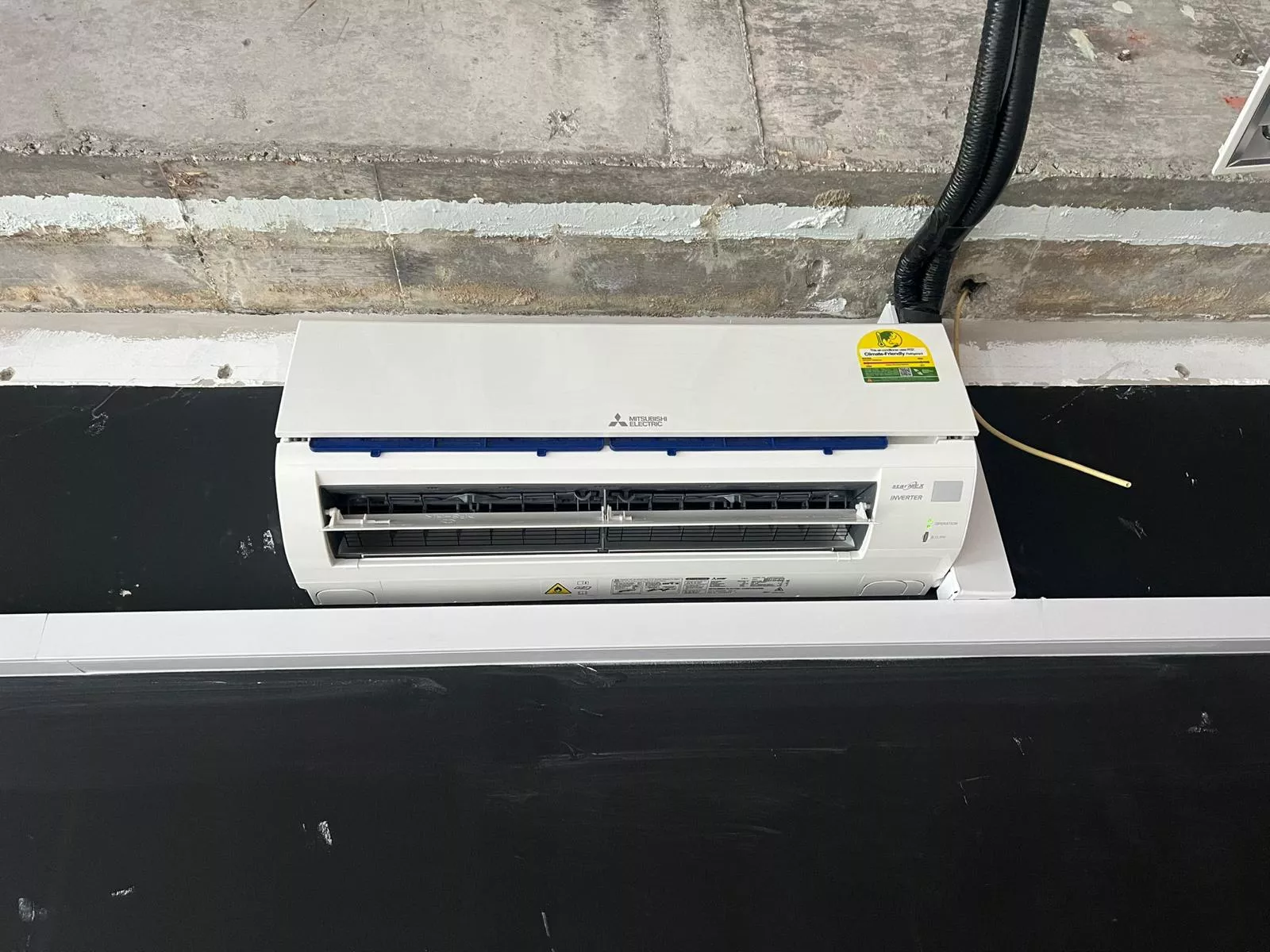
When an aircon is a few years old and cooling weakly, dripping, or smelling musty at switch-on, the choice is usually framed as clean it or replace it. The real choice is narrower and cheaper to get wrong: an aircon chemical overhaul is a published $200–$640 depending on how many units, a new installation starts from $1,200. That is a big enough gap that most owners default to the overhaul — but a handful of conditions mean the overhaul money is better spent on a new unit, and there is no way to see them from outside the casing.
What an overhaul actually buys you
A general service works around the parts still on the wall. A chemical overhaul takes the whole indoor unit off the bracket: casing apart, drain pan and blower wheel out, every part washed and dried separately, then reassembled with a performance test. That is the only way to reach the back face of the coil, the blower barrel and the drain pan outlet — the places a wash or a wipe-down cannot get to. See our full walkthrough of what happens on the day if you want the nine-step sequence.
Published prices: $200 for one unit, $370 for two, $515 for three, $640 for four, and $150 per unit from five. Compare that with a chemical wash at $135 for one unit — the wash cleans the coil in place, the overhaul is the only job that reaches the blower wheel and the back of the coil. Our wash-versus-overhaul comparison breaks down which job fits which symptom.
The case for overhauling
An overhaul is the right call when the unit's problem is dirt and buildup rather than a failing part:
- Weak airflow with a clean filter. If the filter is clean but the room still won't cool the way it used to, the blower wheel or the back of the coil is probably fouled — a general service and a wash both work around that area, not through it.
- A musty or sour smell that a wash didn't fix, or faded and came back within weeks. That points to buildup deep in the blower barrel rather than on the visible coil face.
- Dripping or black specks below the unit with no obvious drainage fault. Years of buildup shedding is a common cause, and it needs the unit opened to confirm and clear properly.
- The unit is otherwise sound — no corrosion visible where the bracket meets the wall, no history of repeated gas top-ups, cooling that is weak rather than absent.
On a unit that fits that description, paying $200–$640 to overhaul is a fraction of $1,200-plus for a new single split, and it is the only service tier that actually reaches the parts causing the problem.
The case for replacing instead
Three things turn an overhaul into money spent on a unit that was going to fail anyway, and none of them are visible until the unit is off the wall or until you already know the history:
- A corroded wall bracket. This is a real, published risk on units in the 12–15 year range: the bracket looks fine from below and turns out corroded only once the unit is taken down for the overhaul. A corroded bracket is a separate job on top of the overhaul, and on an older unit it is a sign the rest of the hardware is aging the same way.
- Brittle casing plastic and discontinued parts. Also flagged on units in that same 12–15 year window — a clip that snaps on reassembly or a part that has to be sourced secondhand is the overhaul telling you the unit is near the end of its practical life, not a fault of the job.
- The unit needs an overhaul AND a leak repair at the same time. Cleaning does not add refrigerant and does not fix a leak. If cooling faded gradually over weeks rather than staying weak since the last clean, that is a leak question, not a dirt question — ask for a pressure test (published at $150 per FCU) before booking the overhaul. Paying for both on a unit already showing its age is usually the moment to price a replacement instead.
None of these show up on a quick look at the unit from the floor. They show up during the job, or in how the unit has behaved over the past year or two — repeated gas top-ups, a rising sound level, a smell that keeps coming back within weeks of a wash. If your unit has one or more of those signs going in, it is worth asking for a straight opinion on replacement before paying for the overhaul, not after.
The actual arithmetic
Published starting prices, side by side:
- Chemical overhaul: $200 (1 unit) / $370 (2) / $515 (3) / $640 (4) / $150 per unit from 5
- New installation, single split: from $1,200 standard inverter, from $1,500 premium tier
- New installation, System 2: from $2,200 / $2,800
- New installation, System 3: from $2,800 / $3,300
- New installation, System 4: from $3,500 / $4,500
On a straight multiple-unit flat, overhauling four units at $640 is still well under a third of a single new split installation, which is why overhaul is the default answer for most homes. The exception is a system where more than one unit is already showing the 12–15 year signs above — at that point the household is closer to a like-for-like replacement conversation than a cleaning one, and it is worth getting both quoted at the same visit so the comparison is real rather than assumed.
A worked example
Take a 3-room HDB flat with two units: one is four years old and cools fine but has started smelling musty at switch-on, the other is thirteen years old and barely cools at all. Overhauling just the older unit is $200. If the technician gets it off the wall and finds the bracket corroded through, that $200 has effectively bought a diagnosis, and a new single split from $1,200 is the real number to plan for. Overhauling both units instead — the younger one for the smell, the older one to try — comes to $370 total, still a fraction of one new installation, which is why it is usually worth attempting the overhaul first on a unit with no other warning signs.
Now flip it: the same flat, but the thirteen-year-old unit has needed two gas top-ups in the past year and the bracket already shows a rust streak from the window. That combination — age, a repeat refrigerant issue, and visible corrosion — is close to the three replacement signs together. Booking the overhaul on that unit risks paying $200 to confirm what was already fairly likely: the money is better put toward the $1,200 installation quote, taken alongside a site survey so the figure is real rather than assumed.
How the pre-check settles it before you commit
Every service booking includes the 9-point pre-check, and it is what actually separates these three outcomes rather than a guess based on age. It covers a filter and coil dirt assessment, a drainage check, a gas and electrical check, and a visual check of the unit and its mounting. On a unit with no other issues, that check is what confirms a wash or an overhaul will fix the symptom. On an older unit, it is also the point where a corroded bracket or brittle casing gets flagged before money is spent on a job that turns out to be the wrong one — ask the technician directly what the pre-check found before agreeing to proceed with either job.
What to ask before you book either job
- How old is the unit, and does the technician see any bracket corrosion or casing wear before the job starts?
- Has cooling faded gradually, or was it fine until recently? Gradual points to a leak, not dirt.
- Has this unit had repeated gas top-ups in the past year? That is usually a leak being treated as normal wear.
- If replacing: what does the free site survey quote include, and is the piping run standard length or will it run over?
The 9-point pre-check that comes with every service booking is what actually answers most of this — it is the same check whether the job turns out to be a wash, an overhaul, or a conversation about a new unit.