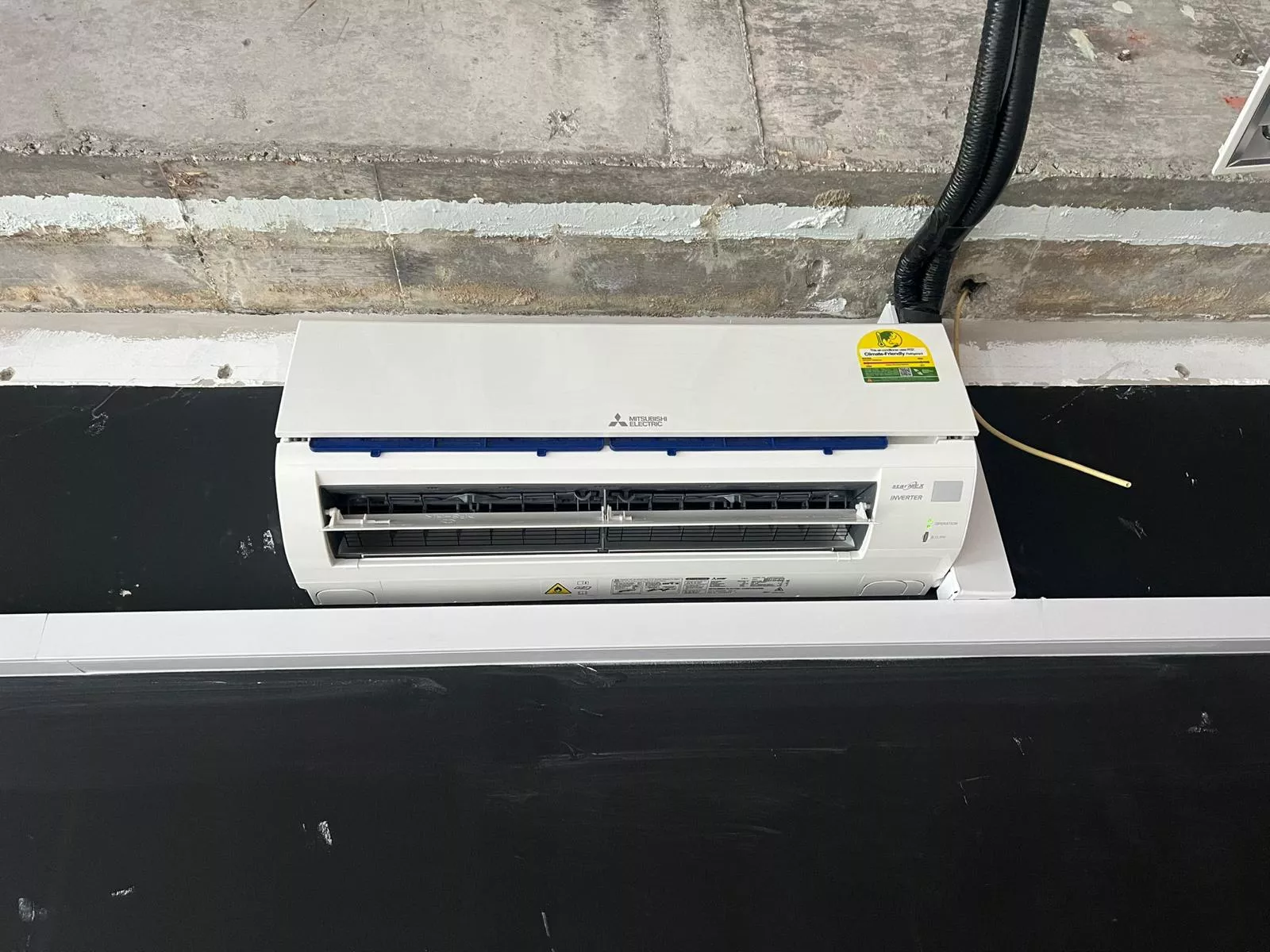
A 5-tick aircon in Singapore saves you $15–$35 monthly per unit compared to a 3-tick model, assuming 8 hours daily use. For a typical 3-bedroom HDB flat running three 9,000 BTU units, that's $540–$1,260 annually. The upfront premium is $150–$400 per unit, so payback happens in 12–18 months. Best performers for Singapore humidity: Daikin iSmile series (inverter, R32), Mitsubishi Starmex (quiet, proven reliability), and Midea Mission Pro (budget 5-tick with solid NEA rating). Size correctly—oversizing kills efficiency even with 5 ticks.
How 5-Tick Rating Translates to Actual Dollar Savings
The NEA energy label measures cooling efficiency in watts per watt: a 5-tick aircon delivers about 4.0–5.0 watts of cooling for every watt of electricity consumed, while a 3-tick sits around 2.8–3.2. In real terms, a 9,000 BTU 5-tick unit draws roughly 600–700W under load; a 3-tick equivalent pulls 850–1,000W for the same cooling output.
Electricity in Singapore averages $0.30–$0.35 per kWh (tariff as of 2025). Run an aircon 8 hours daily:
- 3-tick (900W average): 0.9 kW × 8 hrs × 30 days × $0.32 = $69.12/month
- 5-tick (650W average): 0.65 kW × 8 hrs × 30 days × $0.32 = $49.92/month
- Monthly saving: $19.20 per unit
Scale that to three units in a typical flat: $57.60 monthly, or $691 annually. If you're running aircons longer—common in Singapore's humidity—the gap widens. A household running aircons 12 hours daily (bedrooms overnight, living room evening) sees savings approaching $1,000–$1,400 per year across three units.
Payback Period: When You Break Even
5-tick models cost more upfront. Current market prices (installation included):
| Capacity | 3-Tick Price | 5-Tick Price | Premium |
|---|---|---|---|
| 9,000 BTU | $650–$850 | $850–$1,150 | $200–$300 |
| 12,000 BTU | $800–$1,050 | $1,100–$1,450 | $300–$400 |
| 18,000 BTU | $1,200–$1,500 | $1,600–$2,100 | $400–$600 |
At $19 monthly savings per 9,000 BTU unit, a $250 premium pays back in 13 months. For 12,000 BTU (common in master bedrooms), savings jump to $25–$30 monthly, payback in 12–16 months. After that, it's pure savings for the aircon's 10–12 year lifespan—$2,500–$3,600 over the unit's life, per room.
Top 5-Tick Aircon Models for Singapore Conditions
Not all 5-tick aircons perform equally in Singapore's 80–90% humidity, 30–34°C outdoor temps, and frequent rainfall. Inverter compressors, R32 refrigerant, and robust condensers matter. Here's what actually works.
Daikin iSmile Series (Inverter, R32)
The benchmark. Daikin's iSmile range (models ending in VMA or VMGS) consistently hits 5-tick with real-world reliability. Inverter compressor ramps down smoothly once target temp is reached, cutting power draw by 40–60% vs fixed-speed. R32 refrigerant is mandated in Singapore for new installs (better efficiency, lower GWP than R410A). 9,000 BTU units run $950–$1,150 installed; 12,000 BTU $1,250–$1,450. Quiet: 19–22 dB indoor. Daikin service network is dense—parts available within 24 hours island-wide. Expect 12+ years lifespan with annual servicing.
Mitsubishi Starmex (Inverter, R32)
Premium build, marginally quieter than Daikin (18–21 dB), and the go-to for high-floor condo units where wind load stresses condensers. Starmex models feature anti-corrosion Blue Fin condensers—critical if your unit faces west or gets salt spray (East Coast, Sentosa Cove). 9,000 BTU: $1,050–$1,250; 12,000 BTU: $1,350–$1,550. Mitsubishi's after-sales is slower than Daikin in HDB estates but excellent in prime districts. If budget allows and you value quiet operation, this edges out Daikin.
Midea Mission Pro (Inverter, R32)
The value 5-tick. Midea is a Chinese brand that's earned NEA 5-tick certification without the Japanese price tag. 9,000 BTU units: $850–$1,000; 12,000 BTU: $1,100–$1,300. Trade-off: noisier (24–27 dB), and service network thinner—you'll rely on multi-brand contractors, not brand-exclusive service centres. But for rental flats or investment properties where ROI matters more than whisper-quiet ops, Midea delivers the energy savings at 20–30% lower cost. Lifespan: 8–10 years with proper servicing.
What About Panasonic, LG, Samsung?
Panasonic's 5-tick range (Aero series) sits between Daikin and Midea on price and performance—solid, but no standout advantage. LG and Samsung focus on feature-heavy models (Wi-Fi, air purifiers) that add cost without boosting core cooling efficiency; their 5-tick lineup is sparse and often overpriced for the energy rating. Unless you need smart-home integration, stick with the three above.
Sizing Your 5-Tick Aircon Correctly: Why Efficiency Dies When You Oversize
The #1 mistake: buying a 12,000 BTU unit for a 120 sq ft bedroom because bigger is better. Wrong. An oversized aircon reaches setpoint too quickly, then cycles on-off repeatedly. Inverter compressors lose their efficiency advantage; fixed-speed units waste power on startup surges. You also get poor dehumidification—Singapore's humidity demands runtime to wring moisture from air.
Room Size to BTU Guidelines (Singapore Climate)
| Room Type | Typical Size | Recommended BTU |
|---|---|---|
| HDB common bedroom | 100–130 sq ft | 9,000 BTU |
| HDB master bedroom | 140–180 sq ft | 12,000 BTU |
| Condo bedroom | 120–160 sq ft | 9,000–12,000 BTU |
| Living/dining (4-rm HDB) | 250–350 sq ft | 18,000 BTU |
| Living/dining (condo) | 350–500 sq ft | 24,000 BTU |
| Landed ground floor | 400–600 sq ft | 24,000–30,000 BTU |
Add 10% BTU if the room has west-facing windows, top-floor exposure, or high ceilings (above 2.8m). Subtract 10% if it's an interior room with minimal sun. For open-concept living-dining, measure the combined area and go one size up if there's no partition. A 5-tick aircon sized correctly will outperform an oversized 5-tick every time—both in bills and comfort.
HDB and Condo Installation Constraints
HDB flats have pre-approved condenser ledges; you can't mount elsewhere without HDB written approval (rarely granted). Ensure your 5-tick condenser physically fits the ledge—some high-efficiency models are bulkier. Condo MCSTs often mandate condenser placement, colour (white/grey), and noise limits (check your condo by-laws). High-floor units (above 20th storey) need reinforced brackets due to wind load; confirm your installer provides these (reputable ones do; budget cowboys skip it).
R32 vs R410A: Why Refrigerant Matters for 5-Tick Performance
All new 5-tick models sold in Singapore since 2022 use R32 refrigerant. It's 10–15% more efficient than R410A, has one-third the global warming potential, and is cheaper to top up during servicing. If you're buying second-hand or clearing old stock, avoid R410A units—they won't hit true 5-tick efficiency under Singapore's heat, and you'll struggle to find technicians stocking R410A as supply phases out.
R22 is banned for new installs (NEA regulation, in force since 2020). Any unit still running R22 is 10+ years old; replacement, not servicing, is the right call.
Refrigerant Top-Up Costs (If You Spring a Leak)
- R32: $80–$150 per kg (9,000 BTU unit holds ~0.6 kg)
- R410A: $120–$200 per kg (scarcer supply)
- R22: $180–$280 per kg (discontinued, grey-market only)
A properly installed 5-tick R32 system shouldn't need a top-up for 5–7 years. If you're topping up annually, you have a leak—fix the root cause, don't just refill.
Real-World Energy Bill Comparisons: 3-Room HDB vs 5-Room Condo
Let's model two households to see the 5-tick impact over one year.
Scenario A: 3-Room HDB Flat
- 2× 9,000 BTU (bedrooms), 1× 18,000 BTU (living room)
- Usage: bedrooms 8 hrs/night, living room 5 hrs/evening
- Electricity rate: $0.32/kWh
3-Tick Setup:
Bedrooms: 2 units × 0.9 kW × 8 hrs × 30 days = 432 kWh/month
Living: 1 unit × 1.6 kW × 5 hrs × 30 days = 240 kWh/month
Total: 672 kWh × $0.32 = $215/month, $2,580/year
5-Tick Setup:
Bedrooms: 2 units × 0.65 kW × 8 hrs × 30 days = 312 kWh/month
Living: 1 unit × 1.15 kW × 5 hrs × 30 days = 172.5 kWh/month
Total: 484.5 kWh × $0.32 = $155/month, $1,860/year
Annual saving: $720
Scenario B: 5-Room Condo
- 3× 12,000 BTU (bedrooms), 1× 24,000 BTU (living/dining)
- Usage: bedrooms 10 hrs/night, living 6 hrs/evening
3-Tick Setup:
Bedrooms: 3 units × 1.2 kW × 10 hrs × 30 days = 1,080 kWh/month
Living: 1 unit × 2.2 kW × 6 hrs × 30 days = 396 kWh/month
Total: 1,476 kWh × $0.32 = $472/month, $5,664/year
5-Tick Setup:
Bedrooms: 3 units × 0.85 kW × 10 hrs × 30 days = 765 kWh/month
Living: 1 unit × 1.6 kW × 6 hrs × 30 days = 288 kWh/month
Total: 1,053 kWh × $0.32 = $337/month, $4,044/year
Annual saving: $1,620
Upfront premium for 5-tick across all units: HDB ~$700, condo ~$1,400. Both pay back within the first year.
Maintenance and Lifespan: Keeping Your 5-Tick Running Efficiently
A 5-tick rating is lab-tested under ideal conditions. Real-world efficiency degrades without maintenance. Dirty filters choke airflow, forcing the compressor to work harder—your 5-tick performs like a 3-tick. Clogged condenser coils (dust, pollen, bird droppings) cut heat exchange efficiency by 20–40%.
Servicing Frequency to Maintain 5-Tick Performance
- Every 3 months: DIY filter cleaning (remove, rinse, dry, replace—takes 5 minutes)
- Every 6–9 months: General servicing by a technician—chemical wash of indoor coil, condenser jet-wash, refrigerant pressure check, drain pipe flush. Cost: $50–$80 per unit. Expect 60–90 mins per unit.
- Every 2–3 years: Chemical overhaul if you notice weak airflow or ice on pipes—full dismantle, deep clean. Cost: $120–$180 per unit.
Skip servicing and efficiency drops 15% within a year, 30% by year two. That $20 monthly saving vanishes. We see this constantly: customers buy 5-tick units, never service them, then complain bills didn't drop. The aircon isn't magic—it needs clean coils to work.
Lifespan Expectations
Daikin/Mitsubishi 5-tick inverters with annual servicing: 12–15 years. Midea/budget brands: 8–10 years. Compressor failure is the usual end-of-life; replacement cost ($400–$700) often exceeds buying a new unit. When your 5-tick hits 10 years, start budgeting for replacement rather than major repairs.
Frequently Asked Questions
Is a 5-tick aircon worth it for a rental flat I'll leave in 2 years?
Financially, no—you won't recoup the premium before you move. A 4-tick inverter is the sweet spot for short-term rentals: $100–$150 cheaper than 5-tick, still 20–25% more efficient than 3-tick, and payback happens in 18–24 months. If your landlord is paying for the unit, push for 5-tick; if you're footing the bill, go 4-tick and pocket the difference.
Can I install a 5-tick aircon myself to save on installation cost?
Legally, no. Only licensed EMA electricians can perform aircon installation in Singapore—it involves 230V wiring and refrigerant handling. DIY voids your warranty, risks refrigerant leaks (R32 is mildly flammable), and you'll fail any HDB/MCST inspection. Installation is $80–$150 per unit when bundled with purchase; trying to save that is penny-wise, pound-foolish. We've re-done dozens of botched DIY jobs—always costs more to fix than doing it right the first time.
Do 5-tick aircons work in landed properties with high ceilings?
Yes, but size up. A 3.5m ceiling in a landed dining room increases room volume by 25% vs standard 2.6m HDB ceilings. Use 1.25× the BTU recommendation from the table earlier—so a 400 sq ft room needing 24,000 BTU at standard height should get 30,000 BTU. The 5-tick rating still applies, but undersizing will force the unit to run flat-out continuously, killing efficiency gains. Also consider ceiling cassette units for even air distribution in large spaces; these come in 5-tick models from Daikin and Mitsubishi.
How do I verify an aircon is actually 5-tick before buying?
Check the NEA energy label physically on the unit or ask the retailer for the model number, then cross-check on the NEA Energy Label website (www.nea.gov.sg/energylabel). The label shows ticks and the Energy Efficiency Index (EEI) number—5-tick is EEI ≥4.0 for non-inverter, ≥5.0 for inverter. Some retailers slap 5-tick on marketing even when the model is 4-tick; verify yourself. If buying second-hand, insist on seeing the original label or manual with the NEA certification number.
Will a 5-tick aircon reduce humidity as well as a 3-tick?
Usually better. Inverter-based 5-tick models run longer at lower power rather than cycling on-off, which gives more time for moisture removal. Singapore's discomfort is often humidity, not just heat—82% RH feels worse than dry 30°C. A properly sized 5-tick inverter will keep indoor RH around 55–65%, vs 65–75% for an oversized or inefficient unit. If humidity is your main gripe, prioritise inverter 5-tick models and avoid oversizing.
Why Aircons.sg for Your 5-Tick Installation and Servicing
We're EMA-licensed technicians who've installed and serviced hundreds of 5-tick units across HDB flats, condos, and landed homes island-wide. Before you commit to any new aircon purchase, we offer a free 9-point pre-check: we'll measure your room, check your electrical supply, inspect your condenser ledge, and recommend the exact BTU and brand that'll deliver real savings—not just sell you the highest margin unit. All our quotes are fixed; no surprises, no upsells. Installation includes refrigerant, brackets, trunking, and wiring—typically done same-day. Every installation comes with a 2-year workmanship warranty. Need a quote or want to discuss whether 5-tick makes sense for your home? WhatsApp us directly at +65 9107 2601—we'll respond within the hour during business hours, and we'll talk to you like the technicians we are, not a sales script. Let's get your electricity bill down and your home comfortable.