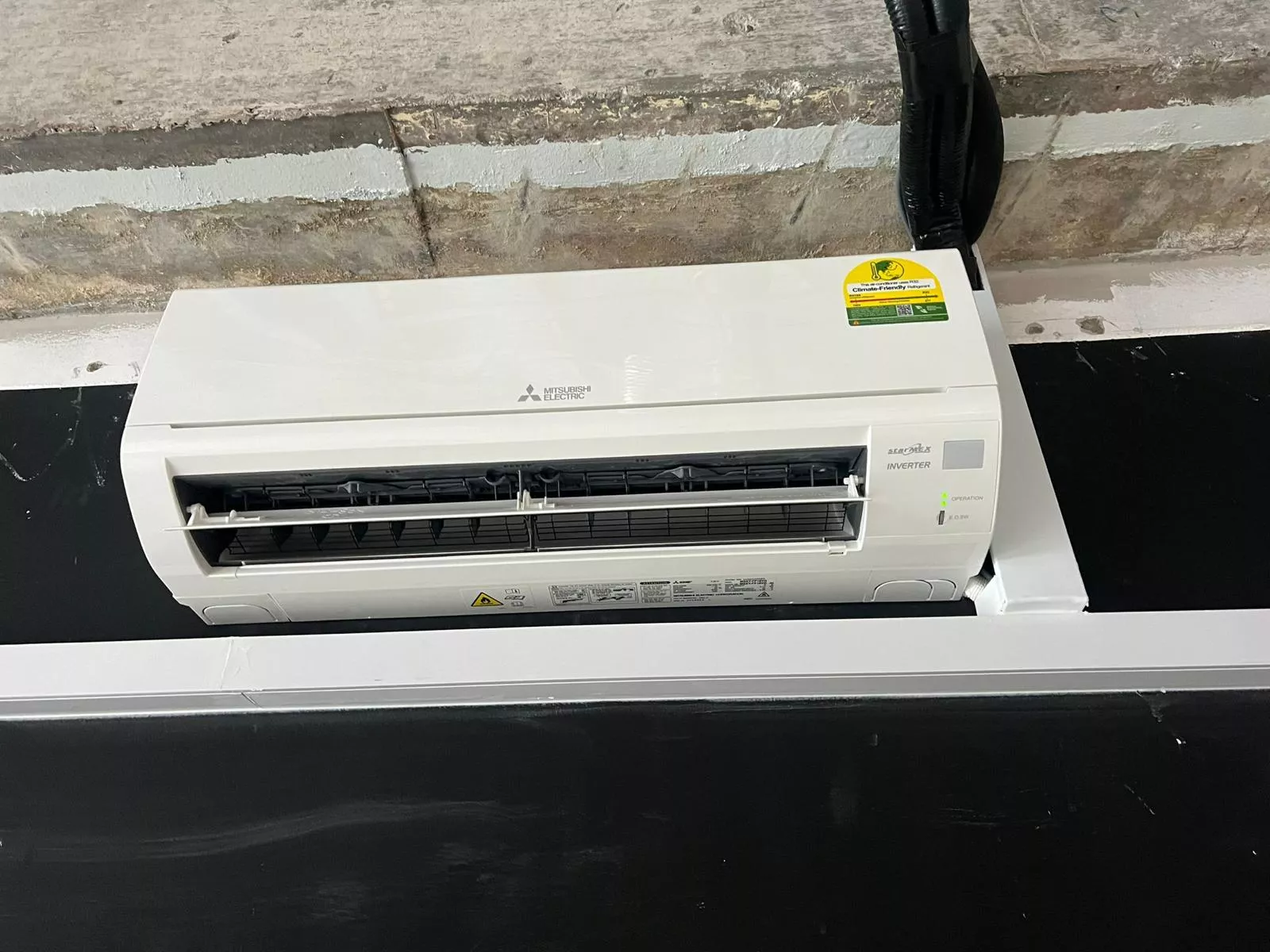
A good office aircon servicing contract in Singapore should include quarterly servicing (minimum), clear response times for breakdowns (ideally same-day for critical zones), transparent per-visit pricing ($45–$90 per unit for standard servicing), and 90-day minimum workmanship warranty. Expect $180–$360 per year per unit for quarterly maintenance on commercial wall-mounted units, higher for cassettes or VRV systems. Avoid contracts that bundle all repairs into a fixed fee without itemised scope — these often exclude refrigerant top-ups, chemical overhauls, and compressor work, leaving you exposed to surprise bills mid-year.
What Should Be Included in Every Office Aircon Servicing Contract
A solid servicing contract protects uptime and budgets. Here is what must be spelled out in writing before you sign:
Servicing Frequency and Scope
Commercial aircons run longer hours than home units — typically 9–12 hours daily, five or six days a week. Standard quarterly servicing (every 3 months) is the baseline for light-use offices. High-traffic environments (retail, clinics, co-working spaces) should contract for bi-monthly or monthly visits to prevent clogged filters and coil fouling. Each visit should include filter cleaning or replacement, coil vacuuming, drain-pan flushing, condensate-pipe clearing, and blower inspection. If the contract says general servicing without itemising tasks, ask for the checklist in writing.
Response Time for Breakdown Calls
Downtime during office hours costs money. A contract worth signing guarantees response within 4–8 hours for critical breakdowns (server rooms, meeting rooms, open-plan floors in peak months). Same-day dispatch is standard for commercial contracts in Singapore; next-day is acceptable only for back-office or storage zones. Confirm whether response-time commitments apply on Saturdays and public holidays — many contracts exclude these unless you pay a surcharge.
Parts, Refrigerant, and Chemical Wash Exclusions
Most servicing contracts cover labour and consumables (cleaning agents, basic filters) but exclude refrigerant top-ups, capacitor or fan-motor replacements, and chemical overhauls. This is reasonable — but it must be stated upfront. A transparent contract will list indicative add-on costs: gas top-up $80–$150 per kg depending on refrigerant type (R32, R410A, or older R22), chemical wash $120–$180 per wall unit, $200–$350 per cassette. Avoid contracts that promise unlimited servicing without defining what is excluded; these often surprise you with $600 invoices for a compressor swap or condenser chemical flush.
Warranty on Workmanship and Parts
Expect a minimum 90-day workmanship warranty on every visit. If a technician services your unit and it leaks water the following week due to improper drain reconnection, the fix should be no-charge. Parts supplied by the contractor (capacitors, contactors, thermistors) should carry at least 30–90 days warranty; OEM compressors typically come with 1–3 years manufacturer cover. Confirm in writing whether callback visits within the warranty window incur a trip charge.
Pricing Models: Per-Visit vs Annual Contract vs Ad-Hoc
Office aircon servicing in Singapore is sold three ways. Each has trade-offs in cost predictability, flexibility, and total spend.
| Model | Typical Cost (per unit/year) | Best For | Watch Out For |
|---|---|---|---|
| Quarterly contract (4 visits) | $180–$360 | Offices with 5+ units, stable occupancy | Auto-renewal clauses, exclusions for refrigerant and chemical work |
| Per-visit rate (no contract) | $50–$90 per visit | Small offices (1–3 units), seasonal use | Higher per-visit cost, no priority for breakdowns |
| Annual lump-sum (all-in) | $250–$500+ | Predictable budgeting, landlord-managed buildings | Hidden exclusions, unclear scope, lock-in penalties |
Quarterly Contract (Most Common for SMEs)
You pay a fixed rate per unit per quarter, scheduled in advance. For a 10-unit office with wall-mounted inverters, expect $450–$900 per quarter ($1,800–$3,600 per year total). Cassettes and ducted systems cost 30–50% more per unit due to longer service time. Contracts often require a 12-month commitment with 30–60 day cancellation notice. Pros: predictable cashflow, priority dispatch for breakdowns, relationship continuity (same technician learns your setup). Cons: you pay even in low-use months, and refrigerant top-ups or chemical overhauls are billed separately.
Per-Visit (Ad-Hoc) Servicing
Call when needed, pay per visit. Suitable for offices with fewer than 4 units or those open only part-year (training centres, pop-up co-working). Expect $50–$90 per unit for standard servicing. At aircons.sg, the minimum callout is $55 for one unit, which includes the 9-point pre-check and standard cleaning; additional units on the same visit are discounted. No lock-in, but you sacrifice priority scheduling and may wait 2–3 days during peak March–May and September–October demand.
Annual Lump-Sum (All-Inclusive)
Some contractors offer a single upfront price covering all servicing and repairs for 12 months. Sounds attractive, but read the fine print: these contracts almost always cap refrigerant top-ups (e.g., 1 kg per unit per year), exclude condenser coil chemical wash, exclude compressor or PCB replacement, and require you to use their parts at non-negotiable rates. If your aircons are older than 7 years or you run them hard, an all-in contract can become more expensive than itemised billing once you factor in the exclusions.
Contract Terms and Red Flags to Avoid
Servicing contracts are legal commitments. Here is what to scrutinise before signing:
Auto-Renewal and Lock-In Clauses
Many 12-month contracts auto-renew unless you give 60 or 90 days written notice. Miss the window and you are locked in for another year, even if you are moving office or switching contractors. Always set a calendar reminder 90 days before expiry. Early-termination penalties range from one quarter's fee to the full remaining contract value — negotiate a pro-rated exit or a 30-day notice term upfront.
Vague Scope Definitions
If the contract says general maintenance or routine servicing without listing tasks, you have no recourse if the technician skips coil vacuuming or condensate flushing. Demand an appendix with the step-by-step checklist for each visit. At aircons.sg, every service booking (minimum $55 for 1 unit) includes a written 9-point pre-check report: filter condition, coil cleanliness, refrigerant pressure, drainage flow, blower bearing noise, electrical connections, thermostat calibration, unusual vibration, and ambient vs outlet temperature delta.
Price-Escalation Clauses
Some contracts allow the vendor to raise rates mid-term if market conditions change or refrigerant costs increase. This is enforceable in Singapore unless you negotiated a fixed-price guarantee. If you sign a multi-year deal, cap annual increases at CPI + 2% or insist on a locked rate for year one.
Liability and Insurance
Confirm the contractor carries public liability insurance (minimum $1–2 million cover) and workman-compensation insurance for technicians. If a technician damages your false ceiling, office equipment, or injures themselves on-site, you want the contractor's insurer to handle claims. Ask for proof of current policies before contract signature. For condos and commercial buildings, MCST or building management often requires contractors to submit insurance certificates and risk-assessment method statements (RAMS) before site access.
Regulatory and Compliance Considerations in Singapore
Office aircon servicing in Singapore intersects with NEA and BCA regulations, especially for refrigerant handling and energy reporting.
Refrigerant Recovery and Disposal (NEA Requirements)
Since 2014, contractors servicing or decommissioning aircons must recover refrigerant using certified equipment and dispose of it through NEA-licensed collectors. Venting R22, R410A, or R32 to atmosphere is illegal and carries fines up to $20,000. Your servicing contract should confirm the contractor holds a valid refrigerant-handling certification and provides disposal receipts for any gas recovered during repair or replacement. If the contractor tops up refrigerant without checking for leaks first, they are masking a problem and wasting your money — and possibly violating NEA guidelines on minimising ozone-depleting and high-GWP emissions.
BCA Green Mark and Minimum Energy Performance Standards
Offices in BCA Green Mark-certified buildings or government premises may be required to meet minimum energy-performance benchmarks. Poorly maintained aircons consume 15–30% more power due to dirty coils and low refrigerant charge. Quarterly servicing keeps units within rated EER (Energy Efficiency Ratio) and helps buildings maintain their Green Mark score. Some contracts include annual energy-consumption reporting (kWh per unit, comparison to baseline) — useful if you are tracking corporate sustainability KPIs or bidding for green-certified office space.
MCST Approval and Contractor Access (Condos and Commercial Buildings)
If your office is in a strata-titled building, the contractor must obtain MCST or building-management approval before servicing external condenser units (especially those on high floors or common ledges). This often requires submission of insurance certificates, risk-assessment documents, and sometimes a one-time registration fee. Confirm your contractor is familiar with the building's access protocols; delays in approval can push scheduled servicing by weeks. For high-rise offices (above 15 floors), condenser access may require gondola or abseiling — factor in additional cost ($150–$300 per session) and longer lead times.
How to Evaluate Contractor Reliability and Track Record
Price is one input; reliability and competence matter more for business continuity.
Verify Licensing and Certifications
In Singapore, there is no universal aircon contractor licence, but reputable firms hold BCA-registered electrician credentials (required for any electrical work on aircon circuits) and NEA-approved refrigerant-handling certifications. Ask for technician cert numbers and check BCA's licensed-electrical-worker registry online. Contractors working on centralised chilled-water or VRV systems should have manufacturer training certificates (Daikin, Mitsubishi Electric, Carrier, etc.).
Check References and Site Visit History
Ask for contact details of two or three current contract clients in similar industries (office, retail, F&B). Call them and ask: Does the contractor show up on schedule? Do technicians complete work in the quoted time? Are post-service reports detailed and actionable? How often do repeat issues occur within the warranty window? A contractor unwilling to provide references is a red flag.
Response-Time Audit Trail
For breakdown calls, ask to see logs from existing clients: date/time of call, dispatch time, arrival time, resolution time. If a contractor promises 4-hour response but historical data shows 12-hour average, the contract SLA is meaningless. Transparent contractors will show you their dispatch system or share sanitised case logs.
aircons.sg Approach to Office Servicing Contracts
We do not push 12-month lock-ins or all-inclusive packages with buried exclusions. Our model for small-to-medium offices (1–15 units) is simple: book per visit or arrange a quarterly schedule at a discounted per-unit rate, billed after each visit. Every booking includes the 9-point pre-check as part of the service (minimum $55 for 1 unit). If the pre-check identifies issues — low refrigerant, clogged drain, worn fan bearing — we quote the fix transparently on-site; the $55 minimum is part of the total if you proceed, or covers the visit and diagnosis if you decline. Quoted prices are final.
For offices needing true contract certainty (building-management companies, multi-location tenants), we offer quarterly fixed-rate agreements with itemised scope, same-day breakdown response, and 90-day workmanship warranty. Refrigerant top-ups, chemical washes, and parts are quoted separately at published rates — no surprises. We carry $2 million public liability insurance and provide RAMS and insurance certificates for MCST or building-management approval. All technicians hold BCA electrical-worker registration and NEA refrigerant-handling certs; we issue written service reports and refrigerant-recovery receipts after every visit.
Frequently Asked Questions
How often should office aircons be serviced under a contract?
Quarterly servicing (every 3 months) is standard for typical office hours (9 AM–6 PM, 5–6 days/week). High-traffic or extended-hour environments (retail, clinics, 24/7 operations) benefit from bi-monthly or monthly visits. Under-servicing leads to coil fouling, higher power consumption, and compressor strain; annual-only servicing is insufficient for commercial use in Singapore's humidity.
Are refrigerant top-ups included in standard servicing contracts?
No. Almost all servicing contracts exclude refrigerant (gas) top-ups because these indicate a leak or system fault, not routine wear. Expect to pay $80–$150 per kg for R32 or R410A, or $120–$200/kg for older R22, charged separately. A reputable contractor will pressure-test for leaks before topping up; repeated top-ups without leak repair waste money and violate NEA guidelines.
What is a reasonable response time for aircon breakdowns in an office contract?
Same-day response (within 4–8 hours) is standard for critical zones during business hours (Monday–Friday, 9 AM–6 PM). Next-day is acceptable for non-critical areas or calls received after 4 PM. Weekend and public-holiday callouts often incur surcharges ($50–$100) unless pre-negotiated. Confirm SLA in writing and ask for dispatch logs from existing contract clients.
Can I terminate an office aircon servicing contract early?
Most 12-month contracts require 30–90 days written notice and may charge an early-termination fee (typically one quarter's contract value or pro-rated balance). Negotiate exit terms before signing. Some contractors allow penalty-free exit if you relocate office or if they breach SLA (e.g., miss two consecutive scheduled visits). Always get termination clauses in writing.
Do I need MCST approval for office aircon servicing contracts in condo buildings?
Yes, if the servicing involves condenser units on common property (ledges, rooftops, external walls). The contractor must submit insurance certificates, risk-assessment method statements, and sometimes pay a registration fee to building management. Approval can take 1–2 weeks; factor this into your contract start date. Ground-floor or internal fan-coil-only servicing typically does not require MCST sign-off.
Get Transparent Office Aircon Servicing Without the Lock-In
Choosing an office aircon servicing contract in Singapore does not have to mean deciphering fine print and hidden fees. At aircons.sg, we believe in pay-for-what-you-use transparency: every service booking (minimum $55 for 1 unit) includes a 9-point pre-check, and any additional work — gas top-up, chemical wash, parts — is quoted on-site at published rates. The prices you see are final. Same-day service available, 90-day workmanship warranty, and all technicians carry BCA and NEA certifications. Whether you need a one-off deep clean or a quarterly schedule for 10 units, WhatsApp us at +65 9107 2601 for an honest quote and a service report you can actually read.