The technician has packed up and gone. The unit looks clean, it is blowing cold, and you are pleased you finally booked it. Then, an hour later, there is a dark patch on the wall under the indoor unit, or a drip on the floor, or a damp sound you have never heard before.
A wet aircon after a wash is a different question from a wet aircon in general, because the unit has just been taken apart, soaked and put back together. This post sets out what a wash or service actually does to the water side of the unit, what can reasonably be put down to that, what points to a fault in the work, a simple test you can run yourself that evening, and what to say when you message the company that did the job.
What the visit does to the water side of the unit
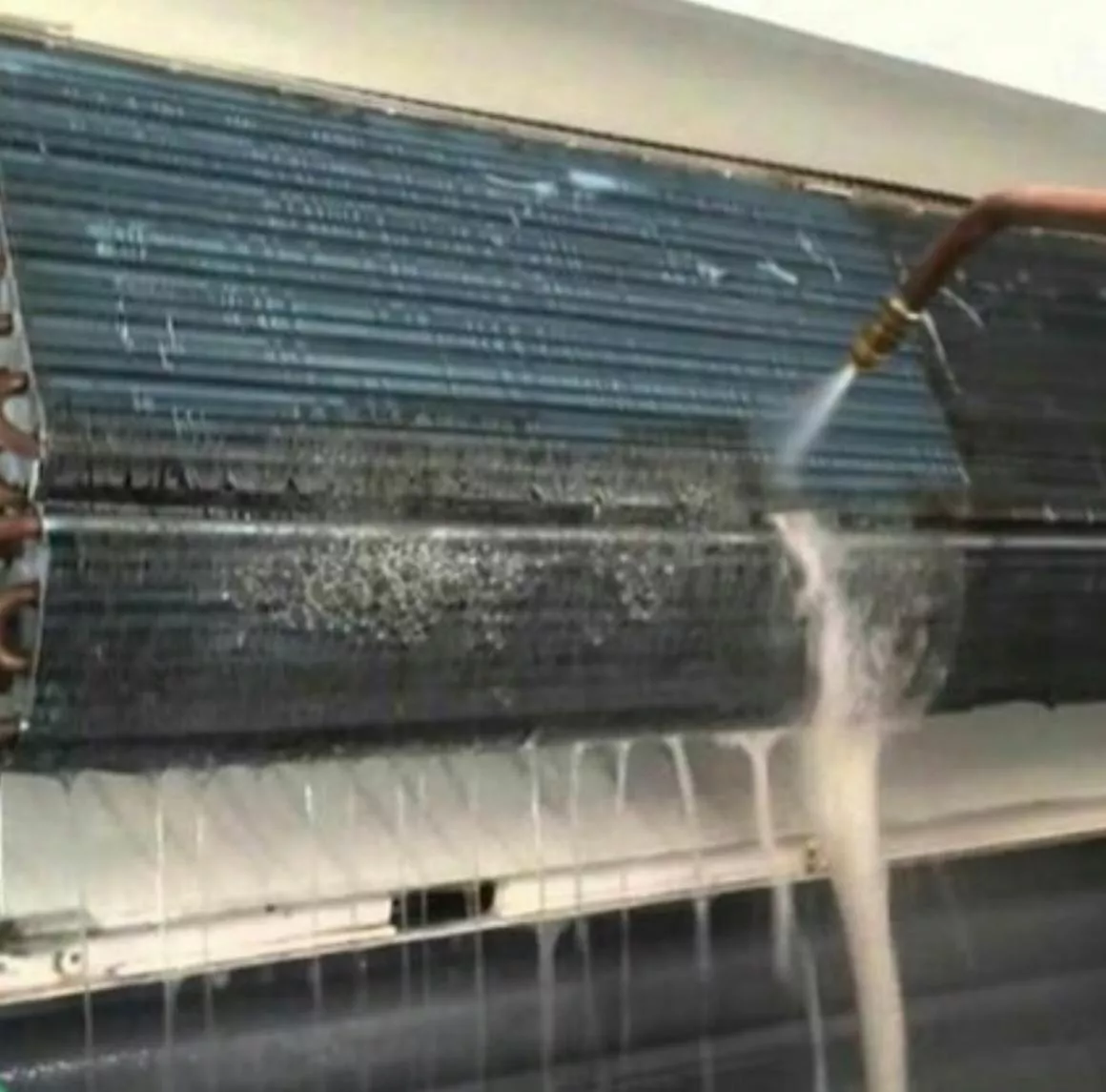
On our published job list, a chemical wash is these steps: the roller is dismantled, a water tray and cover are fitted, chemical is applied to the coil and the blower, everything is rinsed, the drainage is flushed, and cooling is tested before the technician leaves. A normal service is shorter but still dismantles the roller and blower, cleans the filter, coil and drainage, and flushes the drainage.
Read that for what it means for water. A large amount of water goes through the coil and the drain tray during the visit, and the whole system that carries water away is disturbed: the tray, the outlet, the drain hose. Then the cover comes off, the parts go back, and the unit is switched on and has to carry condensate again from a standing start. Anything that was left slightly off will not show while the technician is standing there with a cloth. It shows after the coil has been cold and wet for a while.
What can be normal
Very little of what happens after a wash is worth worrying about, but be exact about where the water is, because that is what separates normal from not.
- Water coming out at the drain outlet, outside, in the first minutes. If the unit has just been switched on and you can see water leaving the drain pipe at the outlet, the drain is doing its job. Some of that is leftover rinse water making its way down the line.
- A trickling or gurgling sound from the unit or the pipe in the first few minutes. Air and water moving through a drain line that was just flushed can make noise. It should settle, not get louder.
- A cool, slightly damp feel on the front panel while the unit is running. That is condensation, which is what an aircon does all day.
What is not on that list is water inside the room. A unit that carries its condensate away properly does not drip from the front, the underside or the wall behind it. Water appearing indoors is the thing to take seriously, even if it is only a few drops.
What is not normal, and what it usually points to
These are the usual suspects. They are possibilities to raise with the technician, not a diagnosis you can make from the sofa.
- Dripping from the front or the underside of the indoor unit. The drain tray carries the water from the coil. If it was moved during the job and not seated properly, or the front cover or panel was not closed fully, water can find the wrong way out.
- A drip that starts after an hour or two of running and continues. Water is not reaching the outlet. A drain hose that was disturbed, kinked or knocked off its connection during refitting is one cause. A blockage that the flush moved further down the line, and which then caught at a bend, is another.
- Water at the wall or on the floor directly below, but none on the unit itself. Look along the drain pipe where it leaves the unit and at the trunking joints. A connection that was loosened can leak at the joint rather than at the unit.
- A drip that is new, when the unit never dripped before the visit. This is the one that matters most for who is responsible, and it is covered in the next section.
- A drip that was already there before the visit and is still there. A wash does not always fix a drain that keeps choking, because the cause can be further down the pipe run. Our post on why clearing a drain never holds explains that case, and water stains under the trunking covers water that is condensation on the outside of the pipe rather than a drain fault.
The question that settles most arguments
Was the unit dripping before the visit?
If it was dry for months and is wet the same evening, something went back differently from how it came off, and it is reasonable to treat it as a problem with the work until someone shows you otherwise. If it was already dripping before anyone touched it, the visit may simply not have reached the cause, and the useful conversation becomes what the next diagnosis looks like.
That is why a short video before the visit is worth thirty seconds of your time: the unit running, the underside, the wall below it. It turns "I think it was dry" into something both sides can look at. If you are comparing what different companies leave behind, what your technician should show you before they leave is a good checklist.
A test you can run that evening
None of this needs tools, and none of it involves opening the unit.
- Run the unit properly. Set Cool, a low temperature and a high fan, and leave it for at least half an hour. A drain fault often only appears once the coil is fully wet and water is flowing steadily, not in the first few minutes.
- Hold a dry tissue along the underside of the unit and at the pipe side. A slow drip shows on the tissue long before it reaches the floor.
- Check the drain outlet outside, if you can see it safely from a window or the service yard. Water leaving the outlet while the unit runs is a good sign. No water outside and water inside is not. Do not lean out or climb onto a ledge to look.
- Note the time. "It starts dripping about forty minutes after I switch on" is far more useful to a technician than "it leaks".
- If water is steadily falling, switch the unit off, put a towel or a basin under it, and take a short video of the drip. Do not keep running it to see what happens, and do not poke at the drain pipe or open the casing.
Who to message, and what to say
Contact the company that did the visit, on the same day, in one message. If another company did the work, they come first, not us. Put in:
- the date of the visit and which service it was (normal service or chemical wash) and which units were done;
- which unit is dripping, where the water appears, and how long after switching on;
- whether that unit was dry before the visit;
- the video or photo.
Ask what they will do and when, and ask for it in writing. Keep the invoice. We do not state a warranty period in this post, because the right answer is whatever the company that did your visit has agreed with you. Whoever it was should be able to tell you theirs before they come back.
On our price list, every service booking begins with the 9-point pre-check, and one of the nine points is a drainage flow check. Our pre-check page describes it as verifying that the drainage pipe is clear, and says blocked drains are the number one cause of aircon water leaks in HDB and condo units. A standard repair for drainage or electrical faults is $80 on the aircon repair page. Anything larger, such as compressor or PCB replacement, is quoted on site and has no published figure.
Before your next wash
You can make the next one easier to judge on the day itself.
- Be home at the end. The last step of our wash is a test of cooling before the technician leaves. Ask for the unit to run for a few minutes while you are both still there, and ask to see water leaving the drain outlet.
- Take your own video the day before. The unit running, the underside, the wall. It costs nothing.
- Tell the technician at the start if a unit has dripped before. That changes what they check first.
- Ask which unit gets which service. Our chemical wash page lists exactly what is included, and the first-week guide for an overhaul covers the more thorough job.
What the published prices are
For reference, these are the prices on the pricing page. The displayed price is the final price.
- Normal servicing, wall unit: $55 for 1 unit, $90 for 2, $120 for 3, $160 for 4, and $35 per unit from 5.
- Chemical wash: $135 for 1 unit, $245 for 2, $345 for 3, $425 for 4, and $100 per unit from 5. The chemical wash page gives 60 to 90 minutes per unit.
- Standard repair for drainage or electrical faults: $80.
If you would like us to look at it
Tell us which unit, where the water appears, how long after switching on it starts, and whether it was dry before. WhatsApp us on 9107 2601 and we will tell you what a visit would cover before we come.