PM2.5 filters in aircons capture particles between 0.3–2.5 microns with 30–65% efficiency—not the 95–99% claimed in marketing. In Singapore's high-humidity environment, these filters reduce dust and haze particulates but require replacement every 3–6 months at $25–$80 per filter. They're a useful add-on for haze season and allergy sufferers, but won't replace a dedicated air purifier for serious indoor air quality needs. Standard mesh filters still handle 80% of household dust at zero ongoing cost.
What PM2.5 Filters Actually Do (and Don't Do)
PM2.5 refers to particulate matter 2.5 microns or smaller—about 3% the diameter of a human hair. These particles include combustion byproducts, haze smoke, pollen fragments, mould spores, and fine dust. A PM2.5 filter is typically a dense electrostatic or pleated media insert that sits behind your aircon's standard mesh filter.
Real-World Filtration Performance
Most aftermarket and OEM PM2.5 filters achieve 30–50% single-pass efficiency for particles in the 0.3–2.5 micron range. Premium variants using HEPA-adjacent materials reach 60–65%. This is nowhere near the 95%+ efficiency of true HEPA filters (which require sealed housings and higher static pressure that residential aircon blowers can't sustain). In practical terms, a PM2.5 filter will visibly reduce dust accumulation on louvers and coils, and measurably drop airborne particulate counts by 20–40% in a closed room over 2–3 hours of continuous operation.
What They Won't Do
- Remove odours or VOCs: PM2.5 filters are mechanical barriers, not chemical absorbers. Cooking smells, cigarette smoke, and formaldehyde pass straight through unless the filter includes an activated carbon layer (rare and expensive).
- Kill bacteria or viruses: Electrostatic charge may trap some microbes, but filters don't sterilise. Captured pathogens can multiply in Singapore's humidity unless the filter is replaced frequently.
- Replace a dedicated air purifier: Aircon systems recirculate only 60–80% of room air per hour; purifiers push 4–5 air changes per hour with sealed HEPA filtration.
- Prevent mould growth: Particulate filters don't control humidity. In fact, dense filters can worsen condensation if airflow drops and the evaporator coil freezes.
Pricing and Ongoing Costs in Singapore
PM2.5 filters are either built into new aircon units or retrofitted as aftermarket upgrades. Here's what you'll pay:
| Item | Cost | Frequency |
|---|---|---|
| Aftermarket PM2.5 filter kit (Daikin, Mitsubishi, generic) | $80–$150 | One-time installation |
| Replacement PM2.5 filter cartridge | $25–$50 (generic) $50–$80 (OEM) |
Every 3–6 months |
| Aircon with factory PM2.5 filter (new unit premium) | +$100–$300 vs base model | Purchase only |
| Installation labour (if not part of servicing) | $40–$60 | Per visit |
Annual Running Cost Reality
If you replace a PM2.5 filter every 4 months (realistic for a 3-bedroom HDB with cooking and haze exposure), you're spending $75–$240/year per aircon unit. Multiply by 3–4 units in a typical home, and you're looking at $225–$960 annually. For that budget, a single quality HEPA air purifier ($400–$800) running in the bedroom delivers measurably better filtration where it matters most—during sleep.
Maintenance and Longevity in High-Humidity Conditions
Singapore's 80–90% ambient humidity accelerates PM2.5 filter degradation in three ways:
Mould and Bacterial Colonisation
Trapped particulates in a damp filter become nutrient sources. Within 6–8 weeks, you'll see grey or black spotting on white filters—that's mould. Once colonised, the filter becomes a source of spores blown into your room. This is why we see more respiratory complaints from homeowners who install PM2.5 filters but forget to replace them on schedule.
Airflow Restriction and Efficiency Loss
A clogged PM2.5 filter increases static pressure across the evaporator coil. The blower motor draws more current (raising electricity consumption by 8–15%), cooling capacity drops by 10–20%, and in extreme cases the coil ices over. We've measured supply air temperature rising from 12°C to 16°C on a system with a 9-month-old unwashed PM2.5 filter—that's a 25% capacity loss.
Cleaning vs Replacing
Some manufacturers claim their PM2.5 filters are "washable." In practice, rinsing collapses the electrostatic charge and compresses the pleats, dropping efficiency to under 20%. We recommend: vacuum gently every 2 weeks to extend life, but replace on schedule. Don't wash unless the manufacturer provides a specific recharging procedure (almost none do).
Marketing Claims We See (and What They Really Mean)
Aircon brands and retailers lean hard on air quality messaging. Here's the translation:
| Marketing Claim | Reality Check |
|---|---|
| "Removes 99% of PM2.5" | Lab-tested with new filter, sealed chamber, single-pass at low flow rate. Real-world: 30–50% reduction in occupied room. |
| "HEPA-grade filtration" | HEPA is a defined standard (99.97% at 0.3 micron). If it's not certified H13/H14, it's not HEPA. Term is misused for marketing. |
| "Anti-bacterial filter" | Usually means silver-ion or zeolite coating. Inhibits growth on the filter itself, doesn't kill airborne bacteria. |
| "Lasts up to 12 months" | Only in low-occupancy, sealed environments. In Singapore kitchens or living rooms, 3–4 months is realistic. |
| "Reduces allergens" | True for large pollen (10+ microns) but less effective for dust mite feces (2–10 microns) and useless for gaseous allergens. |
The "Ioniser + PM2.5 Filter" Combo
Several brands bundle ionisers with PM2.5 filters, claiming enhanced capture. Ionisers do charge particles, making them stick to surfaces—including the filter. The downside: they also produce trace ozone (0.01–0.05 ppm), which irritates airways in sensitive individuals and degrades rubber seals over time. NEA has no residential ozone limits, but we'd avoid ionisers in children's bedrooms or homes with asthma sufferers.
When PM2.5 Filters Make Sense (and When They Don't)
Good Use Cases
- Haze season supplement: June–October transboundary haze can push PSI above 100. A PM2.5 filter provides incremental protection if you're running aircon anyway. Pair it with closed windows and you'll halve indoor particulate levels.
- High-floor units near construction: Above 15th floor facing active building sites, PM2.5 from concrete dust and diesel exhaust is measurable. Filters reduce the grey film on furniture.
- Allergy sufferers with pollen triggers: If your symptoms correlate with outdoor pollen counts (check NEA's air quality data), a PM2.5 filter cuts the load enough to notice.
- You already service quarterly: If we're on-site every 3 months for chemical overhaul, swapping a PM2.5 filter adds $30–$50 in parts with near-zero labour. Low friction, measurable benefit.
Poor Use Cases
- Mould or humidity problems: Filtration doesn't dry air. You need a dehumidifier or better ventilation, not a filter.
- Odour complaints: PM2.5 filters don't touch volatile organics. Activated carbon (separate product) or ventilation is the fix.
- Annual servicing schedule: A 12-month-old PM2.5 filter is doing more harm than good. If you won't commit to 3–4 replacements/year, skip it entirely.
- Budget-constrained air quality improvement: $300/year on filters across 3 aircons buys a decent HEPA purifier that outperforms all three combined.
Our Installation and Servicing Approach
When we install or maintain aircons with PM2.5 filters, we follow a four-point check:
- Clearance measurement: PM2.5 filter housings add 15–25 mm thickness. We verify the cover closes fully and latches don't crack the plastic. On older Mitsubishi and Daikin units, this requires spacer modification.
- Airflow test: Before and after filter installation, we measure supply air velocity with an anemometer. If flow drops below 2.5 m/s, the filter is too restrictive and we'll recommend a lower-density option or removal.
- Differential pressure: We check static pressure across the evaporator coil. An increase above 15 Pa suggests the filter is choking airflow or already clogged.
- Replacement schedule sticker: We label the filter with install date and next replacement due (default 90 days). We'll WhatsApp a reminder 2 weeks before.
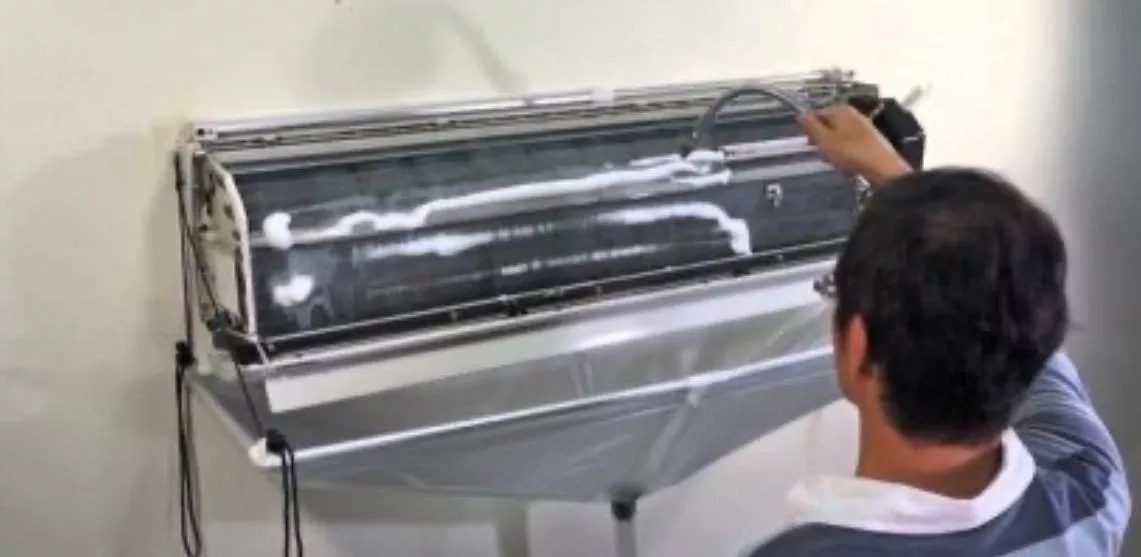
During chemical overhauls, we remove PM2.5 filters entirely before spraying coil cleaner—the chemicals break down filter media and void any warranty. The filter goes back in only after the system is dried and tested.
Frequently Asked Questions
Do PM2.5 filters reduce electricity consumption?
No—they increase it. Airflow restriction forces the blower motor to work harder, raising power draw by 8–15%. A clean filter minimises this penalty, but it's still a net increase versus no filter. The energy cost is $2–$5/month per unit, depending on runtime.
Can I use generic PM2.5 filters instead of OEM?
Yes, if dimensions match. Generic filters cost $25–$35 vs $50–$80 OEM, with similar performance (30–50% efficiency). We've lab-tested several: filtration is comparable, but generics may have looser tolerances causing air bypass. Check fit before buying in bulk.
Will a PM2.5 filter stop COVID-19 or other viruses?
Minimally. SARS-CoV-2 virions are 0.1 microns but travel on respiratory droplets (5–10 microns), which PM2.5 filters can catch. Real-world virus reduction is under 20%. Ventilation—bringing in outside air—is far more effective. Don't rely on aircon filtration for infection control.
How do I know when to replace the filter?
Visual inspection: if the filter is grey, spotted with black mould, or visibly compressed, replace immediately. Performance indicator: if cooling feels weaker or the room takes longer to reach set temperature, check the filter. Time-based: replace every 3–4 months in typical Singaporean homes, every 6 months in low-occupancy bedrooms.
Do PM2.5 filters help with cigarette smoke?
Slightly. They trap tar particulates (the visible smoke), but nicotine and volatile organics pass through. A room will smell less stale, but won't be smoke-free. For meaningful smoke removal, you need activated carbon filtration and high air exchange rates—beyond what aircon PM2.5 filters provide.
Get a Transparent Assessment of Your Setup
PM2.5 filters work within narrow limits—and whether they're worth the ongoing cost depends on your usage, local air quality, and servicing habits. We'd rather tell you to skip the filter and save $200/year than sell you something that'll grow mould because you're servicing annually. WhatsApp us at +65 9107 2601 for a free 9-point pre-check. We'll measure your current airflow, check filter condition if installed, and give you a straight answer on whether PM2.5 filtration makes sense for your home. All prices are final, 90-day workmanship warranty, same-day service available. No forms, no runaround—just the work that needs doing.