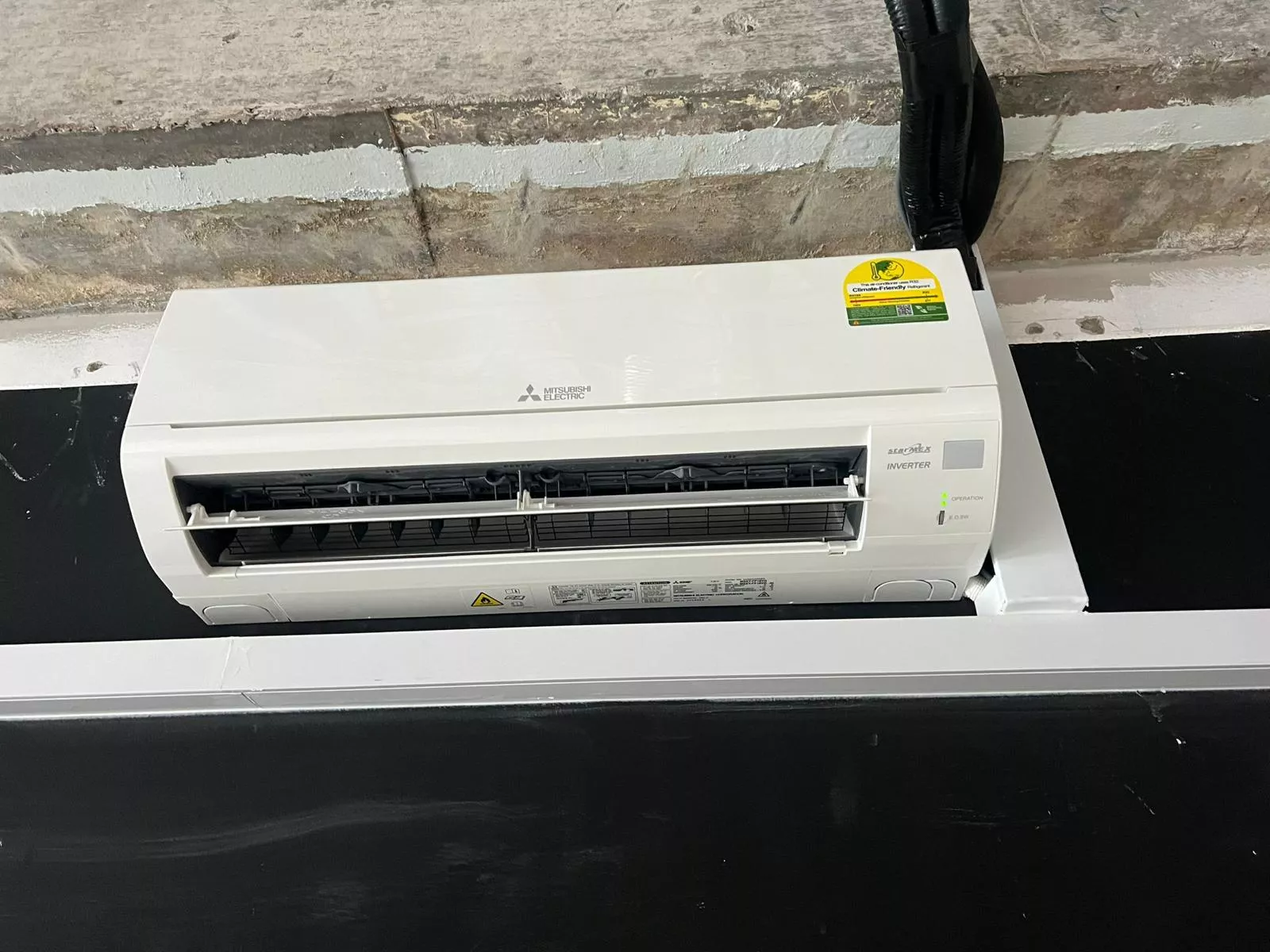
When your aircon trips the circuit breaker, the most common causes are a short circuit in the compressor motor (30–40% of cases), a failing run or start capacitor (25–30%), refrigerant leaks causing the compressor to overwork (15–20%), or a dirty evaporator coil forcing the blower to draw excess current. In Singapore's humidity, moisture ingress into electrical components accelerates failure. The fix ranges from $80 for a capacitor replacement to $450–$850 for a compressor swap (1.0–2.5 HP residential unit). Never reset the breaker repeatedly — you risk fire or permanent damage to the PCB or compressor windings.
What Happens When an Aircon Trips the Breaker
A circuit breaker trips when current draw exceeds its rated capacity — typically 15A or 20A for a single aircon circuit in HDB flats and condos. The breaker is a safety device; it cuts power before wiring overheats or components catch fire.
Two failure modes trigger a trip:
- Overcurrent: The aircon draws more amps than the breaker allows, usually because a motor (compressor or blower fan) is labouring under mechanical resistance or electrical fault.
- Short circuit: Live and neutral wires touch directly, or insulation inside the compressor has broken down, creating a near-zero-resistance path that spikes current instantly.
If the breaker trips within 1–2 seconds of switching on the aircon, suspect a short. If it trips after 5–15 minutes of run time, the compressor or fan motor is likely overheating and drawing excess current as windings heat up and resistance drops.
Why Singapore Conditions Accelerate Electrical Faults
Humidity above 80% year-round means moisture condenses inside outdoor compressor housings and indoor fan compartments. Water bridges electrical contacts, corrodes terminals, and degrades capacitor dielectrics. Aircons installed on high floors (above 15th storey) or west-facing walls endure afternoon sun that bakes the outdoor unit above 55°C, shortening compressor insulation life from the rated 10 years to 6–8 years in practice.
The Six Most Common Causes (And What Each Costs to Fix)
| Cause | Symptoms | Typical Cost (SGD) | Repair Time |
|---|---|---|---|
| Faulty capacitor (run or start) | Compressor hums but won't start; trips after 10–30 sec | $80–$120 | 30–45 min |
| Compressor short circuit (winding-to-case) | Instant trip on power-on; burning smell | $450–$850 | 2–3 hours |
| Dirty evaporator coil (blower overload) | Trips after 10–20 min; weak airflow before trip | $120–$180 (chemical wash) | 1.5–2 hours |
| Refrigerant leak (compressor overwork) | Cooling weak for days/weeks, then starts tripping | $80–$150 gas top-up + $60–$200 leak repair | 1–2 hours |
| PCB relay or contactor stuck closed | Compressor won't stop; breaker trips during continuous run | $180–$350 (PCB), $60–$100 (contactor) | 1–1.5 hours |
| Wiring fault (loose terminal, burnt connector) | Intermittent tripping; scorch marks at terminal block | $60–$120 | 30–60 min |
All prices above are for typical 1.0–2.5 HP (9,000–24,000 BTU) split systems. Inverter multi-split or VRV systems add 20–40% to parts cost due to proprietary components.
How to Tell Which Part Is Failing (Before the Technician Arrives)
Do this only if you're comfortable working near electrical panels:
- Reset the breaker once. Switch the aircon back on. If it trips within 1–3 seconds, you have a short circuit — do not reset again.
- Listen at the outdoor unit. A healthy compressor starts with a brief hum (0.5–1 sec) then runs smoothly. A failing capacitor causes prolonged humming (3–10 sec) before the compressor kicks in or the breaker trips.
- Check the outdoor fan. If the fan spins but the compressor stays silent and the breaker trips, the compressor is seized or shorted.
- Smell for burnt plastic. Acrid smoke or smell from the outdoor unit means winding insulation has failed; the compressor is toast.
Do not bypass the breaker or use a higher-amp breaker to 'make it work' — that removes the last safeguard before a fire starts in the wall cavity.
How Aircons.sg Diagnoses Breaker Trips (The 9-Point Pre-Check)
When you book aircon servicing with aircons.sg (minimum $55 for 1 unit), the 9-point pre-check is included. For breaker-trip cases, the technician will:
- Measure compressor winding resistance with a multimeter (should read 2–10 Ω between terminals; infinite to ground).
- Test capacitor microfarad rating against the nameplate spec (run capacitors are typically 35–50 µF; start capacitors 80–120 µF).
- Inspect terminal blocks and contactors for carbon tracking, loose screws, or melted insulation.
- Check refrigerant pressure with manifold gauges (low-side 60–75 psi for R410A, 50–65 psi for R32 at 28°C ambient). Low pressure + tripping = compressor overheating due to insufficient cooling.
- Verify supply voltage at the outdoor unit (should be 220–240V ±5%). Brownouts below 210V can cause nuisance trips.
If the issue is a $80 capacitor, the technician replaces it on the spot (total job $55 base + $80 part = covered within the initial quote if quoted upfront). If a compressor replacement ($450–$850) or PCB ($180–$350) is needed, you'll receive a transparent quote via WhatsApp photo of the faulty part and model number. The $55 visit + inspection fee stands whether you proceed or not; if you proceed, it's part of the total, not an extra charge.
Why We Don't Guess Over the Phone
Customers often ask, 'Can you tell me the cost before coming?' For breaker trips, the answer is always no — six different faults produce near-identical symptoms. A capacitor costs $80; a compressor $850. Quoting a range that wide isn't helpful. The 9-point pre-check with instruments gives you the actual diagnosis, the actual part number, and the exact price before any work begins. That's the transparent approach.
DIY Safety: What You Can (and Cannot) Do Yourself
Homeowners can safely perform these steps:
- Turn off the aircon at the breaker and leave it off. Don't reset repeatedly hoping it will 'fix itself.'
- Photograph the outdoor unit nameplate (brand, model, BTU, refrigerant type) and send it via WhatsApp to +65 9107 2601 when booking. This lets the technician bring the correct capacitor or contactor on the first visit.
- Check for obvious damage: burnt marks on the outdoor unit casing, melted wire insulation at the isolator switch, pooled water inside the indoor unit (suggests a drain blockage causing water to drip onto the PCB).
Do not attempt:
- Opening the outdoor unit compressor compartment (live 240V terminals inside).
- Replacing a capacitor yourself unless you know how to discharge it safely (capacitors store lethal voltage even after power is off).
- Swapping the breaker for a higher-amp rating (15A → 20A) to 'stop the tripping' — the wiring may be rated for 15A only, and you'll melt it inside the wall.
In HDB flats, the main switch room and MCB panel are your responsibility, but altering circuit ratings without PUB/SP Group notification can void your home insurance if a fire occurs.
When to Call an Electrician vs an Aircon Technician
If multiple circuits trip when the aircon runs, or if the main 63A incomer trips (killing power to the whole flat), the fault is likely in the DB board or supply wiring — call a licensed electrician (LEW-licensed under BCA). If only the dedicated aircon breaker trips and other circuits work fine, the fault is in the aircon itself — call aircons.sg at +65 9107 2601.
Preventing Future Breaker Trips: Maintenance Schedule by Unit Age
Breaker trips are almost always preceded by weeks or months of subtle warnings: longer start-up times, intermittent cooling, higher electricity bills. Regular servicing catches these before they cascade into a full failure.
| Unit Age | Recommended Servicing Interval | Key Focus Areas |
|---|---|---|
| 0–3 years | Every 6 months (general servicing) | Filter cleaning, coil rinse, drain check |
| 4–7 years | Every 4 months; chemical wash yearly | Capacitor test, contactor inspection, refrigerant pressure check |
| 8+ years | Every 3 months; chemical overhaul every 18–24 months | Compressor winding resistance test, PCB relay check, terminal re-torque |
Aircons in commercial settings (shops, small offices running 10–12 hours daily) age twice as fast; treat a 4-year-old commercial unit like an 8-year-old residential unit for maintenance planning.
Specific Risks for Inverter vs Non-Inverter Systems
Inverter aircons (Daikin, Mitsubishi, Midea) use variable-speed compressors controlled by a DC inverter board. When the inverter PCB fails, it can send erratic voltage/frequency to the compressor, causing it to draw 200–300% rated current and trip the breaker instantly. Inverter PCBs cost $280–$450 to replace (versus $180–$250 for non-inverter boards). The trade-off: inverter systems run more efficiently and rarely suffer the mechanical start/stop stress that kills non-inverter capacitors.
Non-inverter systems (older Mitsubishi Heavy Industries, York, Acson) rely on start and run capacitors. These electrochemical components degrade predictably: expect replacement every 4–6 years in Singapore conditions, earlier if the outdoor unit faces west or sits on an unshaded ledge.
Cost Comparison: Repair vs Replace the Whole Unit
When the compressor fails (the most expensive single repair), you face a decision: pay $450–$850 for a compressor replacement, or buy a new aircon for $600–$1,200 (1.0 HP non-inverter) to $1,800–$2,800 (2.5 HP inverter, installed)?
The math:
- Unit under 6 years old, inverter type: Repair. A new compressor adds 5–7 years of life; total cost of ownership is lower than replacing the whole system.
- Unit 8–10 years old, non-inverter: Replace. The PCB, fan motor, and evaporator coil are all near end-of-life. You'll spend $850 on the compressor today, then $300 on a PCB in 12 months, then $400 on a gas leak repair six months later.
- Unit 10+ years old, any type: Replace. New units use R32 refrigerant (GWP 675 vs R410A's 2,088), consume 15–25% less electricity, and carry a 5-year compressor warranty.
aircons.sg provides this replacement-vs-repair analysis in plain terms on-site, with actual numbers for your specific model and usage. No upselling — if a $120 chemical wash solves it, that's what we'll quote.
Frequently Asked Questions
Can I just replace the circuit breaker with a higher amp rating to stop the tripping?
No. The breaker protects the wiring, not the aircon. If your circuit is wired with 2.5 mm² cable (rated 15A), installing a 20A or 25A breaker allows the cable to overheat inside the wall before the breaker trips — a fire hazard. Fix the aircon fault, not the symptom. HDB and condo MCST inspections will flag oversized breakers; your home insurance may refuse claims if an electrical fire starts from modified circuits.
How long does a capacitor replacement take, and can it be done on the spot?
30–45 minutes, including safe discharge of the old capacitor, terminal cleaning, and test run. aircons.sg technicians carry common capacitor ratings (35, 40, 45, 50 µF run; 88, 108 µF start) in the van. If your model needs an unusual rating, we'll order it and return the next day, or source it same-day from our Ubi workshop if you need it urgently (most cases resolved same visit).
Why does my aircon trip the breaker only on hot afternoons?
Compressor motor windings have higher resistance when cool, lower when hot. A compressor with degraded insulation may run fine at 28°C ambient but draw excess current when the outdoor unit hits 50°C in afternoon sun, tripping the breaker after 10–15 min. This is a sign the compressor is on its way out — winding insulation is failing. Budget for replacement within 6–12 months; a chemical overhaul won't fix it.
What's the difference between a thermal overload trip and a breaker trip?
Aircon compressors have an internal thermal overload (a bimetallic disc that opens the circuit when the motor exceeds ~110°C). When it trips, the compressor stops but the indoor fan keeps blowing warm air; the outdoor unit is silent. After 15–30 min cooldown, the overload resets and the compressor restarts — until it trips again. A breaker trip cuts all power to the aircon instantly (indoor unit stops too) and requires manual reset at your DB board. Thermal overload cycling = refrigerant leak or blocked condenser. Breaker trip = electrical fault (short, overcurrent, capacitor failure).
Do I still pay the $55 service fee if the technician can't fix it on the spot?
Yes. The $55 minimum (for 1 unit) covers the technician visit, the 9-point inspection with instruments (multimeter, manifold gauges, infrared thermometer), and diagnosis. If the fix is straightforward (capacitor, contactor, wiring), it's completed on the spot and the $55 is part of the total cost. If a major part (compressor, inverter PCB) is needed, you receive a quote; the $55 reflects the value of knowing exactly what's broken and what it will cost to fix, so you can decide whether to repair or replace the unit with full information.
Same-Day Breaker-Trip Diagnosis and Repair
A tripped breaker means your aircon is offline — no cooling in Singapore's heat is miserable fast. aircons.sg offers same-day service for breaker-trip callouts when you WhatsApp +65 9107 2601 before 3 PM on weekdays, before 12 PM on Saturdays. The technician arrives with capacitors, contactors, and multimeters; most electrical faults (capacitor, wiring, contactor) are resolved in one visit. Compressor or PCB replacements require ordering the part (next-day for common models, 2–3 days for older or commercial units), but you'll have the exact quote and lead time before the technician leaves. Every repair carries a 90-day workmanship warranty — if the same fault recurs, we return and fix it at no additional cost. The quote you see on-site is the final price. WhatsApp us now at https://wa.me/6591072601 to book your diagnostic visit and get your aircon back online today.