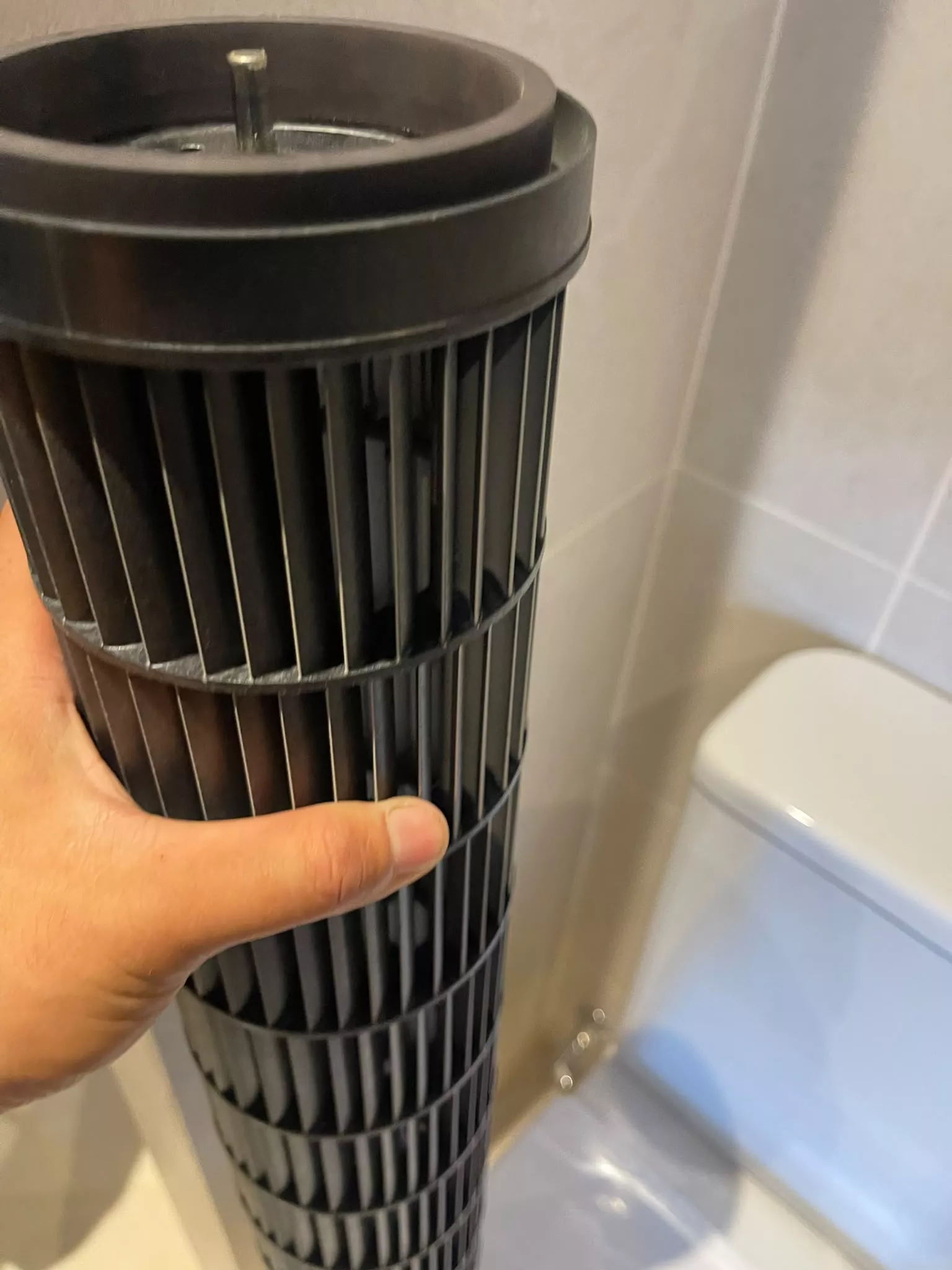
Aircon mould and bacteria cause respiratory infections, allergic rhinitis, skin rashes, and persistent musty odours in Singapore homes. A chemical wash ($80–$120 per unit) removes 90–95% of biofilm from coils and blower wheels; general servicing only cleans visible dust and won't eliminate embedded colonies. In Singapore's 80%+ humidity, untreated mould regrows within 4–6 weeks if drainage is blocked or the unit runs infrequently. The 9-point pre-check included with every aircons.sg service booking ($45 minimum for 1 unit) identifies mould severity and drainage faults before quoting remedial work.
Why Mould and Bacteria Thrive in Singapore Aircons
Singapore's year-round humidity (75–85%) and temperatures (25–32°C) create ideal conditions for Aspergillus, Cladosporium, and Staphylococcus colonies inside air-conditioning units. Condensation forms continuously on evaporator coils; when dust accumulates on wet surfaces, mould spores germinate within 24–48 hours. The blower wheel, drain tray, and return-air filter trap the most biofilm because they remain damp between cooling cycles.
Three design factors accelerate growth:
- Blocked condensate drains: Water pools in the drain tray instead of flowing to the external pipe, creating a stagnant reservoir for bacteria.
- Infrequent use: Units that run less than 3 hours per day never fully dry internal components; biofilm spreads faster in stop-start cycles than in continuous operation.
- Undersized units: An aircon rated below the room's BTU requirement runs longer to achieve set temperature, increasing condensation and humidity inside the casing.
HDB and condo units on floors 10+ experience slower drainage due to vertical pipe length; if the gradient is insufficient (less than 1:100 fall), water backs up into the unit. MCST regulations prohibit altering external drainage routes without written approval, so fixing blockages often requires chemical flushing of the existing pipe rather than re-routing.
Health Risks: What You're Actually Breathing
Mould spores and bacterial endotoxins circulate through supply vents every time the blower runs. Medical studies in tropical climates link prolonged exposure to four primary health outcomes:
| Condition | Symptoms | Typical Onset |
|---|---|---|
| Allergic rhinitis | Sneezing, runny nose, itchy eyes, sinus congestion | 2–4 weeks of exposure |
| Asthma exacerbation | Wheezing, chest tightness, shortness of breath | Immediate (sensitive individuals) |
| Hypersensitivity pneumonitis | Chronic cough, fever, fatigue, lung inflammation | 3–6 months of daily exposure |
| Skin irritation | Rashes, eczema flare-ups, dry patches | 1–3 weeks |
Children under 5 and adults over 60 show higher sensitivity to airborne Aspergillus fumigatus, the most common mould species in Singapore aircons. A 2019 NEA study found detectable mould in 68% of residential split systems that had not been chemically cleaned in the prior 12 months.
The musty smell is not mould itself but microbial volatile organic compounds (MVOCs)—gaseous by-products of fungal metabolism. If you smell it, colony density is already above 10⁴ CFU/m³ (colony-forming units per cubic metre), the threshold where respiratory symptoms begin in non-sensitive individuals.
General Servicing vs. Chemical Wash: What Actually Removes Mould
General aircon servicing ($45–$60 per unit) vacuums the filter, wipes accessible panels, checks refrigerant pressure, and clears the drain pipe with a hand pump. It removes surface dust but does not dismantle the blower wheel or soak the evaporator coil—meaning embedded biofilm remains intact.
A chemical wash ($80–$120 per unit) involves:
- Disconnecting the front casing and removing the blower wheel and evaporator assembly.
- Soaking components in alkaline detergent (pH 11–12) for 15–20 minutes to dissolve organic matter and kill spores.
- High-pressure water rinse (30–40 psi) to flush loosened debris from coil fins.
- Re-assembly, refrigerant top-up if needed, and drain-line flushing with biocide solution.
Laboratory swabs before and after chemical wash show 90–95% reduction in fungal CFU count; general servicing achieves 20–30% reduction (filter and surface areas only). If mould has spread to the fan motor housing or internal insulation, a chemical overhaul ($150–$200) is required—this includes motor disassembly and replacement of degraded foam lining.
The 9-point pre-check included with any aircons.sg service booking identifies whether general servicing is sufficient or chemical intervention is necessary. Technicians measure airflow (in cubic metres per hour), inspect coil colour (black/green indicates mould), and test drain flow rate before quoting. The $45 minimum for 1 unit covers the visit, inspection, and standard servicing; if chemical wash is recommended and you proceed, that $45 forms part of the total cost—not an additional charge.
DIY Fixes That Work (and the Ones That Make It Worse)
Two DIY tasks genuinely reduce mould risk between professional services:
- Weekly filter cleaning: Remove the mesh filter, rinse under tap water, dry completely before reinstalling. Wet filters are mould incubators; never put a damp filter back into the unit.
- Monthly drain-line flush: Pour 200ml of white vinegar (5% acetic acid) into the drain tray access point; wait 30 minutes, then flush with 500ml water. This dissolves biofilm in the pipe without damaging PVC.
Three popular DIY methods that backfire:
- Spraying Dettol or bleach into vents: Aerosol disinfectants coat coil fins with residue that traps more dust; bleach (sodium hypochlorite) corrodes aluminium fins and copper piping within 6–8 weeks.
- Running the aircon on 'fan only' mode to dry it out: Without the compressor running, the evaporator never gets cold enough to condense residual moisture; room humidity simply recirculates through damp components.
- Taping over the condensate outlet 'to increase pressure': This forces water back into the drain tray, accelerating mould growth and potentially flooding the ceiling (common in older HDB units where the tray has hairline cracks).
If you see water dripping from the indoor unit or notice reduced cooling (room takes 20+ minutes to drop 2°C), the issue is beyond DIY scope. Continuing to run a faulty unit spreads contaminated condensate through internal wiring channels, leading to corrosion and short-circuits.
Cost Breakdown: Mould Remediation by Severity
Pricing depends on colony extent, unit capacity (BTU), and whether parts need replacement. All figures below are final prices in Singapore dollars; quoted prices are final.
| Severity | Visual Indicators | Service Required | Cost per Unit |
|---|---|---|---|
| Light | Slight musty smell when first switched on; coils appear grey | General servicing + drain flush | $45–$60 |
| Moderate | Persistent odour; visible black spots on blower wheel; reduced airflow | Chemical wash | $80–$120 |
| Severe | Water leakage; green/black coil coating; respiratory symptoms in occupants | Chemical overhaul + parts | $150–$250 |
| Structural | Mould on internal insulation; motor bearing noise; ceiling stains | Full strip-down or replacement | $280–$450 |
For multi-unit homes (3+ aircons), chemical wash packages typically cost $210–$300 total. If refrigerant top-up is needed (pressure below 110 psi for R410A systems), add $60–$80 per unit. The 90-day workmanship warranty at aircons.sg covers re-cleaning if mould reappears due to incomplete initial removal; it does not cover new growth from customer-side issues like blocked external drains or never opening windows.
Prevention: Keeping Aircons Mould-Free Long-Term
Four engineering-backed habits cut mould recurrence by 70–80%:
- Run the aircon for 10 minutes on 'fan only' after each cooling session: This evaporates residual moisture on the coil; set temperature to 28°C and fan speed to high before switching off.
- Schedule chemical wash every 9–12 months: General servicing every 3 months maintains performance, but only chemical cleaning resets biofilm to near-zero levels.
- Ensure external drainage pipe exits below the indoor unit: HDB installations sometimes have insufficient fall (less than 1 cm per metre); water pools in horizontal sections. Re-sloping the pipe or installing a condensate pump ($80–$120) solves chronic blockages.
- Use the aircon at least 3 hours daily: Intermittent use (1 hour per day) keeps components in the damp zone (60–80% RH) where mould thrives. Continuous operation or extended daily runtime drops internal humidity below 50%, inhibiting spore germination.
For ground-floor units or rooms with external wall dampness, a standalone dehumidifier (target 50–55% RH) reduces the moisture load on the aircon, cutting mould risk by half. NEA guidelines recommend indoor humidity below 60% to control dust mites and mould; aircons alone achieve this only if the unit is correctly sized (1 BTU per 25 cubic feet of room volume in Singapore climate).
Frequently Asked Questions
Can I just spray anti-fungal solution into the aircon vents?
No. Aerosol sprays coat coil surfaces without penetrating biofilm; the residue traps more dust, and mould regrows within 2–3 weeks. Effective mould removal requires physical dismantling, alkaline detergent soaking, and high-pressure rinsing—only achievable with a chemical wash. Surface sprays give the illusion of cleanliness while colonies continue spreading inside the blower housing.
How long does a chemical wash take, and can I use the aircon immediately after?
A single-unit chemical wash takes 60–90 minutes including re-assembly and testing. The aircon is operational immediately after the technician completes final checks (airflow, temperature drop, drainage). Some moisture remains in the drain tray for 10–15 minutes post-flush; this is normal and evaporates during the first cooling cycle. No curing time or waiting period is required.
Why does mould come back faster in bedrooms than in living rooms?
Bedroom aircons typically run 6–8 hours nightly then sit idle for 16 hours, keeping internal components in the 70–80% humidity range where mould grows fastest. Living room units often run intermittently throughout the day, cycling on/off every 1–2 hours, which partially dries the coil between uses. Longer single-session runtime (4+ hours) followed by fan-only mode for 10 minutes significantly reduces bedroom aircon mould recurrence.
Is mould in the aircon covered by warranty if the unit is less than 1 year old?
No. Manufacturer warranties (Daikin, Mitsubishi, Midea, etc.) cover compressor and parts defects, not biological growth. Mould results from environmental factors—humidity, usage patterns, drainage maintenance—not manufacturing faults. However, if a blocked drain causes water damage to internal electronics within the warranty period, the parts replacement may be covered; the chemical cleaning to remove mould is still the owner's responsibility.
Can I prevent mould by setting the temperature higher (26–27°C instead of 22°C)?
No. Mould growth depends on surface moisture on the evaporator coil, not room temperature. At any set point below 28°C, the coil temperature drops to 5–10°C, causing condensation. Higher set points reduce runtime (the compressor cycles off sooner), which can actually increase mould risk because the coil never fully dries. The effective prevention is post-cooling fan-only mode and regular chemical cleaning, not thermostat adjustment.
Book Your Mould Inspection and Chemical Wash Today
If your aircon smells musty, drips water, or triggers sneezing when switched on, mould colonies are already established. The 9-point pre-check included with every aircons.sg service booking identifies the contamination level and quotes transparent remedial costs on the spot—chemical wash from $80, general servicing from $45 for 1 unit, and same-day availability across Singapore. WhatsApp +65 9107 2601 with your unit count and symptom description; our technicians carry chemical wash equipment on every job, so diagnosis and cleaning happen in a single visit. All work is backed by a 90-day workmanship warranty, and quoted prices are final—quoted prices are final. Stop breathing mould spores; get it fixed properly today.
If you are dealing with a smell that does not clear after a few uses — including one that started after the flat sat empty for a while — see what to do with your aircon before and after a long trip away for what a dried-out drain trap and an idle coil do on their own, before you assume it needs a chemical wash.