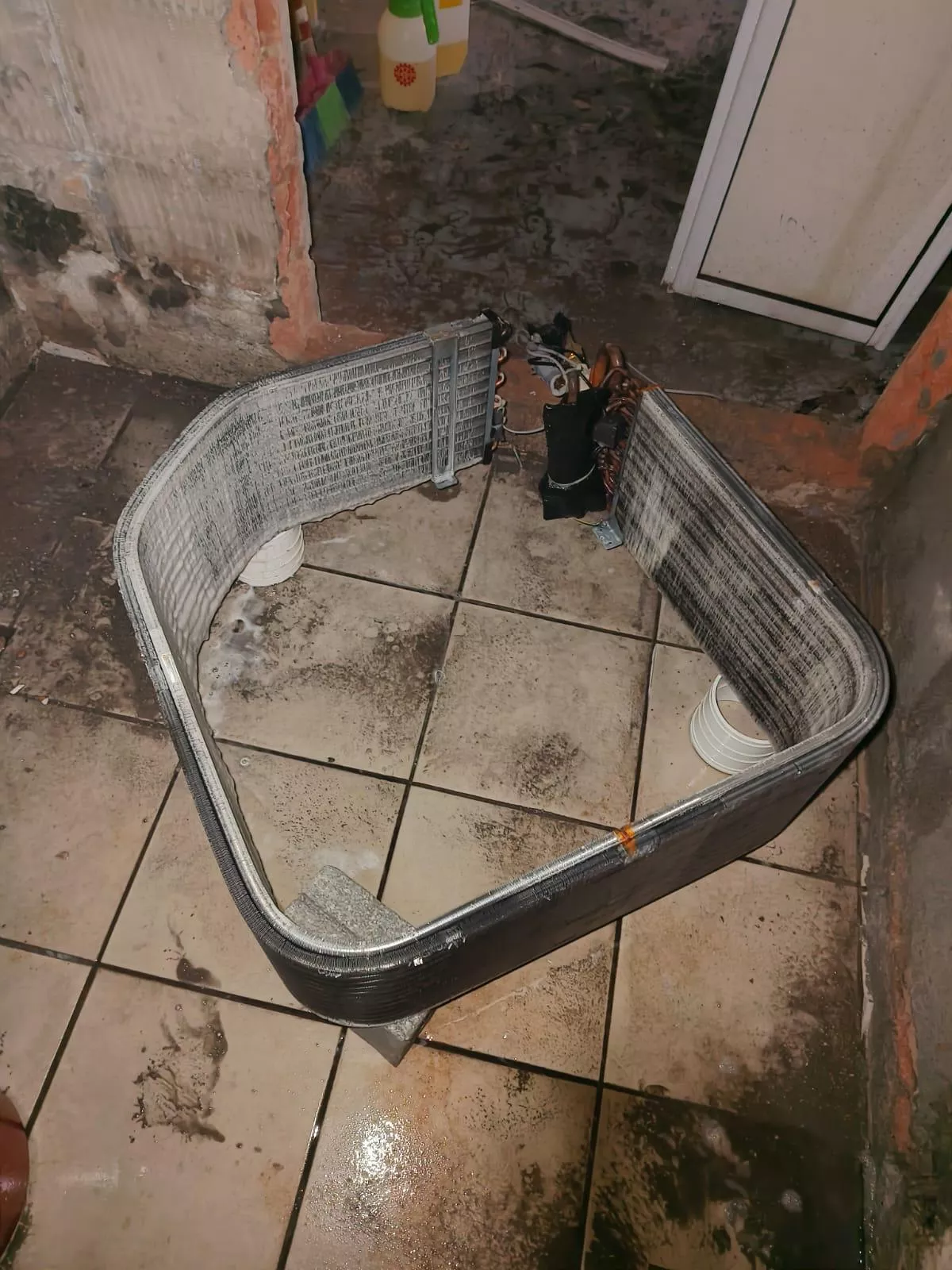
Singapore homeowners in 2025–2026 are shifting toward R32 refrigerant systems (mandated by NEA since 2022 for new installations), smart aircon controllers with real-time monitoring, inverter units with 5-tick energy ratings, and multi-split systems to save on installation costs in HDB and condo homes. Expect tighter regulations on refrigerant handling, rising adoption of air-purifying filters (HEPA, ionizers), and demand for scheduled preventive servicing as units become more complex. Installation prices for a single 9,000 BTU inverter aircon range from $550–$900, while smart controller retrofits add $80–$180 per unit.
R32 Refrigerant: The New Default for All New Installations
Since January 2022, the National Environment Agency (NEA) has required all new aircon installations in Singapore to use refrigerants with a Global Warming Potential (GWP) below 750. R32, with a GWP of 675, has become the industry standard, replacing R410A (GWP 2,088). By 2026, R410A units will only be serviced or repaired — no new units sold — and R22 has been phased out entirely since 2020.
R32 offers 10–15% better energy efficiency than R410A, operates at lower pressures (making leaks less likely), and requires smaller refrigerant charges. For a typical 12,000 BTU unit, an R32 top-up costs $80–$120 versus $100–$150 for R410A, though availability of R410A gas will decline through 2026.
What This Means for Existing Homeowners
If your aircon was installed before 2022 and runs on R410A, you can continue servicing it indefinitely. Gas top-ups remain available, but expect prices to climb 15–20% by late 2026 as suppliers prioritize R32 stock. When replacing an old unit, your installer must swap the entire system (condenser, evaporator, piping) because R32 and R410A are not cross-compatible. Budget $600–$1,000 per unit for a full replacement including installation.
Smart Aircon Controllers and IoT Integration
Wi-Fi-enabled aircon controllers — retrofit devices that sit between your existing infrared remote and the unit — have moved from early-adopter novelty to mainstream in 2025. Brands like Sensibo, Ambi Climate, and Cielo integrate with Google Home, Alexa, and Apple HomeKit, letting you schedule cooling cycles, monitor energy consumption in real-time, and trigger geofencing (aircon auto-off when you leave home).
Retrofit smart controllers cost $80–$180 per unit. Installation is DIY-friendly: plug into power, stick the IR blaster onto your aircon receiver, connect via app. For landlords managing multiple condo units or HDB flats, centralised dashboards show which units are running 24/7 (tenant abuse) or need servicing based on runtime hours.
Energy Monitoring and Cost Savings
A typical 12,000 BTU non-inverter aircon running 8 hours daily consumes ~200 kWh/month (~$50/month at $0.25/kWh). Smart controllers surface this data and let you cap daily runtime or set temperature floors (e.g., never below 24°C). Homeowners report 12–18% savings by automating off-peak usage and catching inefficient units early (a clogged filter or low gas charge shows up as higher-than-normal kWh for the same temperature).
Inverter Technology and 5-Tick Ratings Become Entry-Level Expectations
Non-inverter aircons — fixed-speed compressors that cycle on/off — are rapidly disappearing from showrooms. In 2026, expect 80%+ of new residential units sold in Singapore to be inverter models with 4- or 5-tick NEA energy labels. Inverter compressors ramp speed up or down to match cooling demand, cutting energy use by 30–40% versus non-inverter equivalents and maintaining more stable temperatures (±0.5°C versus ±2°C).
| Feature | Non-Inverter | Inverter (4-Tick) | Inverter (5-Tick) |
|---|---|---|---|
| Energy consumption (9,000 BTU, 8 hrs/day) | ~180 kWh/month | ~120 kWh/month | ~100 kWh/month |
| Monthly electricity cost | ~$45 | ~$30 | ~$25 |
| Purchase + installation (single unit) | $450–$650 | $650–$850 | $750–$1,000 |
| Payback period (vs non-inverter) | — | ~18 months | ~24 months |
For HDB households running 2–3 aircons nightly, switching from non-inverter to 5-tick inverter saves $40–$60/month. Over a typical 10-year lifespan, that is $4,800–$7,200 in cumulative savings, far exceeding the $200–$350 upfront premium per unit.
Multi-Split Systems Gain Popularity in Compact HDB and Condo Units
Multi-split (or multi-zone) aircon systems — one outdoor condenser serving 2–5 indoor fan-coil units — are trending in 4-room and 5-room HDB flats and smaller condos where ledge space is limited. Instead of mounting 3 separate condensers (one per room), you install a single larger outdoor unit, freeing up visual clutter and simplifying MCST approval in condos.
Cost Comparison: Multi-Split vs Individual Units
- 3 individual split systems (9,000 BTU each): $1,800–$2,400 total (units + installation)
- 1 multi-split system (3 indoor units, 1 outdoor): $2,200–$2,800 total
Multi-split systems cost 15–20% more upfront but reduce outdoor unit footprint by 66%, lower maintenance complexity (one condenser to service instead of three), and often qualify for MCST aesthetic waivers. Downsides: if the single outdoor compressor fails, all indoor units go offline simultaneously, and repair costs are higher ($300–$500 versus $150–$250 for a single-split compressor).
HDB Ledge Constraints
HDB regulations limit condenser weight and dimensions on common ledges. A typical single outdoor unit weighs 25–35 kg; a 3-zone multi-split condenser weighs 50–70 kg. Most HDB ledges support up to 80 kg, but always verify with HDB's guidelines or your installer before committing. High-floor units (above 12th storey) face additional wind-load and bracket-reinforcement requirements.
Air Purification Features: HEPA Filters, Ionizers, and UV-C Integration
Post-pandemic, demand for aircons with built-in air purification has surged. In 2026, mid-range and premium models from Daikin, Mitsubishi, and Panasonic ship with one or more of the following:
- HEPA filters (H13 or H14 grade): capture 99.95%+ of particles ≥0.3 microns (dust mites, pollen, mould spores). Replacement every 6–12 months, $30–$60 per filter.
- Plasma ionizers: release positive/negative ions to neutralize bacteria and odours. No consumables, but effectiveness drops 30–40% after 3–4 years; ionizer modules cost $80–$150 to replace.
- UV-C lamps: installed in the evaporator chamber to kill mould and bacteria on coils. Bulbs last ~10,000 hours (~3 years of typical use); replacement $40–$70.
For households with asthma, allergies, or young children, these features add $100–$300 to the unit cost but measurably improve indoor air quality. Expect particle counts (PM2.5) to drop from typical indoor levels of 15–25 µg/m³ to below 10 µg/m³ with HEPA-equipped aircons running.
Preventive Servicing Schedules Become Non-Negotiable
As aircon units grow more complex — inverter boards, IoT modules, multi-stage filters, R32 pressures — the old 'run it until it breaks' mentality is fading. Manufacturers and technicians alike now recommend servicing every 8–12 weeks for units running daily, every 4–6 months for occasional-use guest rooms.
At aircons.sg, every service booking (minimum $45 for 1 unit) includes a 9-point pre-check: refrigerant pressure test, electrical current draw, thermostat calibration, drain-pipe flow, filter inspection, coil condition, fan-blade balance, unusual noise diagnosis, and error-code scan for inverter models. If the pre-check flags low gas, a clogged drain, or a failing capacitor, we quote the fix transparently on-site. The $45 minimum covers the visit and diagnosis; if you proceed with recommended work (e.g., $80 gas top-up), the $45 forms part of the total.
Why Servicing Frequency Matters More in 2026
Inverter compressors modulate speed thousands of times per day, generating more heat and vibration than fixed-speed units. A dirty evaporator coil forces the inverter to ramp higher to achieve target temperature, raising current draw by 15–25% and shortening compressor lifespan by 2–3 years. Regular cleaning (every 3 months for heavy use) keeps efficiency high and prevents $400–$600 compressor replacements.
R32 systems operate at tighter tolerances: even a 10% refrigerant undercharge cuts cooling capacity by 20% and risks compressor overheat. The 9-point pre-check catches these issues before they escalate into expensive failures.
Regulatory and Compliance Shifts: NEA, BCA, and MCST Rules
Beyond refrigerant mandates, Singapore's Building and Construction Authority (BCA) and condo Management Corporation Strata Titles (MCSTs) are tightening installation and noise standards:
- Noise limits: outdoor condensers must not exceed 55 dB(A) at 1 meter during daytime, 50 dB(A) at night (10pm–7am). Inverter units typically run quieter (45–50 dB(A)); older non-inverter models often breach limits and attract neighbour complaints.
- Condenser placement: HDB requires condensers on designated ledges or service yards; unauthorized balcony or window-grille installations incur fines. Condos enforce facade-uniformity rules — visible piping must be white PVC, not bare copper.
- Refrigerant handling licenses: from mid-2025, only NEA-licensed technicians can purchase, handle, or top up refrigerants. DIY gas top-ups (previously common for R22) are now illegal and carry fines up to $5,000.
When booking installation or major repairs, confirm your contractor holds valid NEA refrigerant-handling certification. At aircons.sg, all technicians are licensed and insured; every installation includes MCST/HDB compliance documentation if required.
Frequently Asked Questions
Should I replace my R410A aircon now or wait until it fails?
If your R410A unit is under 5 years old and running efficiently, keep it and service regularly. Gas top-ups remain available through 2026–2027, though prices will creep up. If your unit is 8+ years old, consider proactive replacement with an R32 inverter model to lock in lower running costs and avoid emergency replacements during peak-demand periods (March–May) when installer wait times stretch to 2–3 weeks.
Are smart aircon controllers worth the $80–$180 cost?
Yes, if you run your aircon daily or manage multiple units (e.g., rental properties). Geofencing alone saves 10–15% by eliminating 'forgot to switch off' waste. Energy monitoring helps you catch failing units early — a clogged filter or gas leak shows as spiking kWh. Payback period is typically 8–14 months for a household running 2–3 aircons nightly.
How much does a 9-point pre-check cost at aircons.sg?
The 9-point pre-check is included with any service booking, starting at $45 for 1 unit (covers the technician visit, inspection, and standard cleaning). If additional work is recommended — gas top-up, chemical wash, parts replacement — it is quoted on-site, and the $45 minimum is part of the total. If you decline the fix, the $45 covers the diagnostic visit. No hidden fees; quoted prices are final.
Can I install a multi-split system in an older HDB flat?
Yes, provided your ledge supports the condenser weight (typically 50–70 kg for a 3-zone unit; most HDB ledges are rated to 80 kg) and you follow HDB's installation guidelines (condenser on designated ledge, proper bracketing, no obstructing emergency access). For flats above the 12th storey, additional wind-load brackets may be required, adding $80–$150 to installation cost. Your installer should verify ledge capacity before proceeding.
What is the lifespan of an R32 inverter aircon with regular servicing?
With servicing every 3–4 months (filter cleaning, coil inspection, refrigerant pressure check), expect 10–12 years of reliable operation. Inverter compressors are rated for 40,000–60,000 hours; at 8 hours/day, that is 13–20 years of runtime. In practice, corrosion from Singapore's humidity, power surges, and wear on capacitors/fans typically trigger replacement at the 10–12 year mark. Skipping servicing cuts lifespan to 6–8 years and voids most manufacturer warranties.
Book Your Aircon Service or Upgrade Consultation
Whether you are upgrading to an R32 inverter system, retrofitting smart controls, or scheduling preventive servicing for your existing units, aircons.sg delivers transparent pricing, same-day service availability, and a 90-day workmanship warranty on every job. Every service booking includes our 9-point pre-check (from $45 for 1 unit), covering refrigerant levels, electrical diagnostics, and coil condition — no surprises, no upselling. All prices are final; quoted prices are final. WhatsApp us at +65 9107 2601 to get a quote or book your slot. We will reply within the hour, and our technician can typically reach you the same day or next morning.