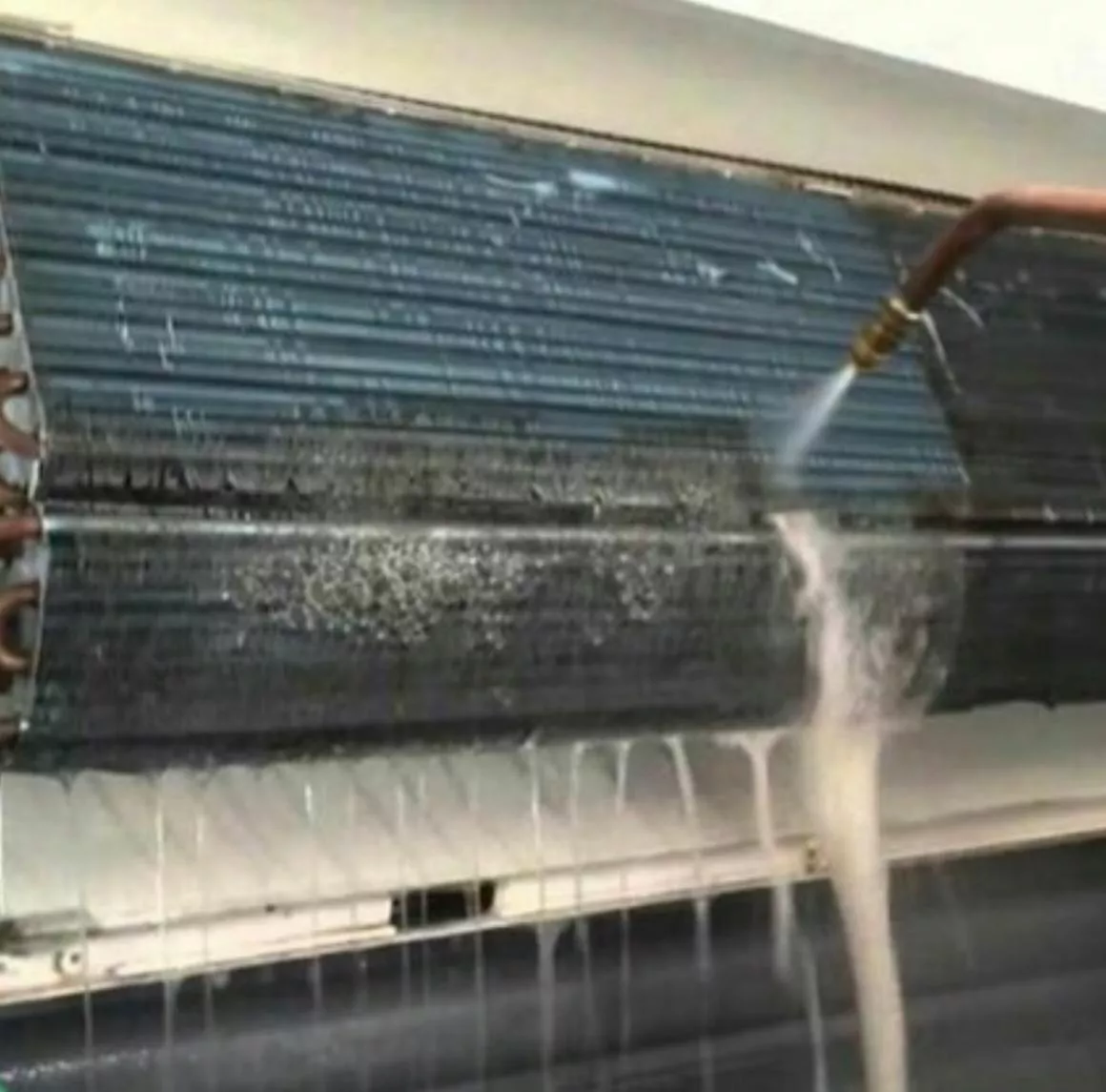
Your aircon bill jumped because of one or more efficiency drains: clogged filters and coils can increase power draw by 20–30%, refrigerant leaks force the compressor to run non-stop, a miscalibrated or broken thermostat keeps the system cycling unnecessarily, worn compressor bearings burn extra watts, and poor room insulation (common in older HDBs and single-glazed condos) means your unit works twice as hard to cool the same space. Most fixes cost $45–$250; ignoring them costs you $30–$80 extra every month in wasted electricity.
Dirty Filters and Coils: The Silent 30% Tax on Your Bill
This is the number-one culprit. A clogged filter restricts airflow, forcing the blower motor to work harder and the evaporator coil to ice up intermittently. In Singapore's 80%+ humidity, dust binds with moisture into a sticky film that coats fins within 4–6 weeks of continuous use. The compressor then runs longer cycles to achieve the same temperature drop, spiking your kWh draw by 20–30%.
What You'll Notice
- Weak airflow from the vents even on high fan speed
- Ice forming on the refrigerant pipes near the indoor unit
- Room takes 15–20 minutes longer to cool down
- Condensate drip-tray overflows or leaks because ice melt overwhelms the drain
The Fix and the Cost
Standard servicing removes dust from filters, fins, and blower wheel. For heavily soiled coils (kitchen units, ground-floor HDB facing main road), a chemical overhaul is needed: technician dismounts the coil and soaks it in alkaline solution to dissolve grease and nicotine residue. Cost breakdown:
| Service Type | Price (1 unit) | Efficiency Gain |
|---|---|---|
| Standard servicing (incl. 9-point pre-check) | $55 | 15–20% if done quarterly |
| Chemical overhaul (coil removal + flush) | $120–$150 | 25–30% for neglected units |
| Fan coil + condenser chemical wash (both units) | $180–$220 | 30–35% restore to near-new |
Quarterly servicing costs $180/year for one unit but saves $25–$40/month in electricity — a net gain of $120–$300 annually. For households running 3–4 units, the payback period is under two months.
Refrigerant Leaks: Why Your Compressor Never Stops
Low refrigerant pressure forces the compressor to run continuously because the system can't absorb enough heat per cycle. In Singapore, 85% of systems use R410A (newer installs) or R32 (post-2021 replacements); older units still on R22 face supply shortages and higher top-up costs. A slow leak — often at flare joints, service valves, or corroded condenser coils — can drop pressure by 20–30 psi over 6–12 months. You won't notice until cooling weakens and the bill climbs.
Symptoms of Low Gas
- Indoor unit blows cool (not cold) air even at 16°C setting
- Frost or ice on the outdoor unit's copper pipes (reversed from filter blockage)
- Compressor runs 24/7 without reaching thermostat cut-off
- Hissing sound near pipe joints (active leak)
Top-Up vs. Leak Repair
A refrigerant top-up without fixing the leak is a temporary patch that costs you every 6–12 months. Honest servicing includes pressure testing and leak detection with soap solution or electronic sniffer. Common leak points:
- Flare-nut connections: vibration loosens the joint over 3–5 years; re-torque or re-flare costs $60–$80 including top-up
- Condenser coil corrosion: salt air (coastal units) or airborne chlorine (near pools) pits the copper; coil replacement $280–$450 depending on tonnage
- Service valve stem leak: rubber core hardens; valve core replacement $45–$60
R410A top-up alone runs $80–$120 per kg (most 9,000–12,000 BTU units need 0.6–0.9 kg). R32 is $90–$130/kg. R22 (phased out under Montreal Protocol) now costs $150–$200/kg and may require MCST approval in condos built before 2010. Leak repair + top-up typically totals $120–$250 but stops the recurring expense.
Thermostat and Control Board Failures: The Phantom Cycles
A faulty thermostat or PCB (printed circuit board) causes erratic on-off cycling: the compressor kicks in every 4–6 minutes instead of running smooth 15–20 minute cycles, spiking start-up current draw each time. Capacitor wear, voltage spikes during thunderstorms (common in Singapore's afternoon squalls), and humidity ingress into the control box are the usual culprits.
How to Spot Control Issues
- Remote display shows correct temperature but unit never stops or stops too early
- Compressor clicks on and off every few minutes (short-cycling)
- Error codes flashing on the indoor unit LED (E1, E2, F0, etc. — varies by brand)
- Room temperature swings ±3°C despite steady setpoint
Repair or Replace?
Thermistor (temperature sensor) replacement is straightforward: $60–$80 including labour. PCB replacement ranges $180–$350 depending on brand and board generation; Daikin and Mitsubishi boards are pricier but longer-lasting. If your unit is over 10 years old and the compressor also shows wear (noisy start-up, oil stains), replacement often makes more financial sense than a $300 board repair on a system worth $600 secondhand.
The 9-point pre-check included with every aircons.sg service booking tests thermistor accuracy, checks capacitor microfarad ratings, and measures actual vs. displayed temperatures — so you know whether you're facing a $60 sensor swap or a bigger fix before committing.
Compressor Wear and Motor Inefficiency
Compressors are the heart of the system and the biggest power draw (60–70% of total kWh). A worn compressor with degraded windings or scored piston walls needs higher current to produce the same cooling output. In Singapore's non-stop cooling demand (many households run aircon 10–16 hours daily), compressors hit end-of-life around 8–12 years depending on brand and maintenance.
Early Warning Signs
- Compressor body is hot to the touch (above 70°C) after 30 minutes of operation
- Start-up draws lights in the room momentarily (voltage sag from high inrush current)
- Loud clunking or grinding from the outdoor unit
- Oil stains on the concrete pad below the condenser
Compressor Replacement vs. New Unit
Compressor replacement costs $450–$750 for a 9,000–12,000 BTU inverter unit (Mitsubishi, Daikin, Midea). A new system-set costs $650–$950 installed. If the condenser coil, fan motor, and indoor blower are also original and aging, replacing the entire unit gives you a fresh warranty (5–10 years on compressor, 1 year parts and labour) and 30–40% better energy efficiency (newer inverters with R32 hit EER 4.0–5.0 vs. 2.8–3.2 for pre-2015 models).
Rough payback: a new inverter unit uses 0.6–0.8 kWh vs. 1.2–1.5 kWh for an old non-inverter. At $0.30/kWh (SP Group July 2024 tariff), that's $0.18–$0.21 saved per hour. Run 12 hours/day and you save $65–$75/month, recovering the $700–$900 upfront in 10–14 months.
Poor Insulation and Heat Gain: The Hidden Load
Even a perfectly maintained aircon will spike your bill if the room itself is a thermal sieve. Single-glazed windows (common in HDBs and older condos), west-facing bedrooms with afternoon sun, and poorly sealed door gaps let heat flood in faster than the system can remove it. Kitchens with gas stoves and living rooms with large LED TVs (40–60 W heat output) add internal heat load.
Quick Wins to Cut Heat Gain
- Blackout or thermal curtains: block 40–50% of radiant heat through glass; $80–$150 per window at IKEA or Taobao
- Door sweep and weather strip: seal the 1–2 cm gap under bedroom doors; $12–$20 at hardware stores, DIY install in 10 minutes
- Reflective window film: reduces solar heat gain by 30–35%; professional install $8–$12/sq ft, lasts 8–10 years
- Ceiling fan pairing: run aircon at 25°C + ceiling fan feels like 23°C; fan uses 40–60 W vs. aircon's 800–1,200 W
When to Upgrade Insulation
If you're renovating, consider double-glazed windows (cost premium $150–$250/window but cuts heat gain 50–60%) and cavity wall insulation in landed properties. For HDB and condos, focus on window treatments and door seals — structural changes need HDB or MCST approval and rarely pencil out for rental or resale units.
What to Do Right Now
Check your last three months of SP bills (download from the SP app). Compare kWh usage month-on-month. A sudden 20–30% jump without extra occupancy or hotter weather points to an aircon issue. Walk through each room: listen for continuous compressor hum, feel for weak airflow, check if the remote temperature matches a separate thermometer reading.
If anything's off, book a service call with the 9-point pre-check included. The inspection covers filter condition, refrigerant pressure, thermistor calibration, capacitor health, drain-line flow, coil frost, compressor amp draw, and unusual noise or vibration. Transparent quoting means you'll know the exact cost — whether it's a $55 standard service, $120 gas top-up, or $180 chemical overhaul — before work starts. Decline a recommended fix and the $55 minimum covers the visit and diagnosis; proceed and it's part of the total.
Frequently Asked Questions
How much does a dirty filter really add to my monthly bill?
A clogged filter increases runtime by 20–30%, translating to $20–$35 extra per month for a single unit running 10 hours daily at July 2024 electricity rates ($0.30/kWh). Cleaning or replacing the filter every 3–4 weeks (washable mesh) or monthly (disposable pleated) prevents this. Standard servicing every quarter keeps coils clean and maintains peak efficiency.
Can I top up refrigerant myself to save money?
No. Refrigerant handling requires a PUB-licensed technician under Singapore's Environmental Protection and Management Act. DIY top-ups risk overcharging (which damages the compressor), undercharging (no cooling improvement), and refrigerant venting (illegal, up to $20,000 fine). Professional top-up with leak check costs $80–$150 and prevents recurring loss.
Why does my bill spike even after servicing?
Standard servicing cleans filters and coils but doesn't address refrigerant leaks, worn capacitors, or thermostat drift. If your unit was low on gas or had a failing start capacitor, cleaning alone won't restore efficiency. The 9-point pre-check included with aircons.sg bookings identifies these issues upfront, so you're not surprised by a persistently high bill after a clean.
Is chemical wash worth the extra cost?
Yes, if your unit hasn't been serviced in 9–12 months, is in a kitchen or near a road, or shows weak airflow despite a clean filter. Chemical wash dissolves baked-on grease and nicotine that water rinse can't touch, restoring 25–30% efficiency. Cost is $120–$150 for fan coil, $180–$220 for fan coil + condenser. Payback is typically 2–3 months in electricity savings.
How often should I service to avoid bill spikes?
Every 3 months for units running daily (bedrooms, living rooms). Every 4–6 months for occasional-use units (guest rooms, study). Skipping servicing for 6+ months in Singapore's humidity guarantees mould growth, coil fouling, and 20–30% efficiency loss. Quarterly servicing at $55 for 1 unit costs $220/year but saves $300–$400 in avoided electricity waste and emergency repairs.
Fix It Before Next Month's Bill Arrives
Most aircon-related bill spikes cost $45–$250 to resolve — a fraction of the $30–$80/month you'll keep paying if you ignore them. Whether it's a clogged coil, slow refrigerant leak, or a tired compressor, transparent diagnosis with the 9-point pre-check (included with every service booking at aircons.sg) tells you exactly what's wrong and what it costs to fix. No guesswork, nothing hidden, no upselling. Same-day service available, 90-day workmanship warranty on all repairs. WhatsApp +65 9107 2601 with your postal code and number of units — you'll get a straight answer and a booking slot within the hour. Stop paying the efficiency tax.