The year-end rains turn the flat sticky. Towels will not dry, the wardrobe smells faint, the floor feels tacky, and the room is not even hot. So you reach for the remote and press the button with the water-drop symbol: dry mode. Does it do what you hope? And if the room still smells damp after a week of using it, what is the aircon telling you?
This guide covers what dry mode is meant to do, what it cannot do, how to tell whether your unit has actually been dehumidifying or has just been running, and when a damp smell means the indoor unit needs servicing. Every price below is one already published on our pricing page.
When the damp season actually arrives
Singapore's weather service describes two monsoon seasons with inter-monsoon periods between them. October to November is an inter-monsoon period, and the Northeast Monsoon runs from December to early March. Rainfall is highest from November to January, and the wet phase of the Northeast Monsoon, with long spells of continuous rain, is usually December to early January. The driest month is February. Those are the weeks when homes feel clammy, which is why questions about damp rooms and smelly aircons pile up then. If you are reading this in October, you have time to sort the unit out before the wettest stretch.
What dry mode is meant to do
A cooling aircon already removes moisture. Warm, humid air passes over the cold coil in the indoor unit, water condenses on it, and that water drains away through the drain pipe. Dry mode is a setting that tries to favour the moisture removal over the temperature drop. The usual approach is to run the compressor gently and the fan slowly, so the air spends longer on the coil and the room does not turn cold.
That is the general idea, but the exact behaviour is the maker's choice, and it differs between brands and between models. Some units hold the room near its current temperature. Some treat dry mode as mild cooling with a slow fan. We do not publish a figure for how much moisture any model removes, and you should be wary of any article that quotes one without naming the model. The reliable source is the manual for your own unit, which says what the dry symbol does on that model and whether the temperature setting still matters in that mode.
What dry mode cannot do
- It is not a dehumidifier for the whole flat. An aircon only treats the air in the room where the indoor unit is, and only while the doors and windows are closed. Open a window and it is drying the street.
- It does not fix a damp problem that has a source. A leak, a wet bathroom door left open or laundry hung indoors keeps adding moisture faster than any setting can remove it.
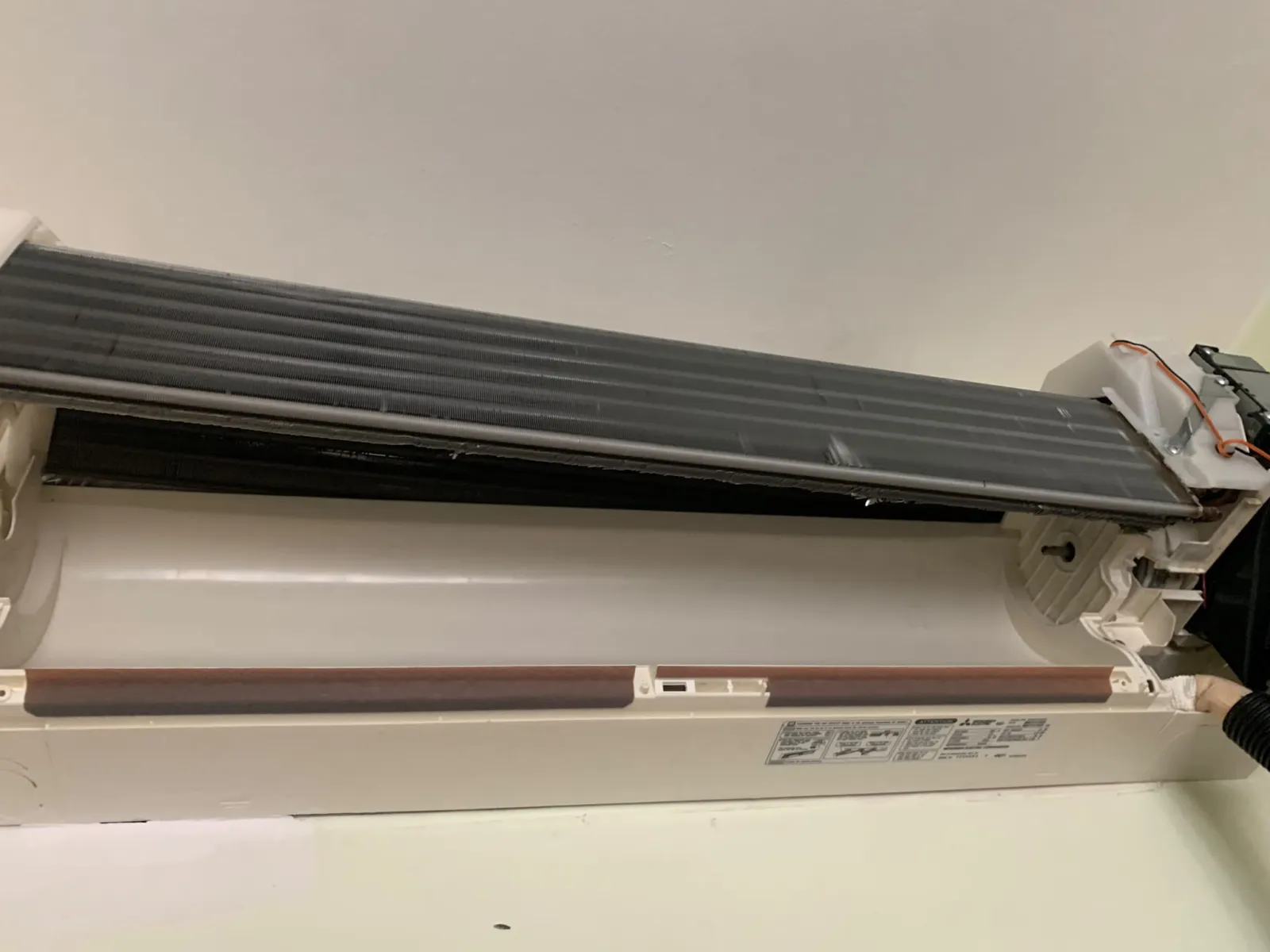
- It does not clean the unit. If the coil, blower wheel and drain tray already carry mould or biofilm, running the unit longer moves more room air across them, and the smell comes out of the vents with the dry air.
- It will not rescue a unit that is already struggling to cool. If the unit is weak in normal cooling mode, switching to dry mode will not change that. Our guide on an aircon that is not cold enough covers that case.
A simple test: is it really drying the room?
You do not need instruments. Run the unit on dry mode for an hour with the room closed up and watch three things:
- Does water come out of the drain pipe outside? Water dripping from the drain outlet is the sign the coil is pulling moisture out of the air. If the unit runs for an hour in a humid room and nothing drains, either the compressor is hardly running or something is wrong. Do not assume which without checking the manual or having it looked at.
- Does the room feel less tacky on the skin? A room that is genuinely drying feels different within the hour, even if the temperature barely moves.
- Does the smell change? A clean unit blows air with almost no smell. A sour or musty smell that appears when the unit starts is coming from the unit.
If water is dripping inside instead, that is a different problem. Read why the condensate drain keeps choking before the water reaches your floor or ceiling.
When a damp smell means the unit needs servicing
Moisture is the reason a damp indoor unit grows things. The coil is wet every time the unit cools, and when it stops, leftover water sits on the coil and in the drain tray. If dust has built up there, that is the food mould and bacteria need. Our guide to why an aircon smells musty goes through the causes, and the mould and bacteria guide explains why the real fix is cleaning the parts you cannot reach with a cloth.
Three signs that point to the unit rather than the room:
- The smell is strongest in the first minutes after you switch on, then fades.
- It only comes from the aircon vents, not from the wardrobe, bed or bathroom.
- It returned within weeks of the last service, or you cannot remember when that was.
This is where the type of service matters. Our published pricing separates two jobs. A general service is routine maintenance: filter clean, coil wipe, drainage flush and gas check. A chemical wash is the deeper clean of the coil that removes mould, biofilm and stubborn grime, and it is recommended every 6 to 12 months. A damp smell that has already set in is usually a chemical-wash question, not a general-service one. If you are not sure, the signs you need a chemical wash sets out the difference, and the chemical wash page has the detail.
What it costs, from our published prices
All of these are from the pricing page, and the displayed price is the final price:
- General servicing: $45 for 1 unit, $70 for 2, $95 for 3, $115 for 4, and $25 per unit from 5 units. The $45 minimum covers the visit, the 9-point pre-check and standard servicing.
- Chemical wash: $135 for 1 unit, $245 for 2, $345 for 3, $425 for 4, and $100 per unit from 5 units.
- Chemical overhaul: $200 for 1 unit, $370 for 2, $515 for 3, $640 for 4, and $150 per unit from 5 units.
If only the bedroom unit smells, you do not have to treat every unit in the flat. Our guide on whether to wash every aircon or just one unit helps you decide.
What to do this week, before the rain sets in
- Read the dry mode entry in your unit's manual, and note whether the temperature setting still applies.
- Run the unit on dry mode for an hour in the room you care about, with the windows shut, and check the drain outlet outside for water.
- Smell the air when the unit starts. If it is sour or musty, book the unit in rather than running it longer.
- Do not spray anything down the vents as a fix. It does not remove the mould from the coil, and the unit then blows whatever you sprayed into the room.
- Keep wet laundry out of the closed room while the unit runs.
If you would like a technician to look, tell us which room, how long the smell has been there and when the unit was last serviced. The visit includes our 9-point pre-check, so you find out what the unit actually needs before any larger job is quoted.