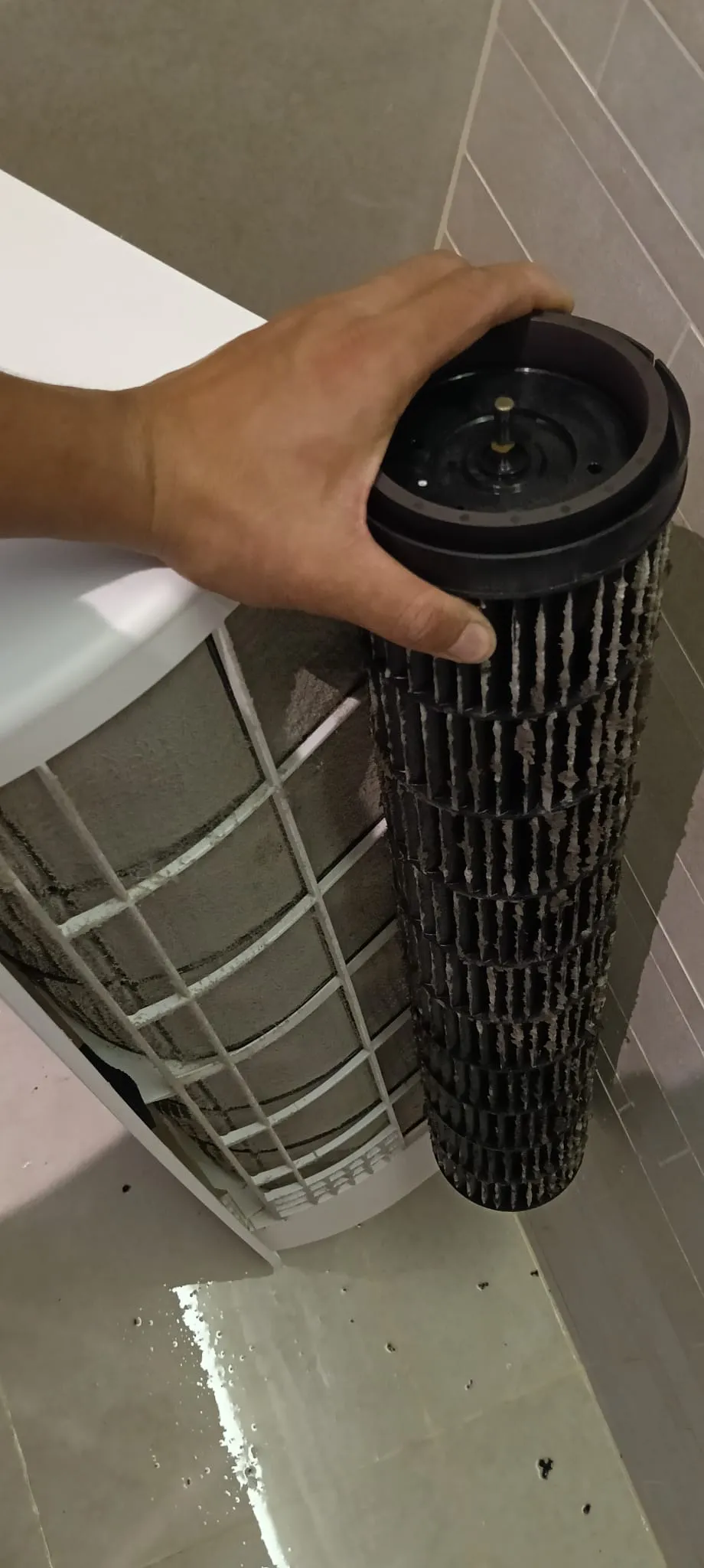
A flat with the aircon switched off and the windows shut is one of the more humid environments in Singapore — no cross-ventilation, no fan running, and a coil and drain pan sitting wet inside a closed metal box. Leave that for two weeks and it dries out. Leave it for six and something usually needs attention before the unit goes back to full-time use.
This is not a warning to never switch your aircon off. It is what actually happens inside the indoor unit while you are away, what is worth doing in the ten minutes before you leave, and what to check when you are back — whether that is a two-week holiday, a work posting, or a flat sitting vacant between tenants.
What actually happens while the unit sits idle
Two things dry out, and both cause problems for a different reason.
The first is the drain trap. Water sitting in the condensate line normally blocks odour and insects from travelling back up the pipe into the room. With the unit off for weeks, that water evaporates. The trap runs dry, and the drain line becomes an open path from the outside drainage stack into your ceiling void or wall cavity. This is also why a unit can come back smelling of the drain itself rather than of mould — a dry trap lets sewer-side odour through in a way a wet one does not.
The second is the coil and blower wheel, sitting in a sealed, humid, unmoving box. Mould does not need much: warmth, moisture and no airflow are the three conditions it needs, and a switched-off indoor unit in a shut flat supplies all three continuously. A coil that would normally dry between servicing cycles because the fan keeps moving air across it stays wet the entire time the system is off.
Neither of these is a fault in the unit. It is what an idle, sealed, humid box does, in this climate, given enough time.
Before you leave: what is actually worth doing
You do not need to service every unit before every trip. For a week or two away, switching off at the remote is enough. For anything longer — three weeks and up, and especially over a school-holiday-length trip or longer — three things are worth doing on your way out the door:
- Run fan mode (not cool mode) for 15–20 minutes before you switch off. This dries the coil while the blower is still moving air across it, instead of leaving a wet coil to sit. Some remotes have a dedicated "dry" or self-clean cycle — use it if yours has one.
- Wash the filters first, not after you're back. A dusty filter sitting in a humid, unmoving unit for weeks is exactly the surface mould prefers. Washing your own filters takes about ten minutes and is the one part of the unit you are meant to touch yourself.
- Isolate at the wall switch, not just the remote, if you are away more than a few weeks. This is about electrical safety during the exact kind of event you are not home for — a power surge, a lightning strike near the outdoor unit, a small electrical fault that would otherwise trip quietly with nobody around to notice a burning smell or a tripped circuit. Leaving the isolator off removes that risk entirely for the length of the trip.
If the unit already had a smell, a weak drain, or noise before you left, those do not fix themselves by being switched off. They are usually worse when you switch back on, not better.
Should you leave it running on a timer instead?
For genuinely short absences with someone checking the flat — a helper, a relative, a neighbour with a key — leaving one unit running on a high temperature setting (25–26°C) with the timer or a smart plug is a reasonable middle ground. It keeps air moving through the room, which does more to control humidity than the temperature setting itself. This only makes sense if someone is actually able to check the flat; running a unit unattended for a month in an empty home is a cost with no one there to notice if something goes wrong.
For a vacant flat with nobody checking in — between tenants, a unit under renovation, or an extended overseas posting — switching off and isolating is the safer default. A slightly musty first hour when you switch back on beats an unattended fault running for weeks.
What "not quite right" after a long trip usually means
Two patterns show up often enough to name specifically.
A musty smell in the first few minutes, then it clears. This is usually the coil, not a hidden leak or a dead animal in the ducting. Run the unit on fan mode with the door open for ten minutes before you rely on it for a room you'll be sleeping in that night. If the smell does not clear after a few uses, that is closer to what a chemical wash addresses rather than something that airs out on its own.
A slow drip for the first day, then it stops. A drain trap that dried out during the absence needs to re-wet itself once the system starts condensing water again; a day of intermittent dripping while that happens is common and usually resolves on its own. A drip that continues past a day or two is a different problem — most likely a blocked drain rather than a trap re-wetting, and worth a proper look rather than a wait-and-see.
Either way, a unit that has sat idle for a month or more is closer to a neglected unit than a normally-used one for the purposes of what the first switch-on needs — not because idle time damages it the way years of continuous running does, but because the same checks (drain flow, coil condition, whether the smell clears) apply either way.
If the flat will be empty for months, not weeks
Landlords between tenants, owners posted overseas for a work stint, or a unit sitting in a flat under renovation face a longer version of the same problem. The trap dries out further, dust settles for longer, and if the unit is switched off at the isolator for the entire period, there is no fan running at all to limit mould growth on the coil.
A general service booked for the day you switch the unit back on — not months later once someone complains about the smell — catches exactly the two things a long absence creates: a drain trap that needs re-checking and a coil that has had an unusually long time to collect moisture. It is the same visit as a normal service call; the difference is timing it to when the unit is coming back into use rather than waiting for a symptom.
Booking a check before or after your trip
General servicing starts from $25/unit (minimum $45 for a single unit), with a 90-day workmanship warranty on the visit. The nine-point pre-check that comes with every booking includes a drainage flow check specifically — a blocked or dried-out drain is a common cause of aircon water leaks, which is exactly the failure mode a long absence sets up.
If you are heading off soon, or you've just come back to a unit that smells off or drips for longer than a day, tell us how long the flat was empty when you book — it changes what we check first.
WhatsApp us on 9107 2601 and let us know whether you're booking before you go or after you're back — we'll tell you what to check first.