Somebody quotes you a number for a System 3, fully installed. It is a clean, round figure and it sounds like the whole job. Then the installer arrives, walks the flat, and there is a second conversation — about piping length, about trunking, about a point in the electrical box — and the number moves.
That second conversation is not a scam. It is what happens when a price is quoted before anyone has seen the property. The problem is that it happens after you have committed, when your bargaining position is gone and your installation date is booked.
Here is what an advertised installation price normally covers, the five things that move the real figure, and the questions that pull that second conversation forward to before you pay anything.
What "supply and install" usually means
An advertised package is almost always a bundle: the units, plus a standard installation. Standard is the operative word. It assumes an ordinary flat, an ordinary distance from the condenser to the indoor units, an electrical supply that can take the load, and no complications.
For reference, this is what we publish as included in an installation at aircons.sg, and it is a reasonable yardstick to hold any quote against:
- A free site survey and a BTU recommendation
- Indoor and outdoor unit mounting on proper brackets
- Insulated copper refrigerant piping (standard length) and drainage piping
- Electrical wiring and isolator connection
- Vacuum, leak test and correct gas charge
- A full performance test on every unit
- Removal and disposal of your old units, on request
- A 2-year installation warranty, plus the manufacturer's 5-year compressor warranty on the units
Read that list again and notice the two words doing the most work: standard length. Everything else on the list is either done or not done. Piping is the one item that is measured.
The five things that move the number
1. How many indoor units, and which tier
A single split is one indoor unit on one condenser. A System 2, 3 or 4 shares one outdoor condenser across more rooms, and the price climbs with each indoor unit. On top of that, a premium-tier system costs more than a standard inverter of the same configuration.
Our published starting prices show both axes at once: a single split from $1,200 standard or from $1,500 premium; a System 2 from $2,200 or $2,800; a System 3 from $2,800 or $3,300; a System 4 from $3,500 or $4,500. Whatever figures you are given, make sure you know which of those two columns your quote sits in — a package advertised against the cheaper tier and delivered in the dearer one is the most common place a number quietly grows.
2. The piping run
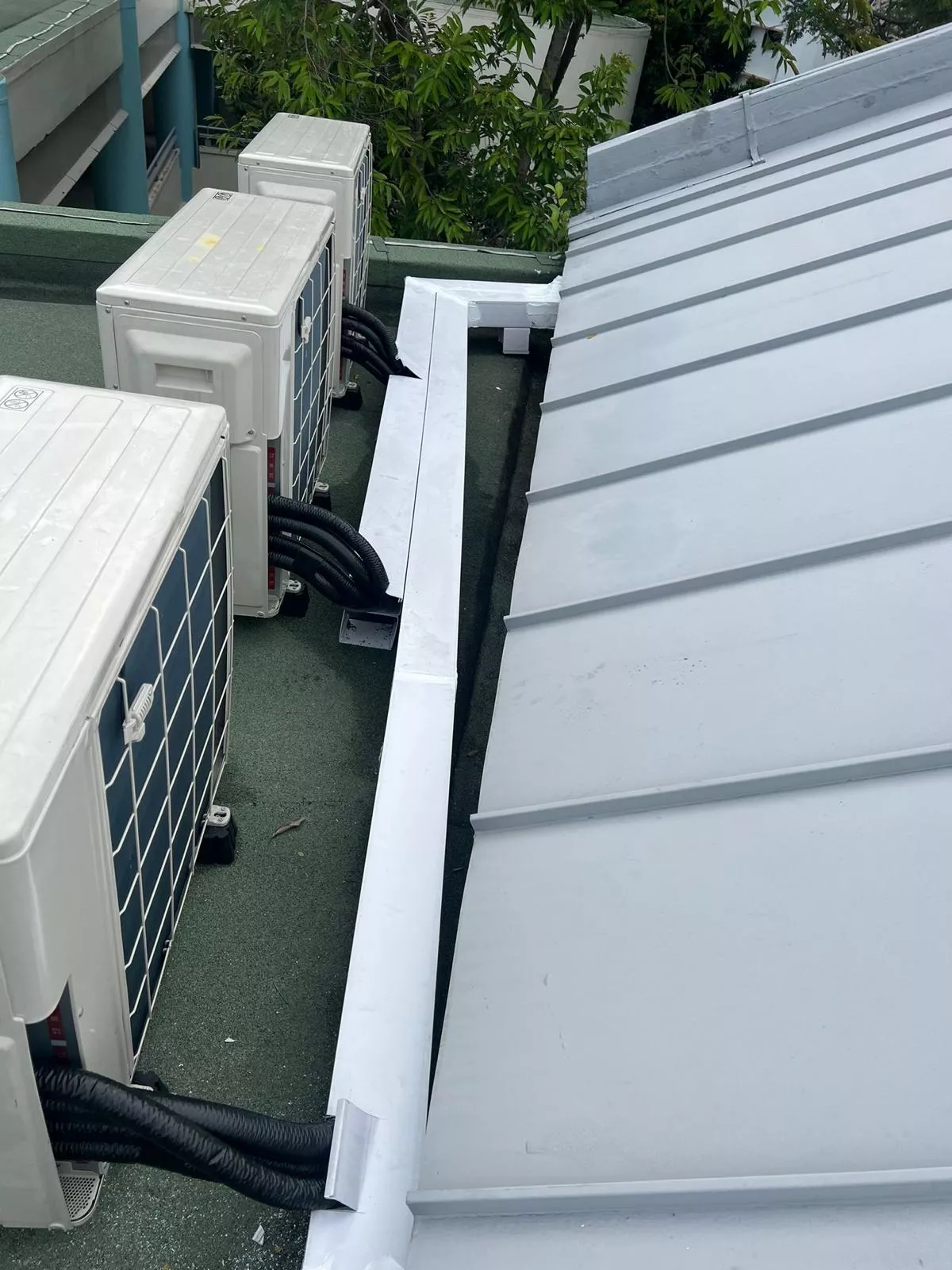
This is the big one, and it is the item most often left vague. Refrigerant piping runs from the outdoor condenser to each indoor unit, and the further apart they are, the more insulated copper the job needs.
A package includes a standard length. Almost nobody tells you what that length is unless you ask. So ask two things, and get the answers in writing:
- How many metres are included per indoor unit?
- What is the rate per additional metre?
Then walk your own flat with those numbers in mind. The condenser sits on the aircon ledge. Every indoor unit has to reach it. If your ledge is at the service yard and you want the far bedroom cooled, that pipe crosses the whole flat. In a compact flat the standard length may cover everything. In a long layout, or a maisonette, or a corner unit where the ledge is at one end, it very often does not.
3. Concealed trunking versus surface trunking
Surface trunking is the plastic casing you see running along the wall. Concealed trunking hides the pipe — inside a bulkhead, above a false ceiling, or chased into the wall — and it costs more, because it is more work and it has to be coordinated with whoever is building the ceiling.
An advertised package price is a surface-trunking price. If you are renovating and you want the pipework hidden, that is a separate line, and it also has a sequencing consequence: the piping has to go in before the ceiling closes. Get that into the quote and into the renovation programme at the same time.
4. Electrical work in older properties
An aircon system needs a supply that can carry it and an isolator so it can be switched off safely for servicing. In a newer flat this is usually straightforward. In an older property there may be no spare way in the distribution board, or no dedicated point where the condenser sits, and adding one is real electrical work.
This is genuinely knowable in advance — it takes someone opening the box and looking. It is also the item most likely to surface on installation day if nobody looked, because that is the moment the installer discovers there is nowhere to connect.
5. Property type
HDB, condo and landed each have their own rules about where the outdoor unit may sit. For an HDB flat, the work must be carried out by a BCA-licensed contractor, and the condenser must go on the flat's designated aircon ledge on proper brackets — not on the roof, and not in the common corridor in most blocks.
For a condo, the MCST may have its own approved-contractor list and its own rules about ledge placement and working hours. That is worth checking before you book a date, not after.
The questions to ask before you pay a deposit
You can settle almost all of this in one message. Ask for the answers in writing, on the quote itself:
- Which units, exactly? Brand and model number, not "premium inverter". Configuration alone does not tell you what you are getting.
- How many metres of piping are included per indoor unit, and what is the rate beyond that?
- Is the price for surface trunking or concealed?
- Does it include an isolator and the electrical connection, and has anyone checked there is a spare way in the box?
- Are the old units removed and disposed of, or left on my floor?
- Who holds the installation warranty, and for how long? The unit warranty comes from the manufacturer. The workmanship warranty comes from whoever installed it — those are two different promises from two different parties, and a leak at a flare joint is a workmanship matter.
- When is the balance due, and what happens if the site survey changes the scope?
Any installer who is going to do the job properly can answer all seven without hesitation. The answers are the quote.
Buying the units separately
You do not have to buy the units and the installation from the same place. Plenty of people buy a unit on offer and get it installed separately, and that is perfectly workable — we install units customers bought themselves, and the workmanship warranty is the same either way.
What changes is that you are now managing two parties. Make sure of three things before you commit: that the model you bought is the right capacity for the room, that the delivery lands before the installation date rather than after it, and that you know who to call if the unit itself turns out faulty on commissioning. That last one is where a split purchase gets uncomfortable, because the installer will say it is the unit and the seller will say it is the installation. Agreeing in advance who tests what removes most of that.
The same logic applies to cleaning. A low headline price for a chemical wash often means part of the job is missing. See what a cheap chemical wash usually leaves out, and the questions to ask before booking.
The short version
An advertised price is a starting figure for a standard job, and there is nothing wrong with that as long as you know which parts of it are measured rather than fixed. Piping length, trunking type and the electrical point are the three that move. Get them written down before you pay a deposit and the second conversation never has to happen.
The reason we survey before quoting is precisely this — everything above is knowable in advance, and a figure agreed after someone has actually looked at the flat is a figure that holds. Extra copper beyond the standard run, concealed trunking or a new electrical point are quoted upfront at the survey, never added afterwards.
Further reading: what is included in a standard installation goes through the scope item by item, the full HDB and condo cost guide covers the numbers by property type, and buying through an interior designer versus direct is worth reading if your aircon is being folded into a renovation package. Our aircon installation cost page has the current per-system pricing on one screen.
Comparing a package and want to know what it actually covers? WhatsApp us on 9107 2601 — send us the configuration you are looking at, your property type and roughly where the ledge sits relative to the rooms you want cooled, and we will tell you which parts of that price are likely to move before anyone comes out.
Related reading: the power point nobody quotes for — the electrical item most often measured on the day rather than fixed in the advertised price.
If you are weighing a package against buying the unit separately, our guide to what an install-only quote should cover when you bought the aircon online sets out what to ask the installer.