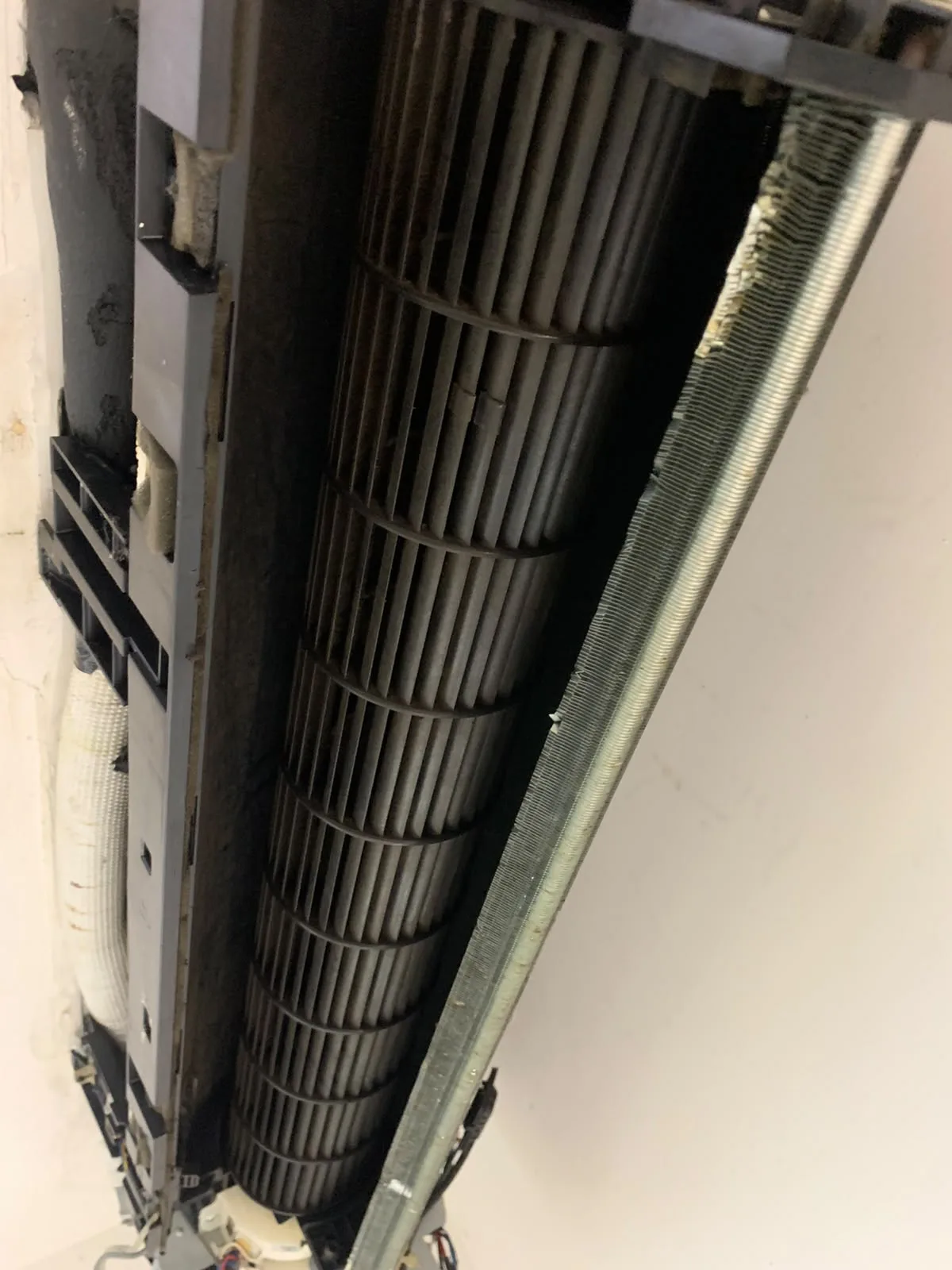
Pictured above: the blower wheel of a wall-mounted aircon at a condo in Canberra on 17 November 2026, after our team serviced it. Water had started dripping from one of the two units in that home, and the owner had both serviced in the same visit. The supply air measured 15.6°C and 17.6°C before the service and 8.9°C and 9.5°C after. The photos are on the live job page.
It usually starts with one room. A drip on the bedroom floor, a wet patch on the wall under the indoor unit, a towel left on the skirting overnight. The other aircons in the flat seem fine, so the natural question is: do I book a service for the one that drips, or for all of them while the technician is here?
There is no answer that fits every home, but there is a way to decide that takes five minutes, and the published prices make part of the decision for you. This post walks through it.
Why one unit drips first
The water itself is normal. Every aircon pulls moisture out of the room air as it cools. The water collects on the cold coil, runs into a drain pan under it, and leaves through a drain pipe. The drip you see is that water going somewhere it should not, because the path out is blocked or slowed.
On our repair page, a blocked drainage pipe is listed as the cause in 90% of water leaking cases. The 9-point pre-check page describes blocked drains as the number one cause of aircon water leaks in HDB and condo units. The less common causes are a cracked drain pan or an indoor unit that was not installed properly.
The other units in the flat breathe the same air, collect the same dust, and in most homes were last serviced on the same day. They do not get dirty at the same speed, though. The bedroom unit that runs every night, or the living room unit near the kitchen, usually builds up dirt and slime faster. So the drip is often the unit that crossed the line first, not the only unit with a dirty drain. That is not a reason to service everything automatically. It is a reason to ask the question about each unit instead of assuming the others are fine because they are dry.
What the Canberra job shows
In the Canberra condo, one unit had started dripping and the owner asked for both to be serviced. Both supply-air readings came down after the service: from 15.6°C and 17.6°C to 8.9°C and 9.5°C. In other words, both units, not only the one that dripped, were blowing noticeably warmer air before they were cleaned.
That is one home, not a rule. It does show something the owner could not see from the floor: a unit can be dry and still be running dirty. Dirt on the blower and coil can choke the drain and also stop the air from getting properly cold. Our post on checking the vent temperature before and after a service explains how to take the same kind of reading yourself.
What it costs: one unit, all units, or two visits
Normal servicing on our price list is priced by the number of indoor units in the same visit:
- 1 unit: $55
- 2 units: $90 ($45 per unit)
- 3 units: $120 ($40 per unit)
- 4 units: $160 ($40 per unit)
- 5 units and more: $35 per unit
Normal servicing means the roller and blower are dismantled, and the filter, coil and drainage are cleaned and flushed, with a basic check. We do not offer a lighter "basic" service. Every booking starts with the 9-point pre-check, which includes a drainage flow check.
Two things follow from that table. Our arithmetic, not a published figure:
- Two units in one visit cost $90. The same two units in two separate visits cost $55 + $55 = $110. If the second unit is going to need a service within the next few weeks anyway, splitting it costs more.
- The extra unit in the same visit costs less than the first. Going from 1 to 2 units adds $35. Going from 2 to 3 adds $30. Going from 3 to 4 adds $40.
The prices shown are the prices you pay. There are no packages or contracts; you book a service when you need one.
When servicing only the dripping unit makes sense
Service just the one unit if most of these are true:
- The other units were serviced recently and the dripping one was missed, or it runs much longer hours than the rest.
- The other units cool quickly and the air feels as cold as it used to. If you have a thermometer, compare the vent temperature of each unit after 10 to 15 minutes of running with the door and windows closed.
- There is no smell from the other units when they start, and no black specks or dust at their vents.
- Budget is tight this month. A drip is the urgent one, because water can stain the wall and ceiling. The rest can wait for the next round.
When it makes sense to do all of them
Book every unit in the same visit if:
- They were all last serviced at the same time, and it was a while ago. The dripping unit is telling you about the schedule, not just about itself.
- The other units are slower to cool than they used to be, or one of them smells musty at start-up.
- You were going to service them soon anyway. The table above makes one visit cheaper than two.
- You only have one free morning or afternoon to let someone in.
When the drip is not a servicing job at all
Not every drip is a blocked drain, and a normal service will not fix the ones that are not. Look before you book, and tell us what you see:
- Ice on the copper pipes or the indoor coil. When ice melts, it drips, and that is often mistaken for a drainage problem. Ice points to low gas or restricted airflow. The pre-check includes a compressor pressure reading. If gas is the cause, the fix and its price are different; see frost on the outdoor valve: a gas check before you pay for a wash.
- Water running along the trunking or staining the ceiling, not dripping from the bottom of the indoor unit. That can be condensation on the pipes rather than the drain; our post on trunking condensation and ceiling stains covers it.
- The drip started right after a wash or service. Water at the drain outlet outside is expected; water dripping indoors is not, and it should be reported to whoever did the work. What is normal after a wash or service explains where the line is.
- The drain has been cleared before and the drip keeps coming back. A drain that chokes again and again needs a different question; read why clearing a drain again never holds.
- A cracked drain pan, or a unit that was not installed level. These are repairs, not a service. A standard repair (drainage, electrical) is $80 on our price list.
You do not have to diagnose it yourself. The pre-check is done first, before any servicing, so if the drip turns out to be gas or a cracked pan, you are told that before the work starts. If the fix needs more than a normal service, it is quoted first. If you go ahead, the $55 is part of the total. If you decide not to, the $55 covers the visit and the diagnosis.
If the dripping unit needs a chemical wash
Sometimes the pre-check finds the dripping unit too dirty for a normal service to fix properly: grime on the coil or blower that a normal service does not reach. The filter and coil dirt assessment is one of the nine points, and its job is to say honestly which service a unit needs.
A chemical wash booked on its own is $135 for 1 unit on our price list. If we are already at your home for another job, a chemical clean is from $100 to $150 per unit. So if one unit needs a chemical clean and the others only need a normal service, that can often be done in the same visit, quoted before the work starts. Our post on chemical wash every aircon or just one goes through that decision unit by unit.
Five checks before you message us
- Where is the water coming from? The bottom edge of the indoor unit, the side, the trunking, or the ceiling.
- Is there ice? Look at the copper pipes under the unit and, if you can see it, the coil behind the front panel. Switch off and do not touch the inside.
- When does it drip? All the time, only after a few hours, only at night, only when set very cold.
- When was each unit last serviced? Write the month for each room if you can.
- How do the other units feel? Slow to cool, smell at start-up, or fine.
Then put a towel or a container under the drip and switch that unit off until the visit. Running it while it drips only spreads the water.
Questions to ask after the visit
- "What did the drainage flow check show on the dripping unit, and on the others?"
- "Was it the drain, the pan, the installation, or gas?"
- "Which units would you service next, and which can wait?"
- "What was the vent temperature before and after?"
A good answer names what was found on each unit. "All OK" on a unit that was dripping an hour ago is not an answer. Our post on what a general service includes, line by line lists what you should expect to see done.
Tell us which unit drips
Send us the property type, how many indoor units you have, which one is dripping, where the water comes from, whether you see any ice, and when each unit was last serviced. A photo of the wet spot and of the pipes under the unit helps. That is enough for us to tell you whether it looks like a normal service, and to confirm the price for one unit or for the whole flat before anyone comes.